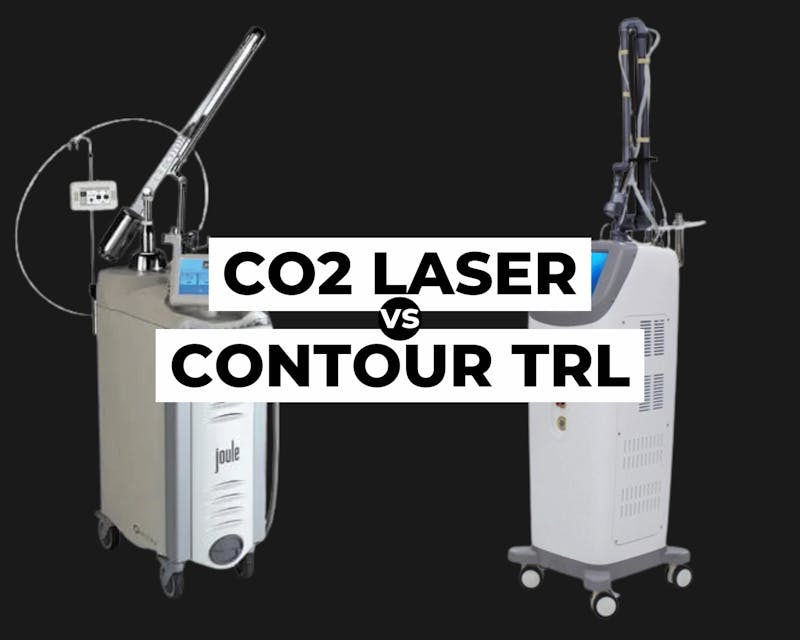
Considering laser skin resurfacing to address wrinkles, sun damage, or uneven texture? While the CO2 laser has been the industry keyword for decades, technology has evolved significantly. Under the medical direction of Dr. Rocco Piazza and the clinical expertise of April Daniel, FNP-C, The Piazza Center has moved beyond traditional CO2 to a more precise, safer alternative: the Contour TRL by Sciton.
The Piazza Protocol: Why We’ve Evolved Beyond CO2
At The Piazza Center, our philosophy is "Precision over Power." While CO2 lasers were the "gold standard" for 30 years, they often carry a "one-size-fits-all" risk profile. Dr. Rocco Piazza has curated our laser suite to prioritize patient safety and predictable healing. By utilizing the Sciton Contour TRL, our lead laser expert April Daniel, FNP-C, can tune the laser to your specific skin anatomy—something traditional CO2 devices simply cannot do.
Traditional CO2 Laser: The Legacy Technology
- Method: CO2 lasers use a 10,600nm wavelength that generates intense heat to remove skin layers. This heat is often "un-tunable," leading to more collateral damage to surrounding tissue.
- Recovery Time: Significant downtime, often 2–4 weeks of intense redness (erythema) and "weeping" skin.
- The Risk Factor: Published clinical studies have shown that traditional CO2 carries a significantly higher risk of hypopigmentation (skin lightening) and prolonged scarring compared to modern Erbium YAG technology.
Next-Generation Contour TRL: The Precision Alternative
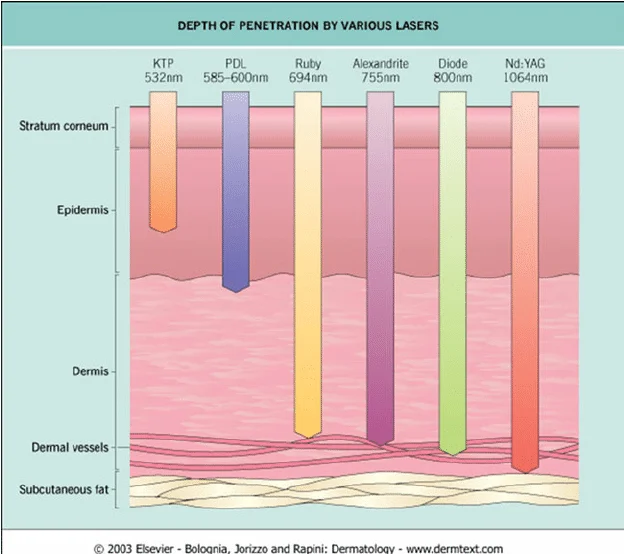
- Method: The Contour TRL uses a 2940nm Erbium YAG wavelength. This is 10x more absorbent in water than CO2, allowing April Daniel to vaporize tissue with micron-level precision and minimal heat dispersion.
- The Safety Advantage: Clinical data illustrates that Sciton’s Erbium technology provides equivalent results to CO2 but with 83% less risk of complications.
- Inclusivity: Because the Contour TRL is "cooler" than CO2, it is a safer, more effective option for darker Fitzpatrick skin types who are typically at high risk for hyperpigmentation with older lasers.
- Customized Recovery: Depending on the depth April selects, downtime can range from a weekend "refresh" to a 7-day total transformation.
April Daniel, FNP-C, explains why she prefers the "tunable" nature of the TRL over the "all-or-nothing" approach of CO2:
Sciton Before and After Case Study Gallery
Contour TRL vs. CO2 Laser Comparison Chart
| Feature | Traditional CO2 Laser | Piazza Center Contour TRL |
|---|---|---|
| Technology Type | Ablative Gas Laser (10,600nm) | Tunable Erbium YAG (2940nm) |
| Safety Profile | High risk of pigment loss & scarring | 83% lower complication rate |
| Downtime | Fixed: 2–4 Weeks | Scalable: 3–10 Days (Customized by April) |
| Clinical Benefit | Effective but aggressive | Precise ablation with better skin texture results |
Why Trust Your Skin to The Piazza Center?
Laser resurfacing is as much an art as it is a science. While other clinics in Austin might offer a "standard CO2 treatment," Dr. Rocco Piazza and April Daniel, FNP-C, provide a tailored clinical experience. We don't just use factory settings; we analyze your skin's thickness, pigment level, and lifestyle to build a resurfacing plan that delivers "Gold Standard" results without the 1960s risks.
Ready to experience the next generation of skin health? Schedule your expert consultation with April Daniel today!