


Expertly WRITTEN By
Dr. Rocco Piazza, MD, FACS
Board-Certified Plastic Surgeon, The Piazza Center, Austin, TX.
Disclosure, before anything else
Some links in this article are affiliate links. If you buy through them, our practice may earn a commission at no extra cost to you. We do not stock, sell, or dispense any of the Korean products below — you can buy them anywhere.
We do sell Pavise and skinbetter science in our Austin clinic, and we make a margin on them. I have tried to be straight about where the cheap option is genuinely good enough and where it is not. You should read the rest of this knowing both of those things.
Are Korean retinal serums as good as medical-grade ones?
For the face, usually yes. Retinal — retinaldehyde — is a vitamin A derivative applied at night to improve skin texture, fine lines and tone. It is the same active at the same tier whether it costs $20 or $176, because retinal sits one conversion step from prescription retinoic acid, where retinol sits two. A $20 Korean retinal shot and a $176 physician-dispensed serum are not separated by the ingredient. They are separated by delivery and stability.
That distinction barely matters on the face, where the skin is thick enough to tolerate an imperfectly delivered active. It matters a great deal on the neck and décolleté, where the skin is thinner, has fewer oil glands, and flexes constantly. For your first retinal, price is not the limiting factor. For your neck, it is.
— Dr. Rocco Piazza, MD, FACS, board-certified plastic surgeon, Austin, TX. Our practice dispenses Pavise and skinbetter science and earns a margin on both; we do not sell any of the Korean products discussed below.
Retinal has become the ingredient everyone is suddenly talking about, and most of the noise is coming out of Korean skincare. The format is hard to miss: a tiny bottle, a shot-style dropper, a double-digit price, and a claim that it works faster than the retinol you have been using for years.
Patients bring these to me constantly now, usually with the same question: is this actually doing anything, or am I paying $14 for marketing?
The short answer is that the ingredient is real, the K-beauty versions are mostly a good deal, and there is one specific place where a $14 bottle will not get you where you want to go. Here is how I sort it for patients.
Why Kylie Jenner’s retinal shot is worth talking about
A big part of the current wave traces back to one bathroom vlog. In a nighttime routine she shared online, Kylie Jenner pulled out the Celimax Vita-A Retinal Shot and dabbed it under her eyes, where she said fine lines were starting to show. Celimax reposted the clip, and the little yellow tube has been hard to find on a shelf since.
Video: @celimax.global on Instagram. Kylie Jenner has no affiliation with The Piazza Center and has not endorsed our practice or anything we sell.
I am not bringing her up as a reason to buy anything. What a celebrity uses tells you about her routine, not your skin. But this one is worth a look, because the choice is more sensible than most celebrity skincare: it is retinal rather than retinol, it is a modest 0.1%, and the brand’s own advice on the clip is to start slow and build up. That is exactly what I would tell a patient.
Where she put it matters too. Under-eye skin is the thinnest skin on the face, and it is the closest thing your face has to the neck: little oil, constant movement, quick to get irritated. If a gentle retinal works there for her, that is the same logic behind everything below. On thin skin, the formula and the delivery decide whether you keep using it. So whether it is a Celimax shot from the drugstore or the Pavise neck serum we are launching on November 15, my position is the same: retinal is the ingredient I would bet on. The rest of this article is about which bottle, for which skin.
First, where retinal actually sits
Every retinoid has to become one molecule to work: retinoic acid. That is the active form, and it is what you get directly in prescription tretinoin. Everything else is a precursor that your skin has to convert, and every conversion step costs you potency and buys you tolerability.
| Retinol | Retinal | Tretinoin | |
|---|---|---|---|
| Conversion steps to active | Two | One | None — it is the active |
| Availability | Over the counter | Over the counter | Prescription only |
| Typical irritation | Lower | Moderate | Highest |
| Who it suits | Beginners, sensitive skin | People who plateaued on retinol, or never tolerated tretinoin | Patients who can tolerate it and want maximum effect |
That middle column is the whole reason for the current boom. Retinal is one step from the prescription drug while still being something you can buy without seeing me. It is a genuinely good position on the ladder, and the Korean brands got there before the American ones did.
One honest caveat on the marketing you will see: a lot of pages quote a specific multiplier — retinal is “11 times faster” than retinol, and so on. Those numbers trace back to older metabolism work that does not really support them. Retinal is meaningfully more active than retinol. The precise ratio is not something I would hang a purchase on.
Three retinals, in the order I would try them
These are widely available, reasonably priced, and a sensible way to find out whether your skin gets along with retinal before you spend real money. We do not sell any of them, and the links below are affiliate links.
One note on the list, since the Korean shots are what brought most people here: the best mid-tier option right now is not Korean at all. K-beauty got to retinal first and still owns the cheap end, but a US indie brand launched the formulation I would hand to reactive skin. I would rather tell you that than keep the list tidy.
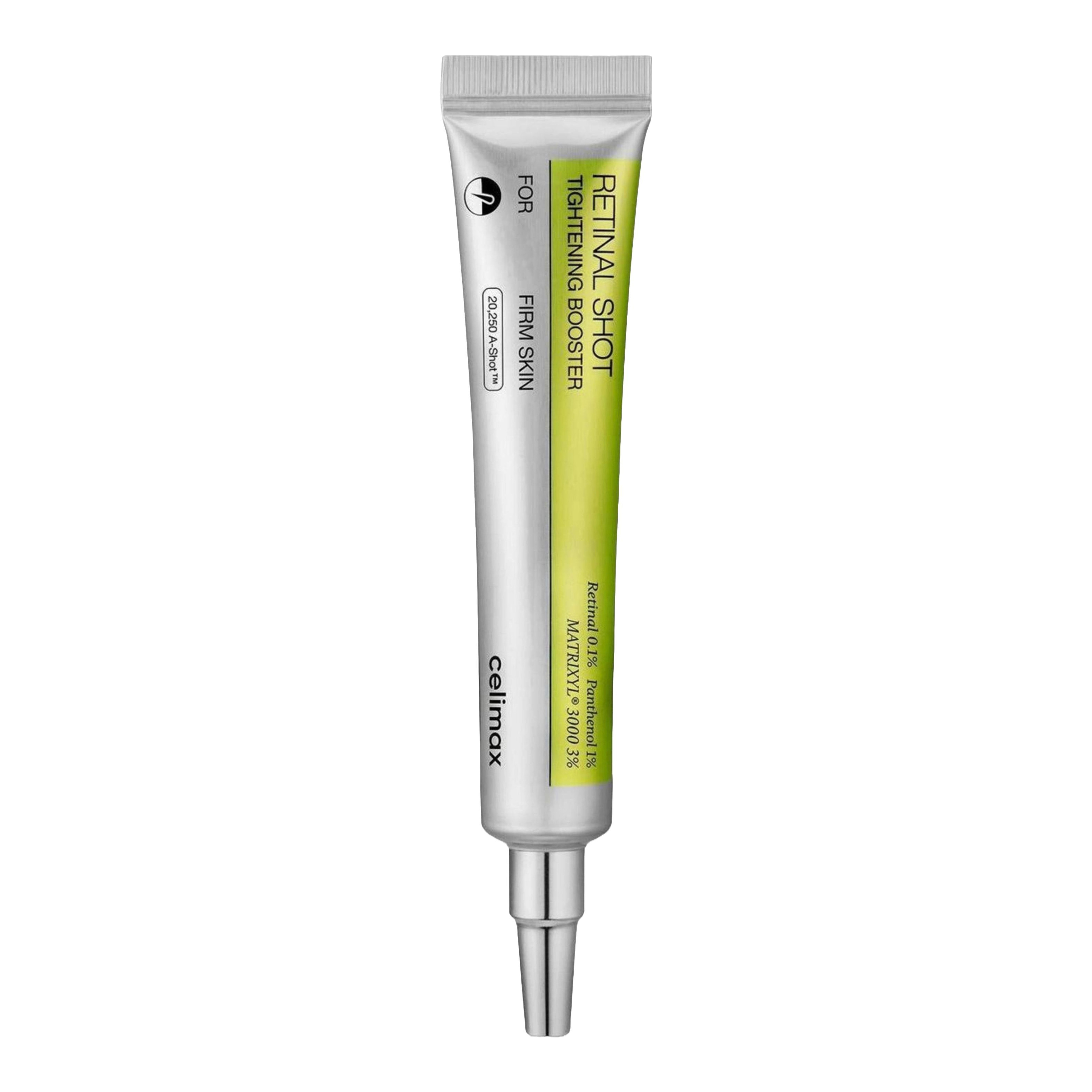
RUNG 1 · THE STARTER
Celimax The Vita A Retinal Shot
The one I point most people to first, and an honest value dupe for the expensive encapsulated retinals. Straightforward formula, no gimmick delivery, priced so a failed experiment costs you almost nothing. If you have never used retinal: twice a week at night for two weeks, then see how your skin answers before changing anything.
Image: Celimax
RUNG 2 · FOR SKIN THAT REACTS
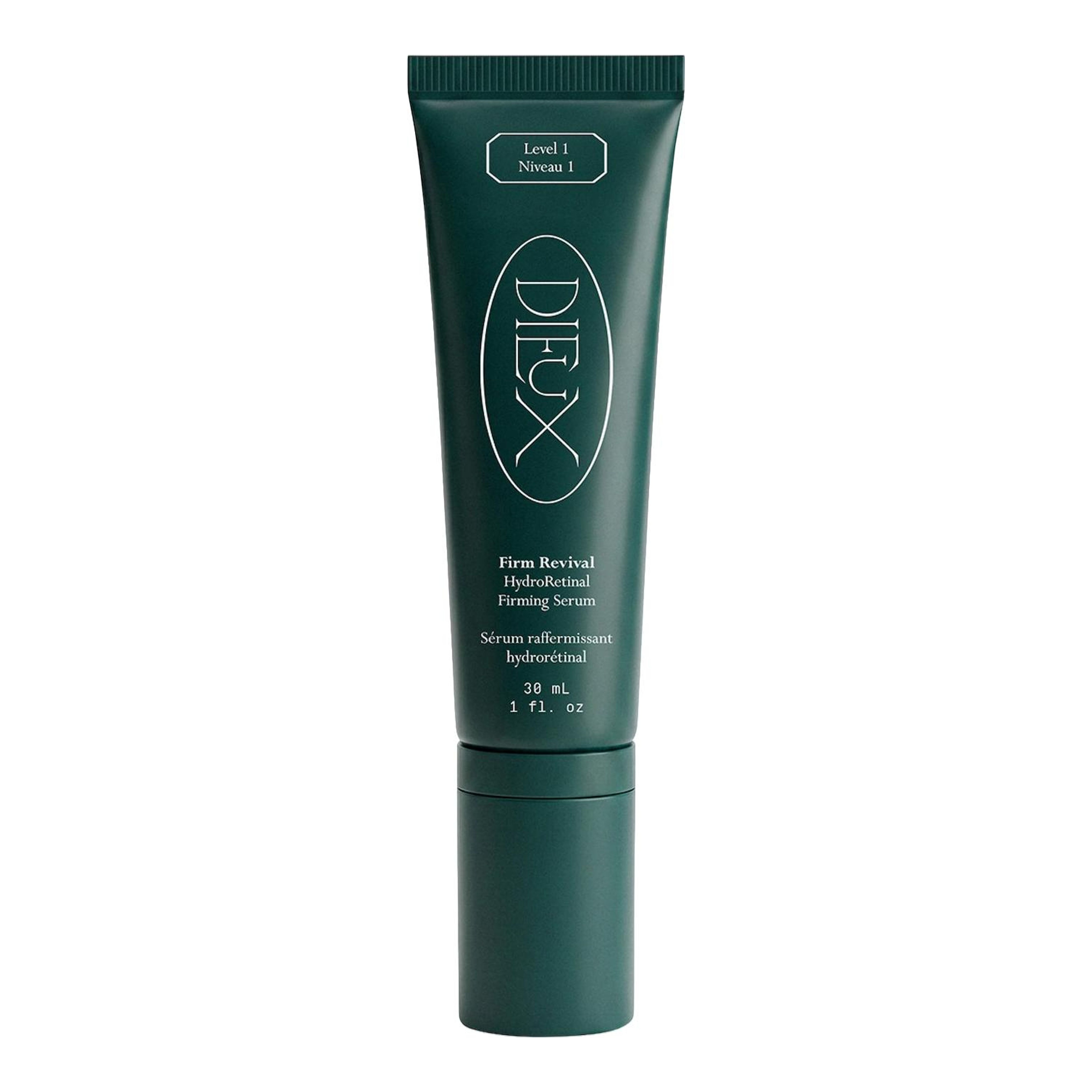
Dieux Firm Revival HydroRetinal
The outlier on this list: Dieux is a New York brand, not a Korean one. I am including it anyway because it is the formulation I would reach for if you have already tried a retinoid and found it too much — stinging, flaking, redness that did not settle after a couple of weeks. The point of a formulation built for reactive skin is not more active. It is the same active delivered with less provocation, which in practice is what decides whether you are still using it in three months.
Image: Dieux Skin
RUNG 3 · THE AGGRESSIVE ONE
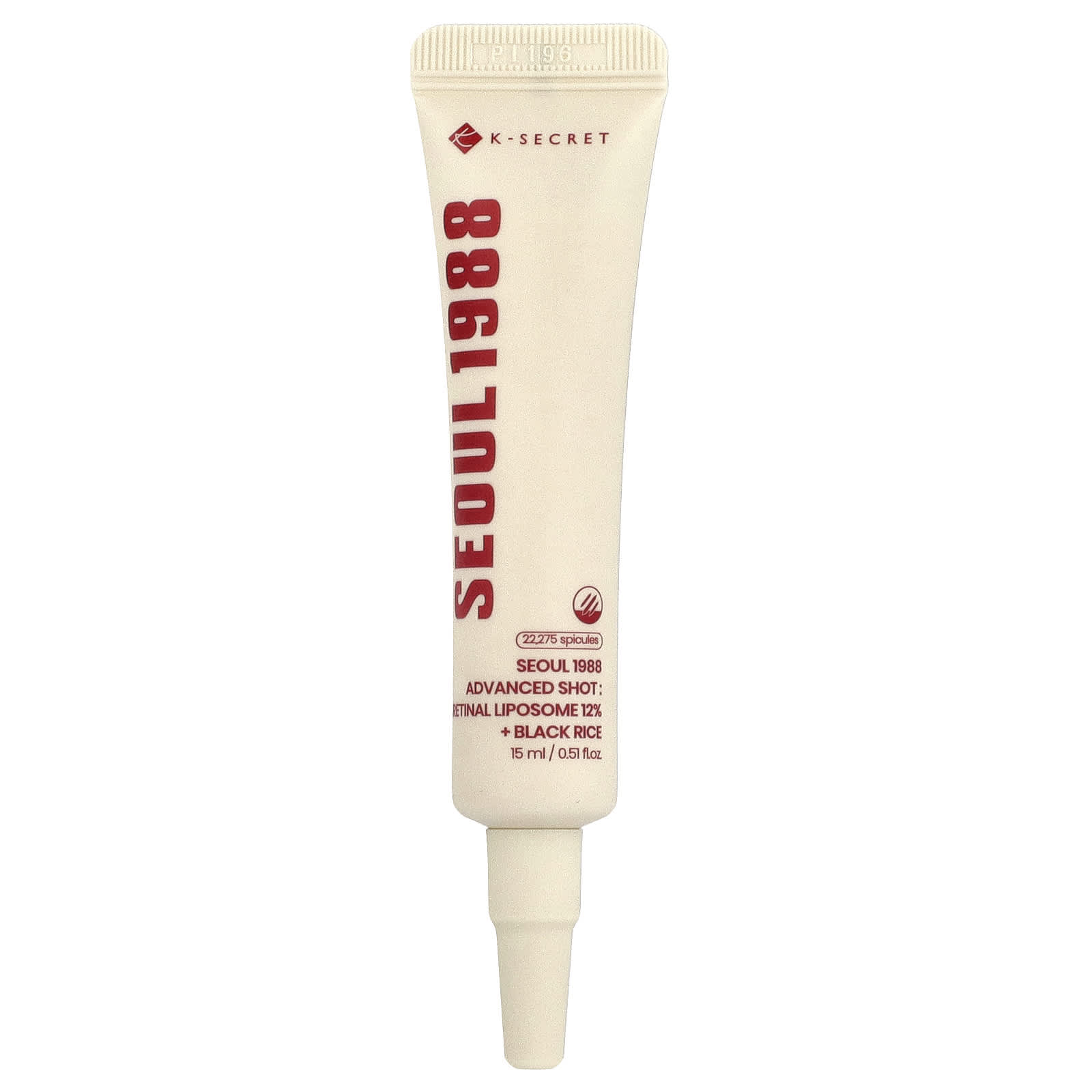
K-SECRET Seoul 1988 Advanced Retinal 12%
The shot driving most of the current buzz, and the best value of the three if your skin can take it. Also the most maximalist: a 12% retinal liposome complex, black rice extract, and delivery by roughly twenty-two thousand micro-spicules — microscopic needle-like structures that create temporary channels in the skin surface to carry ingredients deeper.
Where to buy it — read the caution below first
Image: K-SECRET Seoul 1988
The idea is not silly. Delivery is the real bottleneck in topical skincare and spicules are a serious attempt at solving it. But the dermatologists who have looked closely at this category are consistent about three cautions, and all three land directly on the patients I see every day:
Who should skip this one
- Anyone whose skin is still healing after a laser, a peel, or microneedling — wait until it has fully recovered.
- Anyone layering it with another retinoid, an AHA or a BHA. The combination stacks irritation.
- Anyone with rosacea or eczema, where deliberately disrupting the barrier tends to make things worse.
Note that a product which is itself a retinoid delivered by spicules is doing the second of those by design. That is a reasonable trade for healthy, resilient, non-reactive skin on the face. It is not a trade I would make for a post-procedure patient, and it is not one I would make on a neck. If that is you, rungs one and two do the same job without the barrier disruption. Where to buy it, if it suits you
And if what attracted you to spicules was the promise of better delivery — hold that thought, because it is the entire point of the next two sections.
Where a $14 retinal stops being enough: the neck
I resurface skin for a living — ContourTRL, Halo, Moxi, BBL. Which means most of what I think about is not the treatment itself. It is what happens in the weeks between treatments, when a result is either being protected or quietly given back. That is where a retinoid earns its place, and the neck is where the question gets hardest.
The neck is the hardest place on the body to use a retinoid. The skin is thinner than the skin on your face, it has fewer oil glands to buffer an active, and it sits over muscle that moves every time you turn your head. Retinoids do work there — the published work on retinol for neck aging is reasonable — but they tend to make everything red and flaky first, and most people quit before they reach the part that helps.
It is also the area patients ask me about most between laser sessions. They can see what the device did for the face and they want the neck to keep up, so they reach for whatever is on the counter — usually something formulated for facial skin, at facial strength.

So most neck products solve that problem by being weak. A face-strength retinal shot moved down onto the neck solves it by being irritating. Neither is what you want.
Why we stock Pavise, and what the splurge actually buys
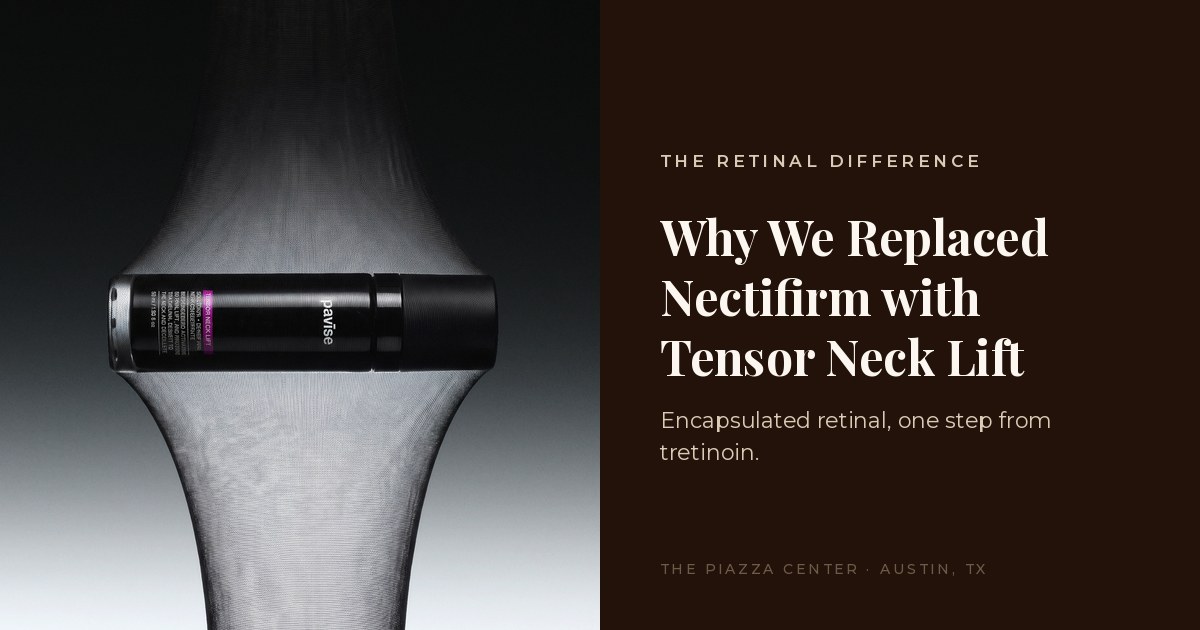
The product we carry for this is Pavise Tensor Neck Lift, and it costs about twelve times what the Korean shots do. I would rather explain the difference than just assert it.

WE STOCK THIS ONE · THE SPLURGE
Pavise Tensor Neck Lift
Retinal + DiamondCore® delivery · 50 mL · $176
Launching at our Austin clinic on November 15. The product page is live now — add your email there and we will tell you the morning it goes on sale, before we announce it anywhere else.
See the product pageIt uses retinal, same tier as above. What is different is what carries it: a delivery system Pavise calls DiamondCore. Pairing those two changes three things that matter specifically on thin skin.
Mechanism as described by Pavise. Claims have not been independently verified by The Piazza Center.
And then there is the one number in all of this I actually pay attention to. Most skincare data describes what is in the bottle. The measurement that predicts whether something works is how much of it gets into living skin — and on the neck, where the barrier is thin but the surface never stops moving, that is exactly where almost everything fails. Pavise’s testing puts absorption of the actives at roughly double when DiamondCore carries them.
I do not quote many numbers to patients. I quote that one, because delivery is the entire difference between a product that works on a neck and one that just sits on it. It is also, notably, the same problem the spicule products are trying to solve — without disrupting the barrier to do it.
The practical upshot is the part I care about most: this is the first neck retinoid I would hand to a patient who has never been able to tolerate tretinoin.
“Retinal is almost always a good idea. If a $14 bottle gets you using one consistently, buy the $14 bottle — consistency beats concentration every time. The splurge is worth it when the skin you are treating is thin enough that delivery becomes the whole problem. That is the neck, and that is the one place I will tell you to spend.”
— Dr. Rocco Piazza, MD, FACS
If you are treating skin between laser sessions
This is the situation most of our patients are actually in, and it changes the advice. After ContourTRL, Halo, Moxi or BBL, the skin is doing the useful part of its work for weeks after you leave — and what you put on it in that window either protects the result or undoes it.
Three rules I give people, and they are not negotiable:
- Nothing active until you are cleared. Retinoids, acids and spicules all come off the shelf until your skin has fully recovered. Ask us when — it depends on the device and on you, not on a number from the internet.
- When you restart, restart lower than you think. Resurfaced skin is more permeable than it was. The retinal that was comfortable before the treatment can be too much after it.
- Sunscreen is the whole investment. Not an accessory to it. Pigment that comes back after a laser almost always came back through UV.
Within those rules, a well-tolerated retinal is the single best thing most people can be doing between appointments — it keeps turnover going in the gap and means each session starts from better skin than the last one did.
How I would actually start
- If you have never used a retinoid: start with an inexpensive encapsulated retinal, twice a week, at night. Give it two weeks before you judge it.
- If retinol stopped doing anything: move up to retinal rather than giving up on the pathway. That is usually the right next step, not a different ingredient entirely.
- If tretinoin has burned you before: this is the tier to try, and the delivery matters more than the number on the label.
- If your concern is the neck and décolleté: use something formulated for it. One to two pumps at night, upward from the chest to the jawline.
- Sunscreen in the morning, without exception. Retinal makes skin sun-sensitive, and the neck is where sun damage shows first.
An honest word about what none of this does
Every product on this page — the $14 one and the $176 one — improves crepey texture, horizontal lines and tone. None of them tightens loose skin, and none of them touches the vertical bands that come from the platysma muscle underneath. That is a surgical problem, and I do not perform neck lifts. If that is what you are looking at, I will tell you plainly and refer you to a surgeon who does.
What we do treat — and treat well — is the quality of the neck skin itself: crepey texture, sun damage, pigment, uneven tone. That is laser and light work, and it is a genuinely different question from laxity. Most people who come in asking about neck creams turn out to be in this second group, which is good news, because it is the group a retinoid and a resurfacing plan can actually help.
If you are not sure which of the two you are looking at in the mirror, that is a short conversation and worth having before you spend anything. And it is worth having with me specifically, for a slightly contrarian reason: I have no incentive to steer you toward surgery, because I do not do the surgery. The only neutral answer to “do I need a neck lift?” comes from someone who does not sell one.
Frequently asked questions
Is retinal stronger than retinol?
It is closer to the active form. Retinol takes two conversion steps in the skin to become retinoic acid; retinal takes one. That generally means faster visible results at a comparable concentration, with somewhat more irritation than retinol and considerably less than prescription tretinoin.
Are Korean retinal serums as good as medical-grade ones?
For the face, often yes — the ingredient is the same tier and the formulations are competent. The difference shows up in delivery and in stability, which matters most on thin skin like the neck and décolleté. For a first retinal, price is not the limiting factor.
Can I use retinal on my neck?
Yes, but use something formulated for it rather than moving a face product down. Neck skin is thinner, has fewer oil glands, and flexes constantly, so it reacts faster and recovers more slowly. Start two nights a week and build up.
What if tretinoin was too irritating for me?
Most people who cannot tolerate tretinoin do well on a lower tier of the same pathway rather than abandoning retinoids altogether. Retinal, particularly in a buffered or encapsulated formulation, is usually the right next thing to try.
What retinal serum does Kylie Jenner use?
In a nighttime routine she shared online, Kylie Jenner applied Celimax The Vita-A Retinal Shot, a 0.1% retinal serum, under her eyes. She has no connection to our practice. It is a sensible starter retinal for most faces; start two nights a week and build up.
Are spicule products safe to use with retinal?
Generally not layered together. Spicules deliberately disrupt the skin barrier to improve penetration, and stacking that with a retinoid, AHA or BHA compounds irritation. They are also best avoided on healing post-procedure skin and in rosacea or eczema.
References
- Sullivan N, et al. Efficacy of a topical retinol for the signs of neck aging. J Cosmet Dermatol. 2023. doi:10.1111/jocd.15904
- Efficacy and safety of retinaldehyde 0.1% and 0.05% creams used to treat photoaged skin: a randomized double-blind controlled trial. Record
- Topical retinaldehyde on human skin: biologic effects and tolerance. PDF
- A randomized, double-blind, split-face study comparing three retinol-based products vs three tretinoin-based products in subjects with moderate to severe facial photodamage. J Drugs Dermatol. Abstract
Spicule cautions summarized from published commentary by board-certified dermatologists on barrier disruption, post-procedure use, and rosacea. Absorption and delivery figures for DiamondCore® are Pavise’s own reported testing.
Individual results vary. This article is for educational purposes and does not constitute medical advice or a treatment recommendation for any individual. Product claims attributed to manufacturers have not been independently verified by The Piazza Center. Links to products we do not sell may be affiliate links. Speak with a qualified provider about your own skin before starting any retinoid.
Not sure which tier your skin needs?
Pavise Tensor Neck Lift launches at our Austin clinic on November 15. If you want to know whether a topical is the right answer for your neck, whether laser resurfacing would do more, or whether you are looking at laxity that no cream will touch — we can tell you in one short conversation. We treat the first two. For the third, we will point you to the right surgeon.
Book a Consultation See Pavise Tensor Neck Lift
Dr. Rocco Piazza II
Board-Certified Plastic Surgeon
Dr. Piazza is a board-certified plastic surgeon practicing in Austin, TX. He specializes in aesthetic and reconstructive surgery with a focus on natural results.