


Expertly Written By
Dr. Rocco Piazza, MD, FACS
Board-Certified Plastic Surgeon practicing in Austin, Texas, and the physician who selects every product on our skincare shelf.
At a Glance
Why the cast happens: Zinc oxide particles scatter visible light, and clumps scatter more
Best fix for most deep skin tones: A tinted mineral formula in a shade that matches
For melasma: Iron-oxide tints add visible-light protection, with independent trial data behind them
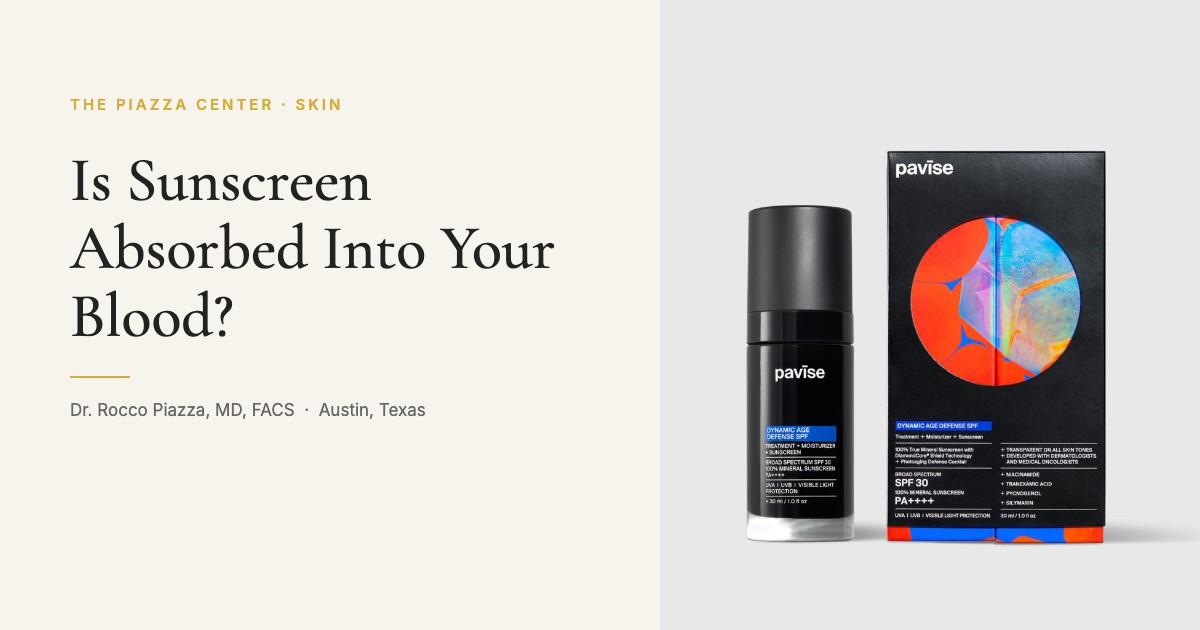
When no tint matches: An advanced clear zinc — we stock Pavise Dynamic Age Defense SPF 30
Under makeup: Thin layers, a few minutes to set, then pat foundation on
Why This Matters: A sunscreen that makes you look grey in photos does not get worn, and the people most likely to give up on mineral sunscreen are often the people with melasma and post-inflammatory pigment who need visible-light protection most. Individual results vary.
Patients with deeper skin tones tell me the same story. They were told mineral sunscreen is the gentle option, bought one, looked in the mirror and saw a purple-grey film. Most went back to a chemical sunscreen, which is a perfectly good decision. Some went back to nothing, which is not.
There are now real ways around the white cast. Which one is right depends on two questions: do you need visible-light protection for pigment, and can you find a tint that matches your skin?
Key Takeaways
- White cast comes from zinc particles scattering visible light. Smaller, evenly dispersed particles look clearer.
- For melasma and dark spots, a tinted sunscreen with iron oxides has the strongest independent evidence, because it also blocks visible light.
- If no tint matches your skin, a well-made clear zinc formula such as Pavise is the alternative. Chemical sunscreen is also a fine choice.

Which Mineral Sunscreen Won't Leave a White Cast?
A mineral sunscreen is least likely to leave a cast if its zinc oxide is finely and evenly dispersed, or if it is tinted to your skin tone with iron oxides. For deep skin and for melasma, a matched tinted formula is usually the best first choice. When no tint matches, a clear zinc formula engineered for transparency, such as Pavise Dynamic Age Defense SPF 30, is the alternative we stock.
Why Zinc Oxide Leaves a White Cast
Zinc oxide is a white mineral — the same compound in old-school lifeguard nose stripes. Whether it looks white on skin comes down mostly to particle size.
Visible light runs from roughly 380 to 780 nanometres. Particles in that size range or larger scatter visible light back at your eye, so the film looks white. Once particles are smaller than visible wavelengths, they stop scattering visible light noticeably and the film looks clear, while still absorbing UV. (Penn State MRSEC)
The catch is that tiny particles like to clump. A clump behaves like a large particle, so a formula built on small zinc can still go chalky if it is poorly dispersed. UCLA chemists described this in February 2026: the clumps scatter visible light and leave a white or grey residue that is most visible on darker skin. (UCLA Health)
One common belief is worth correcting while we are here. Mineral sunscreens do not mainly work by reflecting UV like a mirror. Dr. Michelle Wong of Lab Muffin Beauty Science walks through the data: about 95% of the UV that mineral filters block is absorbed, and only a few percent is scattered. The scattering you can see — the white cast — is mostly a cosmetic side effect. (Lab Muffin)
Clumped or large zinc
Particles at or above visible-light wavelengths scatter visible light. You see a white or grey film.
Fine, evenly dispersed zinc
Particles smaller than visible wavelengths let visible light pass but still absorb UV. The film looks clear.
Visible light spans roughly 380–780 nm. Sources: Penn State MRSEC; UCLA Health (Feb 2026); Lab Muffin Beauty Science. Diagram not to scale.
Zinc is also weaker per gram than most chemical filters. Dr. Wong notes that zinc-only products tend to top out around SPF 60 before they become too chalky to wear, which is why so many mineral formulas sit at SPF 30 to 50. (Lab Muffin)
Video: Dr. Michelle Wong, Lab Muffin Beauty Science, on what zinc oxide does and does not do better.
Tinted vs. Untinted: Why Iron Oxides Matter for Melasma
SPF measures UVB. "Broad spectrum" covers UVA. Neither label tells you anything about visible light, and visible light matters for pigment.
In a study of 22 volunteers summarised in a 2020 review, visible light produced pigmentation in skin types IV to VI that was darker and lasted to the end of the study period, while the two volunteers with lighter skin (type II) showed none. (Photochemical & Photobiological Sciences, 2020) That is a large part of why melasma and post-inflammatory hyperpigmentation are so stubborn in deeper skin.
Iron oxides — the pigments that give tinted sunscreens their colour — absorb visible light. In a double-blind randomised trial, 61 melasma patients using hydroquinone were given either a UV-plus-visible-light sunscreen containing iron oxide or a UV-only sunscreen. After eight weeks, the iron-oxide group improved more on every measure. (Castanedo-Cazares et al., 2014) A separate randomised trial in JAAD found fewer melasma relapses with a sunscreen covering UV and short-wavelength visible light. (Boukari et al., JAAD 2015)
Extra improvement with an iron-oxide sunscreen vs. UV-only, at 8 weeks
Colorimetric values
Melasma severity score (MASI)
Melanin assessment
61 patients completed, all also using hydroquinone. Source: Castanedo-Cazares JP et al., Photodermatol Photoimmunol Photomed 2014;30(1):35–42. Bars scaled to the largest value.
This is why our default advice for melasma is a tinted sunscreen in a shade that matches. We go deeper in zinc oxide for melasma and why sunscreen alone often fails melasma.
The Options, Side by Side
| Type | Cast on deep skin | Visible-light protection | Best for |
|---|---|---|---|
| Classic untinted zinc | Often visible | Limited | Lighter skin and body use |
| Tinted mineral (iron oxides) | None if shade matches | ✓ Best-studied | Melasma, PIH, anyone a shade suits |
| Pavise Dynamic Age Defense | Pavise reports transparent on all tones | Claimed by Pavise; manufacturer data | Mineral fans no tint has matched |
| Chemical or hybrid | Usually none | Only if tinted | Anyone who likes the feel; often lightest texture |
Summary of the sources cited in this article. Pavise claims are the manufacturer's own.
A word on that last row. Chemical sunscreens are often the easiest way to get zero cast on deep skin, and Dr. Michelle Wong makes the case well that they are not harmful at the levels used. (Lab Muffin) I agree with her. If you are choosing mineral because you read that chemical filters are dangerous, read what the FDA absorption studies actually found first.
Also worth knowing: a popular "tinted mineral" option we stock, EltaMD UV Clear Tinted SPF 46, is technically a hybrid. Its actives are 9% zinc oxide and 7.5% octinoxate. (Bluemercury) That is fine; just know what you are buying. We compare it directly in Pavise vs. EltaMD UV Clear Tinted.
How Pavise Approaches the White Cast
I wear mineral by preference, and Pavise Dynamic Age Defense SPF 30 is the one that solved the cast for me. Here is what the company says it does, and where the evidence stands.
- 15% zinc oxide, 100% mineral, broad spectrum SPF 30, PA++++.
- DiamondCore. Pavise pairs zinc oxide with a nanodiamond core and reports a uniform particle size and shape, which it says is what keeps the film transparent. See DiamondCore explained.
- No iron oxides, no tint. Pavise states it is transparent on all skin tones and claims visible-light protection without pigments. That claim rests on manufacturer-funded data rather than independent trials like the iron-oxide studies above.
- Pigment-minded extras: niacinamide and tranexamic acid, plus Pycnogenol and silymarin as antioxidants.

What it cannot do: it will not match the visible-light evidence of a good iron-oxide tint, it is SPF 30 rather than 50, and at $148 it is an expensive bottle. If your melasma is active, I would rather you wear a matched tinted sunscreen — or layer a tinted product over Pavise — than rely on a clear formula alone.

Reel: Dr. Rocco Piazza (@roccopiazzamd) on Pavise Dynamic Age Defense.
"For melasma, I start with a tinted sunscreen that matches, because that is where the evidence is. Pavise is what I reach for when someone likes mineral and has never found a tint that looks like their skin. Either way, the right sunscreen is the one you will wear every day." — Dr. Rocco Piazza, MD, FACS
Wearing Mineral Sunscreen Under Makeup
- Use enough, in two thin passes rather than one thick one. Thick single layers are what pill and streak.
- Give it a few minutes to set before anything goes on top.
- Pat, do not rub, foundation on. Rubbing drags the sunscreen film and leaves thin patches.
- Reapply outdoors every two hours. Over makeup, a tinted mineral product or SPF powder is easier than starting over, though powder alone rarely gives full coverage.
- Remove it properly at night. Mineral sunscreen is designed to cling. We use Pavise Gentle Amino Powerwash, which Pavise states removes mineral SPF in one wash.
If you want the whole routine in one box, the Pavise 3-Step Essential Kit pairs the SPF with Powerwash and Bioadaptive Stress Repair, a night serum Pavise positions for dyspigmentation and redness, for $44 less than buying the three separately.

Mineral Sunscreen and White Cast: Common Questions
Why does mineral sunscreen leave a white cast?
Zinc oxide and titanium dioxide particles, especially larger or clumped ones, scatter visible light back toward the eye. Finer, well-dispersed particles scatter less and look clearer.
What is the best mineral sunscreen for dark skin?
A tinted mineral sunscreen in a shade that matches is usually the best start. If no shade works, a clear zinc formula designed for transparency, such as Pavise, is the alternative. A chemical sunscreen is also a good choice.
Is tinted sunscreen better for melasma?
The evidence favours it. Iron oxides in tinted sunscreens absorb visible light, and randomised trials found better melasma outcomes and fewer relapses with UV-plus-visible-light sunscreens. Individual results vary.
Does zinc oxide protect against visible light?
Untinted zinc offers limited visible-light protection on its own. Iron oxides add most of it. Pavise claims visible-light protection without a tint; that claim comes from the manufacturer.
Can I wear mineral sunscreen under makeup?
Yes. Apply it in thin layers, let it set for a few minutes, and pat foundation on rather than rubbing. Reapply with a tinted mineral product when you are outdoors.
Is mineral sunscreen better than chemical for sensitive skin?
Dermatologists often suggest mineral for sensitive skin, and many people find it gentler. It is a preference, not a rule; some people break out more with mineral formulas. Individual results vary.
Individual results vary. The products discussed are cosmetic and over-the-counter products and are not intended to diagnose, treat, cure or prevent any disease. Manufacturer claims are attributed to the manufacturer. Cited studies are linked to their published sources. This article is for educational purposes and does not constitute medical advice; speak with a qualified physician about what is appropriate for your skin.
Melasma, Dark Spots, or Just Tired of the Cast?
Dr. Rocco Piazza and our Austin aesthetics team can match you to a sunscreen that suits your skin tone and your pigment, and build the treatment plan around it.
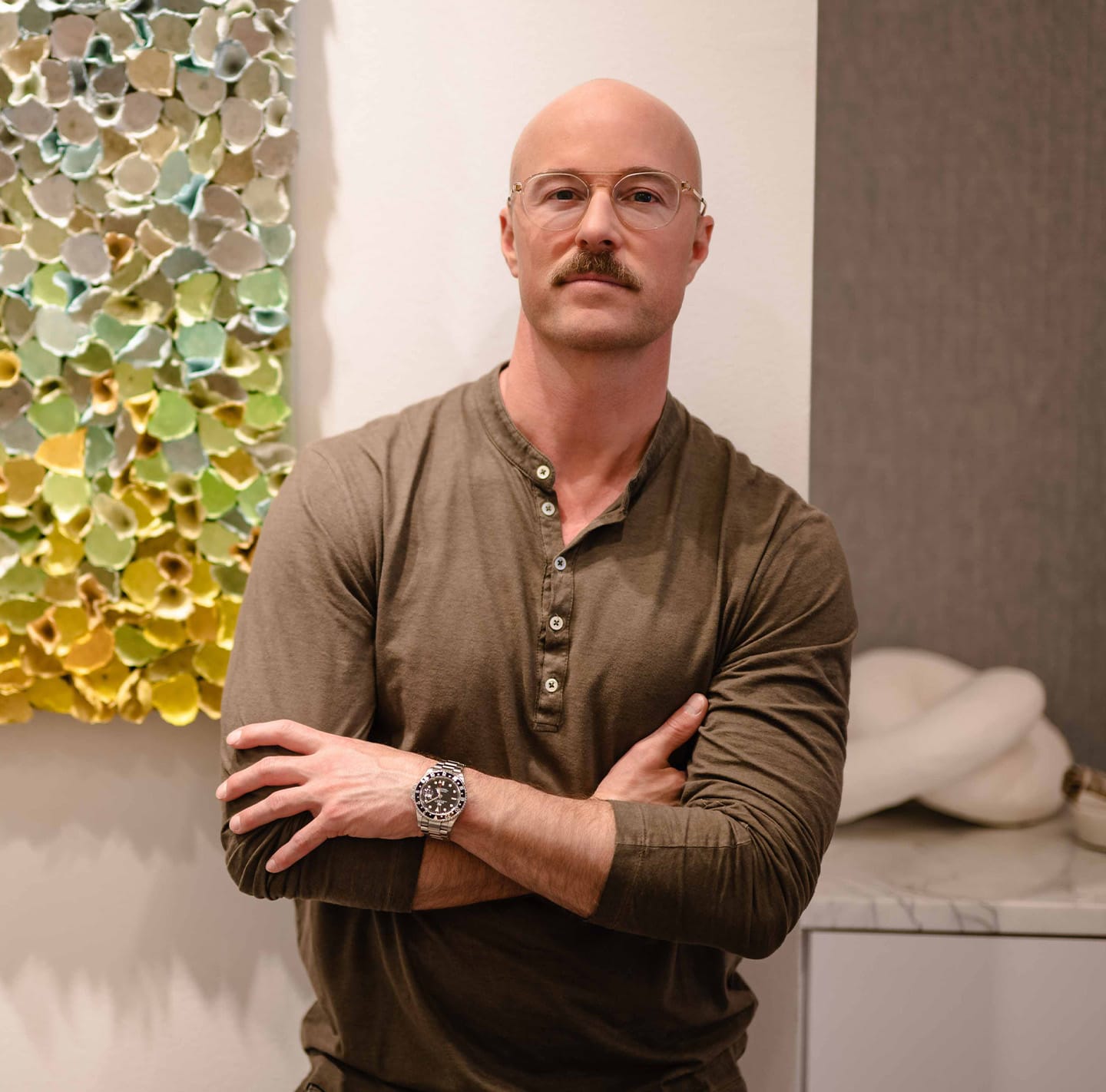
Dr. Rocco Piazza II
Board-Certified Plastic Surgeon
Dr. Piazza is a board-certified plastic surgeon practicing in Austin, TX. He specializes in aesthetic and reconstructive surgery with a focus on natural results.