


Expertly Written By
Dr. Rocco Piazza, MD, FACS
Board-Certified Plastic Surgeon practicing in Austin, Texas, and the physician who selects every product on our skincare shelf.
At a Glance
Who it suits: Dull, congested or reactive skin — and anyone who wants a treatment step that doesn't sting
The active: Catechins, chiefly EGCG, the antioxidant group green tea is known for
What it does well: Antioxidant defence, calming visible redness, a temporary tightening effect from caffeine
What it will not do: Replace sunscreen, a retinoid, or anything that treats acne medically
Frequency: Two to three times a week, as a treatment step and not a routine
Why This Matters: A mask is the easiest category in skincare to oversell. Matcha earns its place for antioxidant support and comfort on reactive skin — not as a treatment for acne or pigment. Judging it by what it actually does is what keeps it in a routine instead of in a drawer. Individual results vary.
Matcha turns up in skincare for the same reason it turns up in coffee shops: it is a concentrated form of something people already trust. Whole shade-grown leaf, ground rather than steeped, so you take in the leaf itself instead of an infusion of it.
That concentration is real, and it is the honest basis for putting it on skin. What follows is what the antioxidants in matcha actually do at the surface, what they do not do, and where a mask sensibly sits in a routine.

The Antioxidant Argument, Stated Carefully
Matcha is rich in catechins, principally epigallocatechin gallate (EGCG). Catechins are antioxidants: they help neutralise free radicals, the reactive molecules generated by UV exposure and pollution that contribute to visible ageing over time.
Applied topically, that is a defensive benefit. It supports the skin against environmental stress. It is not a corrective one — an antioxidant does not remove a wrinkle that is already there, and any product sold on that promise is overselling.
The distinction matters because it tells you where a matcha mask belongs: alongside daily sun protection, as support, rather than as a substitute for the actives that actually remodel skin.
Calming, and Why Reactive Skin Tolerates It
The more immediately noticeable benefit for most people is comfort. Matcha's polyphenols have anti-inflammatory properties, which in practice means less visible redness and less of the tight, provoked feeling that follows a stronger treatment.
For skin that reacts to most things — rosacea-prone, barrier-compromised, or simply over-exfoliated — that tolerance is the whole appeal. A mask you can use without consequence is worth more than a stronger one you abandon after two tries.
Tone, Texture and the Caffeine Effect
Two further effects are worth naming precisely, because both are commonly exaggerated.
Tone. Regular use can support a more even-looking complexion and reduce dullness. This is a surface-radiance effect. It is not pigment correction: melasma and post-inflammatory hyperpigmentation need targeted treatment and sun protection, and no mask substitutes for that.
Tightening. Matcha contains caffeine, which produces a temporary tightening and de-puffing effect. The word doing the work is temporary. It is a real, visible, short-lived change — genuinely useful before an event, and not a structural one.
Acne and Oil: Supportive, Not Therapeutic
Green tea compounds have mild antibacterial activity and can help moderate the feel of excess oil, which is why matcha masks are often marketed to acne-prone skin. Used alongside a proper regimen, a calming mask can make an active routine more tolerable.
But a mask is not acne treatment. If you are breaking out persistently, the conversation to have is about a regimen — and in our practice, often about a hypochlorous acid step for inflammation control, which is gentler than benzoyl peroxide and easier to stay consistent with. A mask supports that work; it does not do it.
Where the CO2 Pairing Comes In
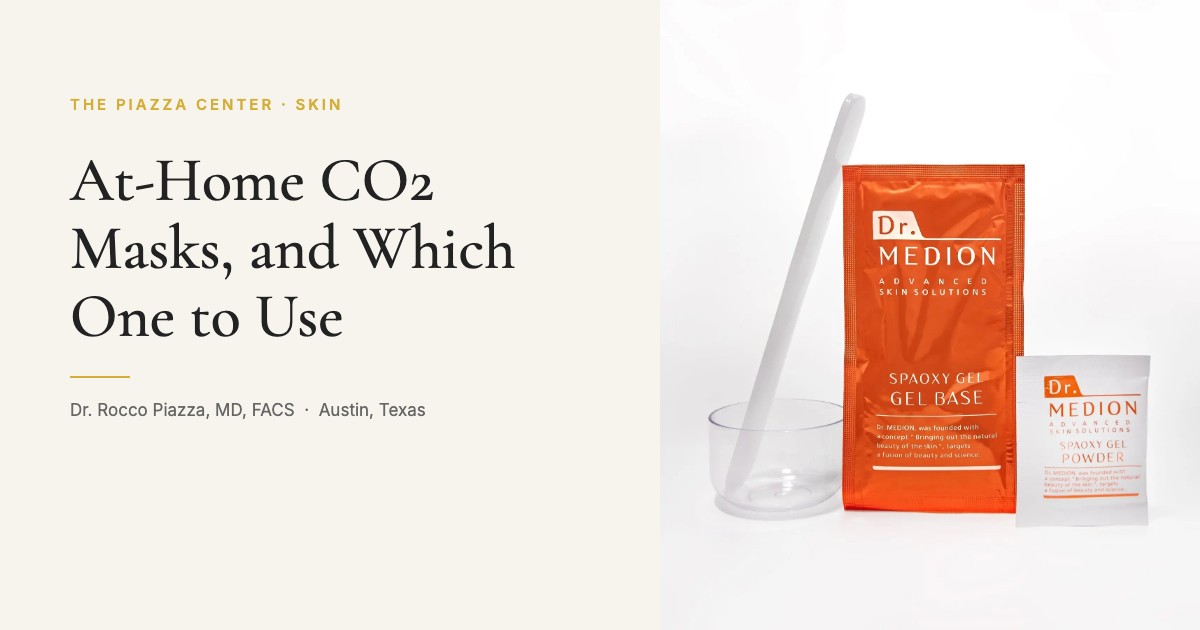
The matcha product we stock is Dr. Medion's Spaoxy Matcha CO2 Gel Mask, which pairs shade-grown Japanese matcha with carboxy therapy rather than relying on the botanical alone.
Carboxy therapy works on a different mechanism: controlled CO2 exposure at the skin surface prompts a local increase in microcirculation. The reason to combine the two is that they are not redundant — one is antioxidant support, the other is a circulatory effect, and the visible result of better microcirculation is the flush of colour people describe as glow.
"Matcha on its own is a good antioxidant step. What interested me about pairing it with CO2 is that the two do different jobs — one defends, one moves blood through the skin. That is a more sensible combination than stacking two antioxidants and calling it a treatment." — Dr. Rocco Piazza, MD, FACS

Making One at Home, and Its Limits
A kitchen version is genuinely fine for the antioxidant and calming benefits, and costs almost nothing:
- 1 teaspoon culinary-grade matcha
- 1 tablespoon raw honey
- 2 teaspoons warm water, or aloe vera gel for oilier skin
Mix to a thick paste, apply to clean skin, leave 15–20 minutes, rinse warm. Two to three times weekly.
What a DIY version cannot replicate is formulation: a stabilised delivery system, controlled concentration, and in the case of the Spaoxy mask the CO2 chemistry, which is not something you can assemble at home. If the goal is an antioxidant treat, make it yourself. If the goal is the circulatory effect, that is a formulated product.
Patch test first. Natural does not mean non-reactive — try it behind the ear or on the inner wrist before putting it on your face, particularly if you are prone to contact reactions.
How to Fit It Into a Real Routine
Use it as a treatment step, not a daily one. Cleanse first; a mask on unprepared skin is mostly wasted. Afterwards, go straight to your moisturiser while skin is still damp, and keep sunscreen every morning regardless — antioxidant support and UV protection are complements, not alternatives.
If you are in active treatment with us — post-laser, post-peel, post-microneedling — ask before you add anything. Timing matters more than the product in the first week, and that advice is specific to your procedure and your skin.
Matcha Face Masks: Common Questions
How quickly will I see anything?
The tightening and radiance effects are immediate and short-lived — you will see them after the first use and they fade. The antioxidant and tone benefits are cumulative and need several weeks of consistent use at two to three times a week. Individual results vary.
Can a matcha mask replace my daily skincare?
No. It is a treatment step that complements cleansing, moisturising and daily SPF. Nothing used twice a week substitutes for what you do every day.
Is matcha better than regular green tea for skin?
It is more concentrated, because matcha is the whole shade-grown leaf ground to powder rather than an infusion. More concentrated is not automatically better on skin — formulation and stability decide how much of that concentration actually reaches you.
Will it help my acne?
It can make an acne routine more comfortable and help with the look of redness, but it is not an acne treatment. Persistent breakouts deserve a proper regimen rather than a mask.
Is it safe for sensitive or rosacea-prone skin?
Usually, and tolerance is one of its strengths. Patch test anyway, and if you have an active flare, treat the flare before adding anything new.
Can I use it after a laser or a peel?
Ask your provider first. Post-procedure skin follows a specific aftercare sequence and the right answer depends on which treatment you had and how recently.
Individual results vary. The products discussed are cosmetic products and are not intended to diagnose, treat, cure or prevent any disease. This article is for educational purposes and does not constitute medical advice; speak with a qualified physician about what is appropriate for your skin.
Not Sure What Your Skin Actually Needs?
Dr. Rocco Piazza and our Austin aesthetics team can tell you whether a mask is worth adding — or whether something else would move the needle further.
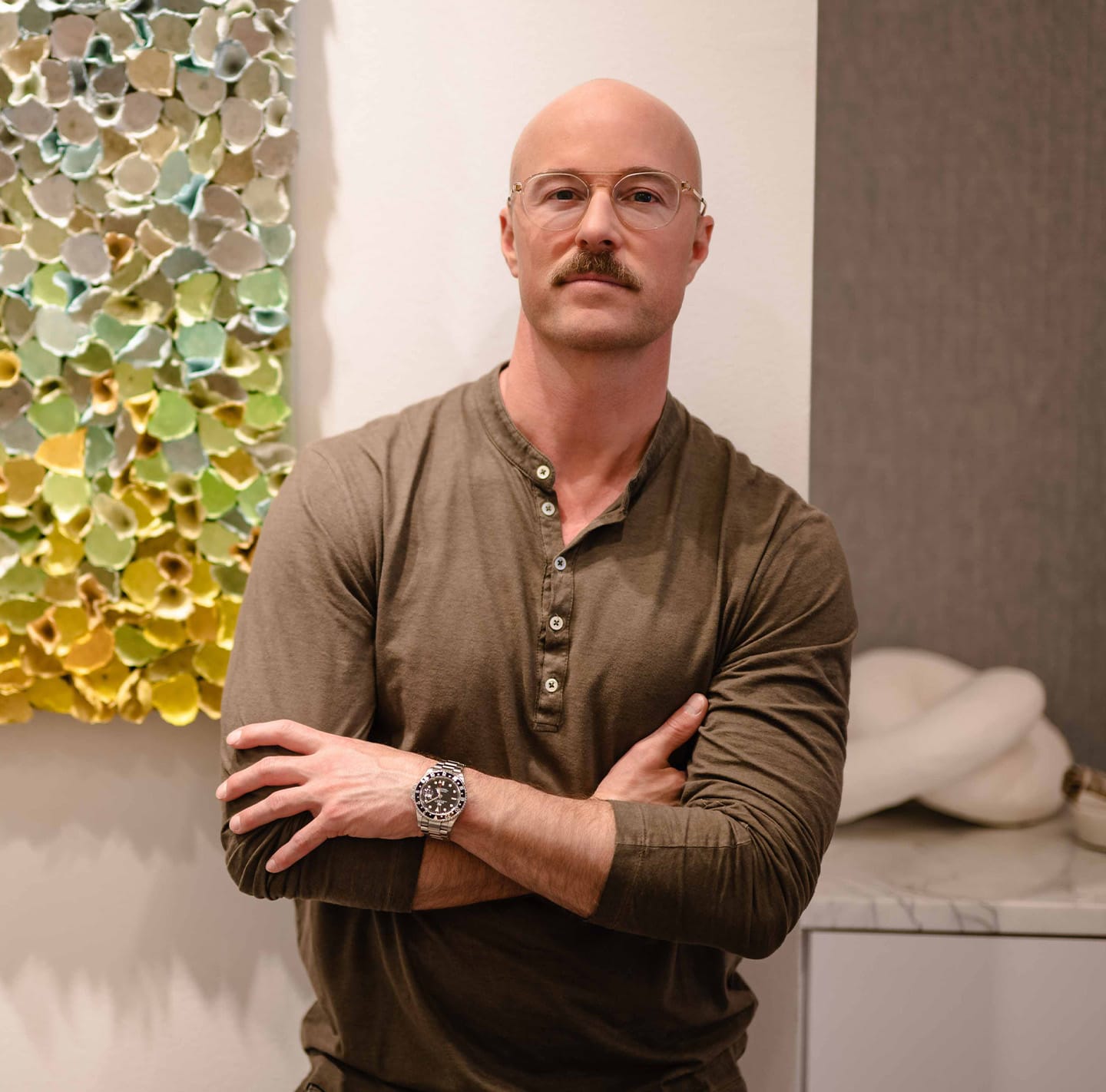
Dr. Rocco Piazza II
Board-Certified Plastic Surgeon
Dr. Piazza is a board-certified plastic surgeon practicing in Austin, TX. He specializes in aesthetic and reconstructive surgery with a focus on natural results.