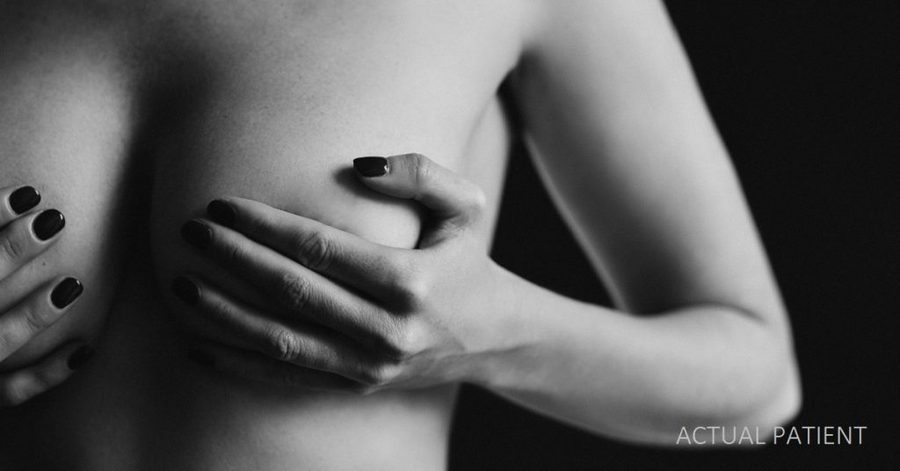



One of the most common questions I hear from breast augmentation patients is about scarring — where the incision goes, what it looks like as it heals, and whether it will always be visible. It's a fair question, and the honest answer is that placement, technique, and how closely you follow post-op care all matter more than people expect.
Where's the safest place for a breast augmentation incision?
Where Is the Incision Placed?
There are three incision locations commonly used in breast augmentation: under the breast (inframammary), around the areola (periareolar), or through the armpit (transaxillary). Each has tradeoffs in scar location, visibility, and how much control the surgeon has over implant placement during surgery.
My preferred approach is the inframammary incision — placed directly within the natural fold under the breast, where it's concealed by the breast's own shape. Implants are placed using a sterile no-touch insertion method, which reduces tissue trauma and bacterial exposure and is central to a preservation-first approach to augmentation. This is also the incision I use with Motiva Ergonomix® Smoothsilk® and Natrelle INSPIRA® SoftTouch implants.
What Does Healing Actually Look Like?
Not everyone heals on the same timeline, and that's normal. In the first few days after surgery, it's common to notice real changes day to day — tightness, swelling, and a feeling of restriction that gradually eases. Day one looks different from day three, and day three looks different from day seven. None of that on its own is a sign anything is wrong; it's the expected early progression of healing.
Breast aug healing: day 1 vs. day 3 vs. day 7
For the specific silicone gel and scar-sheeting protocol I recommend once the incision has closed, see our full post-surgical scar protocol — it covers exactly what to use and when, from the first weeks through full scar maturation.
Feeling the Implant Near the Incision
It's a common concern: noticing you can feel the implant near the incision line and wondering if that means something went wrong. Most of the time it doesn't — it usually comes down to how the surgery was performed, including incision placement and how the implant pocket was created, rather than a problem with the implant itself.
Feeling your implant near the incision
If something feels off — persistent pain, unusual firmness, or a change in shape — that's always worth a call to our office rather than waiting it out. Most sensations near a well-placed inframammary incision are a normal part of healing and settle as swelling resolves and tissue relaxes around the implant.
Visit our photo gallery to see real breast augmentation results, or request a consultation online to talk through incision placement and healing for your own anatomy. You can also reach us at (512) 288-8200.
Dr. Rocco Piazza II
Board-Certified Plastic Surgeon
Dr. Piazza is a board-certified plastic surgeon practicing in Austin, TX. He specializes in aesthetic and reconstructive surgery with a focus on natural results.