



Expertly Written By
Dr. Rocco Piazza, MD, FACS
Board-Certified Plastic Surgeon & Austin Motiva® Implant Specialist
Dr. Piazza answers the questions patients ask most about Motiva® implants: who Preservé is for, how recovery works, which implant and placement fit your body, how to choose a size, and what to know about safety and warranty. Each answer is in his own words, the way he would explain it in a consultation.
In this guide
Preservé
- Motiva Preservé: are only certain patients candidates for this?
- What is the recovery time for subfascial Motiva implant placement?
- Age 40, getting Motiva implants: which placement am I a better candidate for, subglandular or submuscular?
Ergonomix and implant choice
- Is Motiva Ergonomix 2 (Joy) really better than Ergonomix?
- Athletic / gym junkie: are Motiva Joy implants a good fit?
- Mentor anatomical or Motiva Ergonomix?
- Can Motiva Ergonomix rotate or flip?
- Is the demi or the high profile Ergonomix better for upper-pole fullness?
- Is there much difference between the Motiva round demi and mini?
Sizing
- Struggling to choose size: age 40, 230cc vs. 275cc, went from a 32D to a 32A after 3 pregnancies.
- Age 25, 154cm, 50kg, petite: will 275cc Full give noticeable but natural volume?
- 32B to a full C: will Ergonomix give me what I'm looking for?
Safety and trust
- Have surgeons seen a higher capsular contracture rate with subglandular Motiva?
- Is the Motiva extended warranty worth it?
- Do you recommend Motiva implants with the microchip?
Motiva Preservé: are only certain patients candidates for this?
Preservé is actually a wonderful option for a very broad range of patients. There are very few patients who I think could not benefit from a tissue-preservation approach to breast augmentation.
The key is understanding your anatomy and, most importantly, your expectations for the outcome. Like any breast augmentation, there are limitations. In very lean patients or women with very little natural breast tissue, there can be a greater chance of seeing or feeling some implant rippling because there is simply less tissue covering the implant.
That doesn’t necessarily mean Preservé isn’t an option. We have additional techniques available to improve soft-tissue coverage. For example, I may use AlloClae to add thickness to the breast envelope in areas where additional coverage is needed.
Ultimately, Preservé isn’t about fitting patients into a narrow set of criteria. It’s about preserving as much of your natural anatomy as possible while creating a result that matches your body, your tissues, and your expectations.
What is the recovery time for subfascial Motiva implant placement?
One of the things I really appreciate about the Preservé tissue-preservation approach is that we often find it shortens and simplifies the recovery experience.
I encourage my patients to dedicate the first three to four days to truly recovering—resting, surrounding themselves with support and love, eating nourishing food, staying well hydrated, and giving their body the time it needs to heal.
Most patients are returning to their normal daily activities around day four. From there, we gradually increase activity. Depending on how you’re healing and the type of exercise you do, many patients begin returning to the gym somewhere between two and four weeks. Higher-intensity training can generally resume after four weeks.
Of course, every patient heals differently, but the goal of Preservé is to minimize unnecessary tissue trauma while respecting the natural anatomy of the breast. That can translate into a remarkably manageable recovery for many patients.
Age 40, getting Motiva implants: which placement am I a better candidate for, subglandular or submuscular?
At 40, age alone doesn’t determine implant placement. Your anatomy does.
Historically, surgeons often thought of breast augmentation as a choice between “over the muscle” and “under the muscle.” Modern breast augmentation is much more nuanced.
I evaluate your breast-tissue thickness, skin quality, breast width, nipple position, amount of deflation after pregnancy or weight changes, and how active you are. If you have adequate tissue coverage, I increasingly favor preserving the pectoralis muscle and creating a carefully controlled pre-pectoral pocket.
Why? Putting an implant beneath the muscle can provide additional coverage in a thin patient, but it also introduces muscle-related issues such as animation deformity and implant movement during exercise.
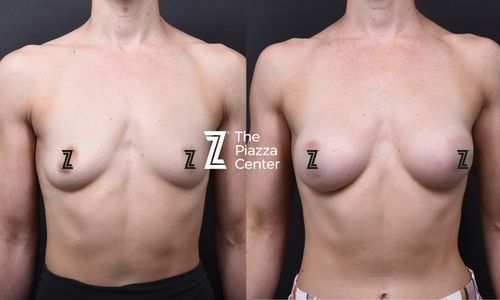
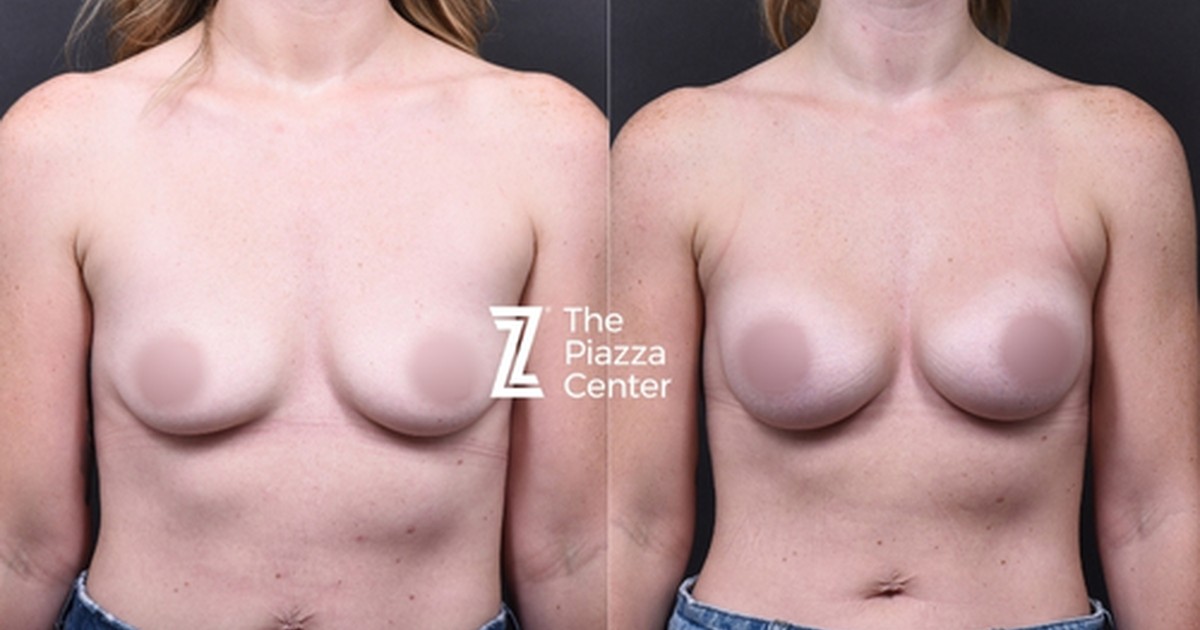
I recently treated a 40-year-old patient with significant deflation using a tissue-preservation approach and very modest 170 cc Motiva Ergonomix implants. The goal wasn’t simply to make her breasts larger—it was to restore what she had lost.
That’s an important distinction. At 40, I would choose the pocket and implant based upon your tissue and your goals, not your birthday.
Is Motiva Ergonomix 2 (Joy) really better than Ergonomix?
Ergonomix2® is the next generation of Motiva Ergonomix® technology.
Both use ProgressiveGel Ultima®, but E2 incorporates Motiva’s newer “SuperSilicone®” technology, making the implant extremely soft, stretchy, and compressible. This allows us to insert the implant through a remarkably small incision while maintaining the dimensions and volume we’ve selected.
There are also two versions of Ergonomix2®. The standard Ergonomix 2 maintains the familiar Ergonomix dimensions, while Ergonomix2 Diamond® offers a different dimensional profile for patients who need that option.
So, E2 isn’t necessarily about creating a different-looking breast—it gives me another level of flexibility in how I can achieve the result we’ve planned through an even smaller incision. The goal here is to continue to move in the direction of less invasive to minimally invasive breast enhancement surgery. And these devices make that possible.
Athletic / gym junkie: are Motiva Joy implants a good fit?
First, a quick clarification: JOY® isn’t actually an implant. JOY is Motiva’s program that gives patients access to its next-generation Ergonomix2® implant technology, along with additional warranty and patient-support benefits.
For my athletic patients and my “gym junkies,” I think the more important conversation is actually about the surgical technique.
This is where Preservé™ becomes really exciting. Preservé is a less-invasive, tissue-preserving approach that allows us to place the implant in the pre-pectoral space—above the pectoralis muscle—without cutting or disrupting that muscle.
For someone who is very active, lifts weights, or has a highly developed chest, preserving the function and anatomy of the pectoralis muscle can be particularly appealing. It also eliminates the animation deformity we can see when an implant is placed beneath a contracting chest muscle.
So yes, Ergonomix2® can be a great implant for an athletic patient—but I think the bigger story is pairing that technology with Preservé and continuing to move breast augmentation toward less-invasive, tissue-preserving surgery.
Mentor anatomical or Motiva Ergonomix?
For me, I would choose Motiva Ergonomix®.
I used anatomical implants for many years, and they were an important tool for creating a very controlled breast shape. But they are a more fixed device—the implant is designed to hold a predetermined form.
Ergonomix represents a different philosophy. Its ProgressiveGel Ultima® is softer and more adaptable, allowing the implant to behave more naturally with the breast rather than forcing the breast to conform to the implant.
That aligns much more closely with where I am today as a surgeon: preserving tissue, using smaller incisions, minimizing disruption, and allowing the patient’s own anatomy to help determine the final result.
So it’s not that an anatomical implant is a “bad” implant. I simply think Ergonomix is a more elegant tool for the type of natural, less-invasive breast augmentation I want to create today.
Can Motiva Ergonomix rotate or flip?
Yes—Motiva Ergonomix® implants can rotate, and rotation itself is normal. With a round-base implant, rotation generally doesn’t matter.
Flipping is different. An implant can flip front-to-back, and whether you notice it depends on the implant, the patient’s tissues, and the pocket. One of the things that can contribute to flipping is an implant pocket that has been over-dissected.
This is one reason I really like Preservé™. Rather than creating an oversized pocket, this less-invasive technique is designed to create a precise space that supports the implant almost like a hand in a glove. In my experience, that pocket control is paramount to minimizing the opportunity for an implant to flip.
And if flipping does occur, how noticeable it is can vary. In my experience, the rounder and more projecting the device, the more noticeable a flip may be. The same principle can apply to a firmer, more shape-retaining implant such as Motiva Round®.
So yes, flipping is possible with any breast implant—but thoughtful implant selection and, importantly, precise pocket creation can help mitigate that risk.
Is the demi or the high profile Ergonomix better for upper-pole fullness?
If you’re looking for more breast fullness, I typically move from a Demi to a Full profile.
I personally love the Ergonomix® Full. It gives me the projection and rounder, fuller breast shape many patients are looking for, while still maintaining the softness that I really value in a breast implant.
Motiva also makes a Round implant, which does a beautiful job creating a very round, full breast—but the gel is firmer. For me, it’s actually a little too firm, which is why I don’t use it very often.
I want a breast to look beautiful, but I also want it to feel like a breast. For my patients who want more fullness and projection, Ergonomix Full often gives me that balance: a fuller, rounder breast that still feels naturally soft.
Ultimately, Demi versus Full comes down to your anatomy, breast width, tissue characteristics, and how much projection and fullness you’re trying to achieve.
Is there much difference between the Motiva round demi and mini?
There is a difference, but I wouldn’t consider it dramatic. Mini and Demi are simply different projection profiles within the Motiva Round® family.
Mini is the lower-profile implant, while Demi provides a little more forward projection and fullness.
For me, the decision isn’t really about whether Mini or Demi is “better.” It’s about matching the width and projection of the implant to your chest, your existing breast tissue, and the amount of fullness you’re trying to achieve.
Sometimes a relatively small change in projection is exactly what makes an implant fit a patient’s body beautifully.
Struggling to choose size: age 40, 230cc vs. 275cc, went from a 32D to a 32A after 3 pregnancies.
I completely understand why you’re struggling between 230cc and 275cc—but I would encourage you not to get too focused on the number.
After three pregnancies and going from a 32D to a 32A, you’ve lost breast volume, and our goal is really to understand where that volume was lost and what we’re trying to restore.
For me, implant sizing starts with the width of your breast and chest—not the cc’s. Once I understand the footprint that fits your body, I can then use projection and volume to create the fullness you’re looking for.
The difference between 230cc and 275cc is only 45cc. That can make a difference, but it isn’t necessarily the dramatic difference patients sometimes imagine.
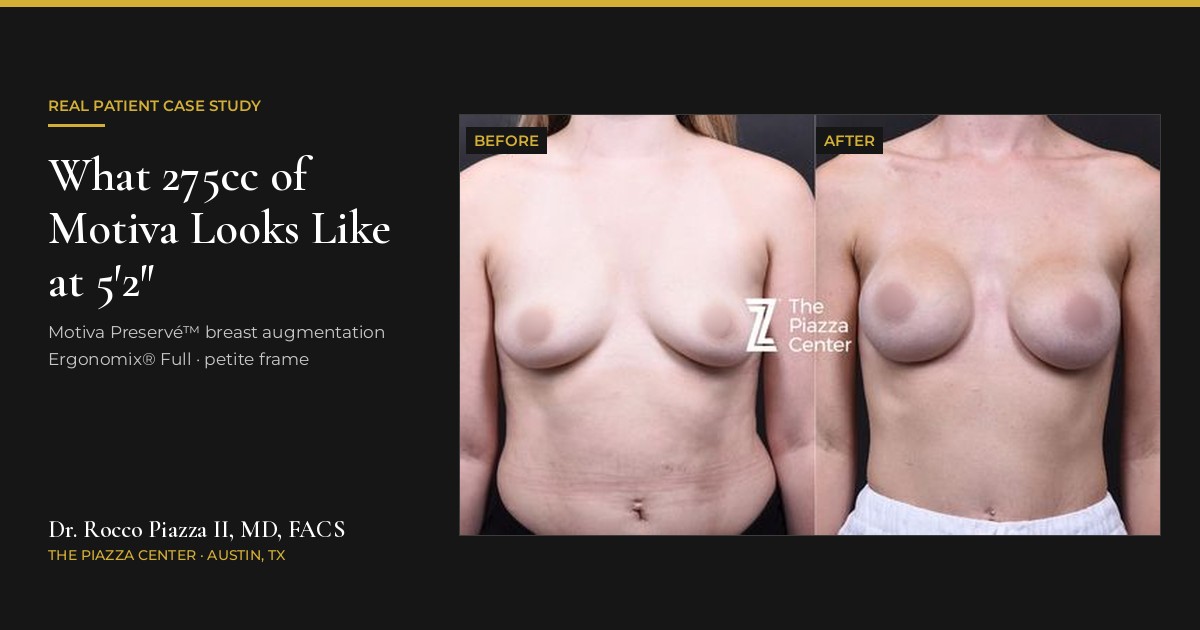
I recently shared a patient who is only 5’2” and 105 pounds who chose a 275cc Motiva Ergonomix® Full implant. Despite her petite frame, the result is beautifully proportionate because the implant fits the width of her chest.
So rather than asking, “Is 275cc too big?” I would ask, “Which implant best fits my anatomy and restores the breast I lost after pregnancy?” That’s the conversation I think matters most.
Age 25, 154cm, 50kg, petite: will 275cc Full give noticeable but natural volume?
Absolutely, it can. At 154 cm (5’1”) and 50 kg (110 lbs), you are petite, but that doesn’t automatically mean you need a very small implant.
I actually have a very similar patient who is 157 cm (5’2”) and 48 kg (105 lbs) who chose a 275cc Motiva Ergonomix® Full. Her goal was noticeable fullness while still looking natural and proportionate.
For me, the more important measurement isn’t your height, weight, or even the 275cc number—it’s the width of your breast and chest. If the implant footprint fits your anatomy, a Full profile allows us to create more forward projection and fullness without making the breast unnecessarily wide.
So yes, 275cc Full can absolutely create noticeable but natural volume on a petite frame. The question I would want to answer during your consultation is whether that specific implant fits your breast width, your tissues, and the result you want to achieve.
32B to a full C: will Ergonomix give me what I'm looking for?
Yes—Motiva Ergonomix® can be a beautiful choice for someone wanting to go from a 32B to a full C, particularly if your goal is a soft, natural-looking breast with more fullness.
But I don’t choose an implant based on cup size alone. A “full C” can mean something very different from one patient to another. I start with the width of your breast and chest, the amount of tissue you already have, and where you want more volume. From there, we select the implant width, profile, and volume that best fits your anatomy.
I recently shared a post-pregnancy patient who went from a full B to a small C using only a 205cc Motiva Ergonomix® Demi. The implant wasn’t large—it was simply the right implant for her body and the result she wanted.
So yes, Ergonomix can absolutely get you there. The goal isn’t to choose a number of cc’s to make you a C cup. It’s to choose an implant that fits your breast beautifully and creates the fullness and proportion you’re looking for.
Have surgeons seen a higher capsular contracture rate with subglandular Motiva?
I can really only speak to my own clinical experience and the data we have available on Motiva®.
I started using Motiva Ergonomix® implants in the fall of 2024 and have now placed over 340 Motiva implants. To date, I have not had a case of capsular contracture with Ergonomix—including in my patients with implants placed above the muscle.
That experience is consistent with the very low capsular contracture rates we’re seeing in the U.S. clinical data. At 5 years, the FDA data reports a 0.5% rate of Baker grade III/IV capsular contracture in primary augmentation patients.
So, have I personally seen a higher rate of capsular contracture with Motiva above the muscle? No.
Capsular contracture is multifactorial, however, and implant placement is only one part of that equation. Surgical technique, bleeding, contamination/biofilm, implant surface, and the individual patient’s biology can all play a role.
This is one of the reasons I’ve become increasingly comfortable with pre-pectoral, tissue-preserving breast augmentation using Motiva Ergonomix® and Preservé™.
Is the Motiva extended warranty worth it?
Honestly, I’m fairly indifferent about whether a patient chooses the Motiva® extended warranty.
Device-related complications with Motiva are very low, so I don’t feel that every patient necessarily needs additional coverage. At the same time, when you look at what Motiva offers through its extended warranty, there appears to be a lot of value there if having that additional protection gives you peace of mind.
My recommendation is really to look at the coverage, understand what you’re purchasing, and lean into what feels right for you. Some patients love having every additional layer of protection available; others are comfortable without it.
In my practice, we also provide CosmetAssure® coverage for our surgical patients. This helps mitigate some of the financial burden associated with unforeseen postoperative complications such as bleeding, hematoma, infection, and capsular contracture, subject to the program’s coverage terms.
So I don’t think there’s a right or wrong answer. The Motiva extended warranty is an additional layer of protection—and whether that added peace of mind has value is ultimately a very personal decision.
Do you recommend Motiva implants with the microchip?
Yes—I actually really like this technology.
As a surgeon who performs a lot of breast revision surgery, I navigate this problem almost every week. Patients frequently don’t remember what implants they have, don’t have their implant card, and sometimes have no records available from their original surgery.
Can I perform a revision without that information? Absolutely. But having it means less guesswork as we move from consultation to the operating room and allows me to create a more precise plan for achieving the patient’s goals.
Motiva’s Qid® technology places a tiny identification chip within the implant. The chip contains a unique identification number that can be read externally with a small handheld device. That number allows us to access the manufacturing information for that specific implant—including its size, dimensions, catalog information, and other production data.
I think that’s incredibly valuable. Ten or fifteen years from now, you shouldn’t have to remember exactly which implant was placed in your body or hope you can find an old implant card.
For me, more information allows for better planning, less guesswork, and a more direct path toward achieving the outcome a patient wants—particularly if they ever need or choose revision surgery.
Related pages
- Motiva Preservé® breast augmentation in Austin
- Motiva® implants in Austin
- Breast implant options
- Motiva vs Natrelle: which looks more natural?
- Petite breast augmentation: 275cc Motiva at 5′2″
- Breast augmentation without a lift: 230cc Motiva
- 150cc Motiva implants: a natural, athletic look
- Schedule a consultation with Dr. Piazza
FAQ
Frequently Asked Questions.
Preservé is actually a wonderful option for a very broad range of patients. There are very few patients who I think could not benefit from a tissue-preservation approach to breast augmentation. The key is understanding your anatomy and, most importantly, your expectations for the outcome. Like any breast augmentation, there are limitations. In very lean patients or women with very little natural breast tissue, there can be a greater chance of seeing or feeling some implant rippling because there is simply less tissue covering the implant.
One of the things I really appreciate about the Preservé tissue-preservation approach is that we often find it shortens and simplifies the recovery experience. I encourage my patients to dedicate the first three to four days to truly recovering—resting, surrounding themselves with support and love, eating nourishing food, staying well hydrated, and giving their body the time it needs to heal.
At 40, age alone doesn’t determine implant placement. Your anatomy does. Historically, surgeons often thought of breast augmentation as a choice between “over the muscle” and “under the muscle.” Modern breast augmentation is much more nuanced.
Ergonomix2® is the next generation of Motiva Ergonomix® technology. Both use ProgressiveGel Ultima®, but E2 incorporates Motiva’s newer “SuperSilicone®” technology, making the implant extremely soft, stretchy, and compressible. This allows us to insert the implant through a remarkably small incision while maintaining the dimensions and volume we’ve selected.
First, a quick clarification: JOY® isn’t actually an implant. JOY is Motiva’s program that gives patients access to its next-generation Ergonomix2® implant technology, along with additional warranty and patient-support benefits. For my athletic patients and my “gym junkies,” I think the more important conversation is actually about the surgical technique.
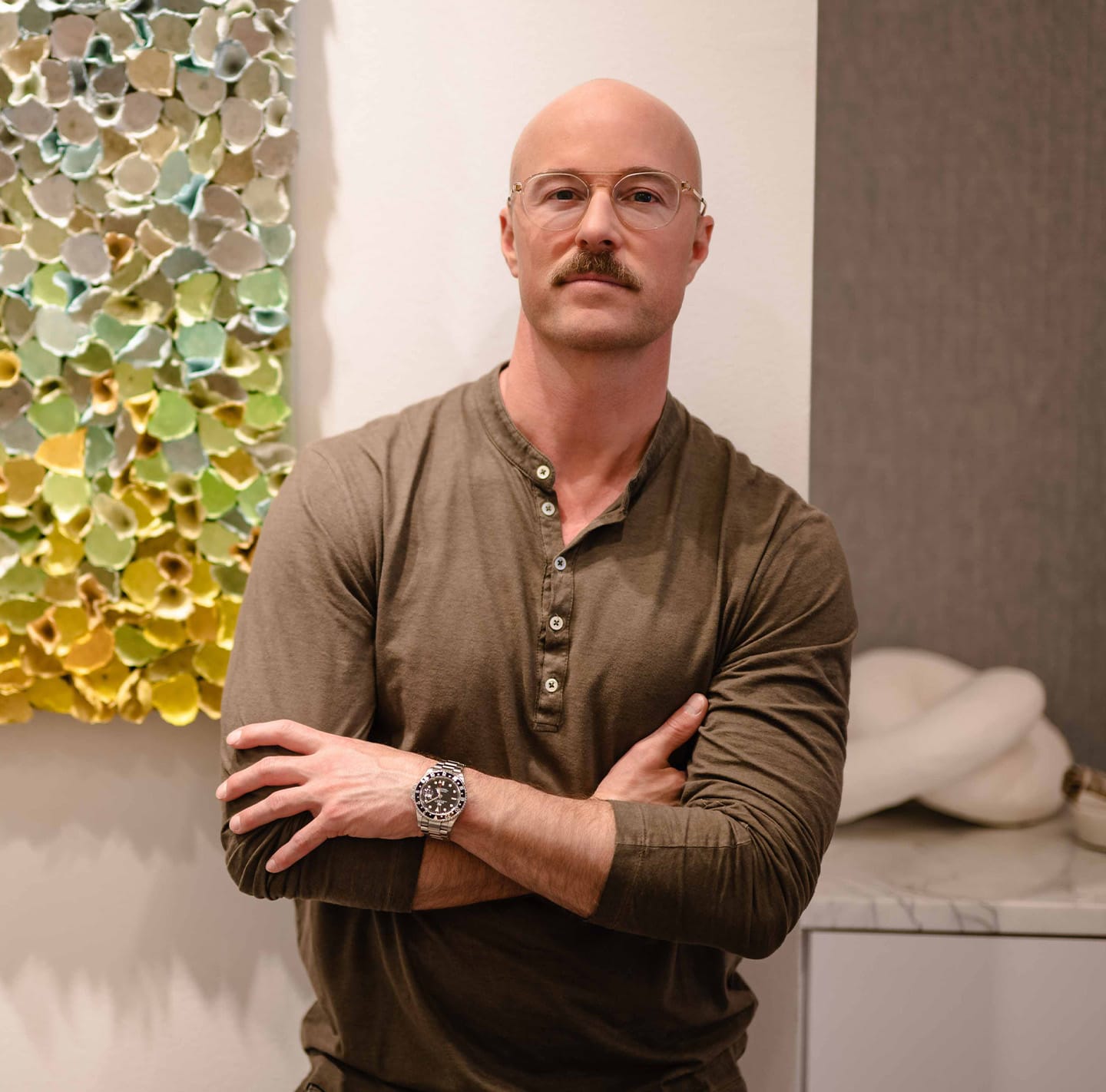
Dr. Rocco Piazza II
Board-Certified Plastic Surgeon
Dr. Piazza is a board-certified plastic surgeon practicing in Austin, TX. He specializes in aesthetic and reconstructive surgery with a focus on natural results.