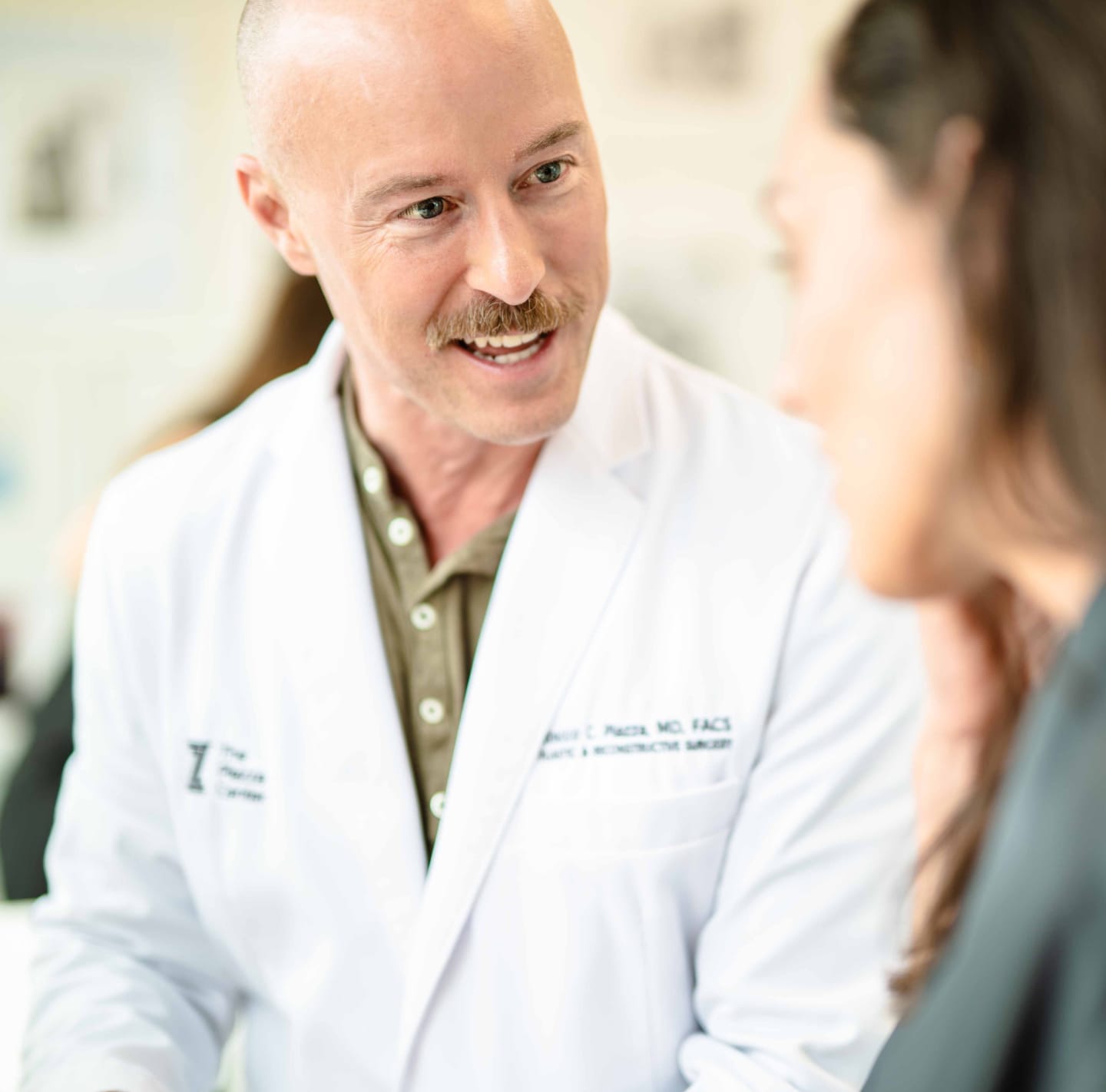



Rocco C. Piazza, MD, FACS
Board-certified plastic surgeon, Austin, Texas. Dr. Piazza has spent two decades studying how a patient's underlying health affects surgical outcomes — and which of the supplements patients ask about are actually worth taking.
Fatty15 at a Glance
What It Is
C15:0 (pentadecanoic acid), an odd-chain saturated fat
Where It Comes From
Whole-fat dairy and some fish; a lab-made pure form in supplements
The Claim
Strengthens cell membranes and supports mitochondrial function
Strength of Evidence
Strong laboratory data; early and limited human trial data
Dr. Piazza's Position
No objection after surgery. Before surgery, clear it with your physician first.
Where It Doesn't Belong
As a wound-healing agent or a substitute for surgical aftercare
An Honest Note: C15:0 has not been studied in surgical patients. What follows is my reasoning about why cellular health matters around an operation — not a claim that this supplement improves surgical outcomes.
Every few years a compound escapes the research literature and lands in the middle of the wellness conversation. Right now it is a fat with an unglamorous name: C15:0, sold most visibly as fatty15.
My patients are asking about it. They have heard it on a podcast, seen it on daytime television, or had it recommended by a physician they follow online. The question they bring to my office is a fair one: is this real, and does it matter for someone about to have surgery?
Here is my answer, including the parts that are less exciting than the marketing.
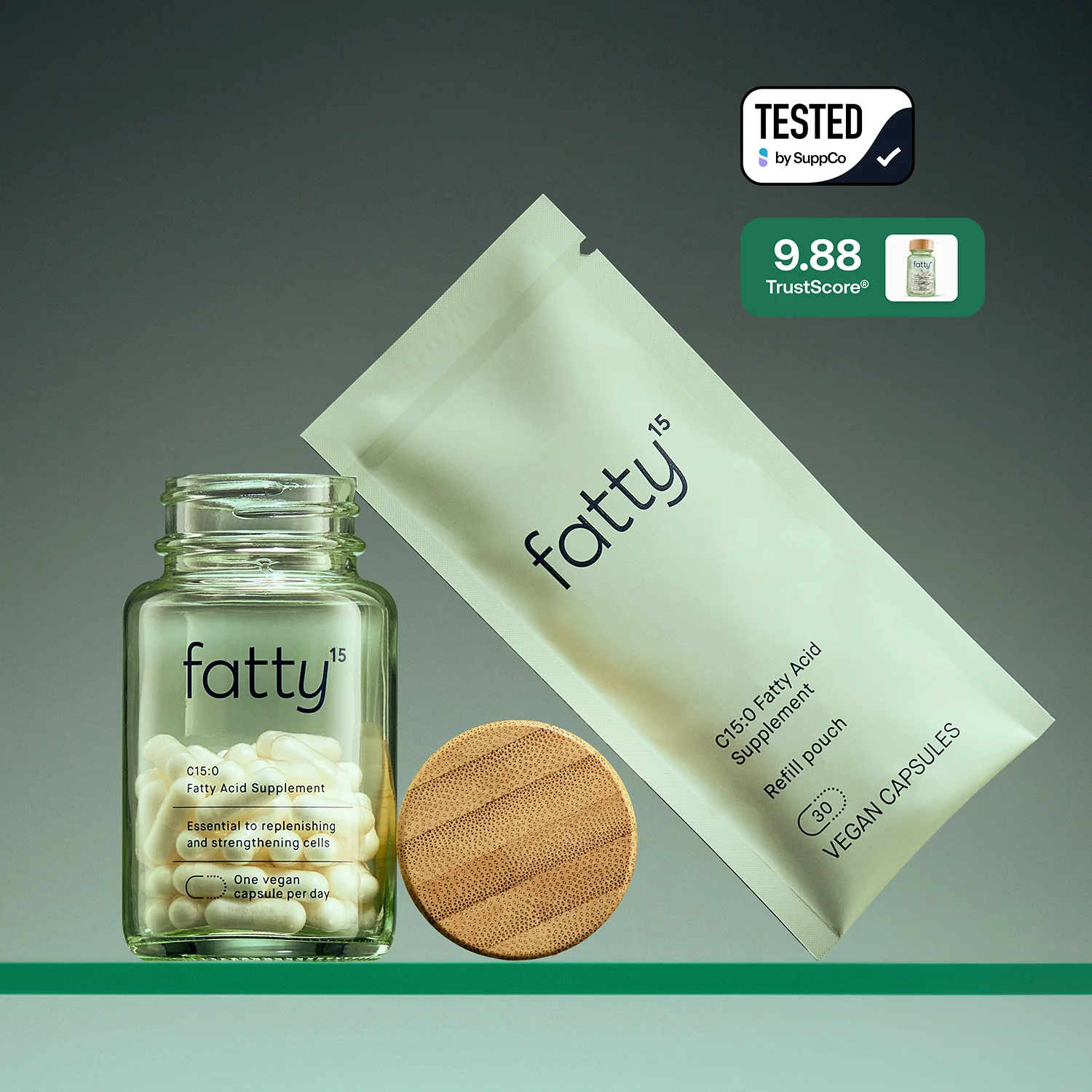
What the label claims
Healthier hair and skin. Balanced metabolism. Deeper sleep. And the headline: three times more cellular benefits than omega‑3.
What that claim rests on
A study comparing C15:0 against omega‑3 across twelve human cell-based disease systems. It is real, published work — and it was done in cells, not in people. That distinction runs through this entire article.
These statements have not been evaluated by the Food and Drug Administration. This product is not intended to diagnose, treat, cure or prevent any disease.
Why Everyone Is Suddenly Talking About Fatty15
The story behind C15:0 is genuinely unusual, which is part of why it travels so well.
It was identified by Dr. Stephanie Venn-Watson, a veterinary epidemiologist who spent years studying a population of Navy dolphins. Some of the older dolphins were aging poorly — elevated inflammation, fatty liver, metabolic dysfunction — while others of the same age were not. The difference tracked with a fatty acid in their diet. That observation became a research program, and eventually a supplement.
From there it moved into the mainstream:
- Dr. Mark Hyman has hosted Venn-Watson on his show and describes C15:0 as one of his preferred longevity supplements.
- Dave Asprey covered it on The Human Upgrade, framing it as a foundational cellular nutrient.
- Ben Greenfield featured it on Boundless Life.
- Venn-Watson appeared on The Kelly Clarkson Show in 2025, which is roughly the moment a supplement stops being a biohacker item and becomes a household one.
- She was named a 2025 CNBC Changemaker, and the research has been covered by the Washington Post, Forbes, and Business Insider.
One thing worth saying plainly: a number of these placements are commercial relationships or brand partnerships. That does not make the underlying science wrong. It does mean the volume of the conversation is not, by itself, evidence. I judge a supplement by its data, not its reach.
What Fatty15 Actually Is
Fatty15 delivers pentadecanoic acid, written as C15:0 — a saturated fatty acid with a 15-carbon chain. The odd number matters. Nearly every fat in the human diet has an even-numbered chain, and odd-chain fats behave differently in the body.
You get small amounts of C15:0 from whole-fat dairy and certain fish. Decades of dietary advice steering people away from full-fat dairy means many adults now carry very little of it. The researchers behind fatty15 argue that C15:0 meets the formal definition of an essential fatty acid — one the body cannot make in sufficient quantity and must obtain from diet. If that holds up, it would be the first new one identified in roughly ninety years. That claim is not yet settled science, but it is being argued in peer-reviewed journals rather than only in advertising.
The Cell Membrane Argument, in Plain Language
Every cell in your body is wrapped in a membrane made largely of fat. The physical properties of that membrane — how stable it is, how easily it oxidizes — depend on which fats are built into it.
Polyunsaturated fats are flexible but chemically fragile. In the presence of iron and oxidative stress, they are prone to a damaging chain reaction called lipid peroxidation, which can end in a form of cell death known as ferroptosis. C15:0 is structurally stable. When it is incorporated into a membrane, it occupies space that a more oxidation-prone fat would otherwise take.
In laboratory work, C15:0 has been shown to reduce iron-driven oxidative damage in cell membranes, support mitochondrial function, and dampen inflammatory signaling including IL-6 and TNF-α. Researchers have proposed the term Cellular Fragility Syndrome for what they believe happens when C15:0 runs low over decades.
That is a coherent mechanism. It is also, importantly, mostly a mechanism established in cells and animals.
What the Evidence Does — and Does Not — Show
I want to be precise here, because this is where most articles about fatty15 stop being useful.
Well supported
C15:0 is a real fatty acid with real biological activity. The cell-based and animal data are substantial and published in respectable journals. Blood levels of C15:0 track with better metabolic and cardiovascular markers in observational studies.
Not yet established
Large, long-duration randomized human trials. The human studies that exist are small and short — roughly twelve weeks. And much of the foundational research was done by scientists with a financial interest in the product.
Entirely unstudied
C15:0 in surgical patients. No trial has examined wound healing, scar quality, swelling, bruising, or recovery time after an operation. Any article that tells you otherwise is inventing it.
So why am I writing about it at all?
Why Cellular Health Matters Before Surgery
Because the question underneath the supplement question is a good one.
Surgery is a controlled physiologic stress. A patient's body has to manage a wound, an inflammatory response, a period of reduced mobility, and the metabolic demand of building new tissue. Two patients having the identical operation from the identical surgeon can have meaningfully different experiences, and much of that difference is decided before anyone enters the operating room.
The things that reliably move that needle are not exotic. They are:
- Not smoking or vaping nicotine. This is the single largest modifiable risk factor for wound-healing complications, and it is not close.
- Adequate protein intake in the weeks before and after surgery.
- Stable blood sugar and metabolic health.
- Real sleep, which is when the majority of tissue repair happens.
- Iron and vitamin D status, checked rather than assumed.
- A realistic weight that has been stable for several months.
If a patient is doing all of that and wants to add a cellular-health supplement with a plausible mechanism and a clean safety profile, I do not object. What I will not do is let a supplement become a substitute for the list above. A patient who is still smoking but taking fatty15 has optimized nothing.
Where It Fits After Surgery
Recovery has phases, and each has different demands. The first two weeks are dominated by inflammation and swelling. The following months are remodeling — collagen laid down, reorganized, and matured into a scar that softens over roughly a year.
That second phase is long, and it is metabolically demanding. It is also the phase patients tend to neglect, because by then they feel fine and have stopped thinking of themselves as surgical patients.
My view of C15:0 is that it belongs to that longer horizon rather than the acute one. It is not an anti-swelling agent and it will not shorten your first week. If it does what the laboratory data suggests — supporting mitochondrial function and membrane stability — that is the kind of benefit measured over months of a patient generally taking better care of themselves, not days.
Which is honestly how I frame most of the supplement conversation. The patients who recover best are not the ones with the most elaborate stack. They are the ones who treat surgery as a reason to build habits that were worth having anyway.
“Patients often arrive with a list of supplements and ask which one will make their result better. The honest answer is that no supplement will outperform sleep, protein, and not smoking. What I look for in something like C15:0 is whether the mechanism is real and the safety profile is clean — and whether it supports the patient rather than distracting them from the things that actually matter.”
— Rocco C. Piazza, MD, FACS
If You Decide to Try It
Fatty15 is sold directly by the company that makes it rather than through our office, so there is no version of it on our shelf. If you and I have talked it through and you want to start, our patients get an extra 9% off through Dr. Piazza’s clinical portal, stacked on top of the subscription price.
90-day starter kit: $149.95 about $99 once the subscription price and the portal discount are applied.
This is an affiliate link. The Piazza Center may earn a commission if you purchase through it, at no additional cost to you. It does not change what we recommend or who we recommend it to.
Frequently Asked Questions
Is fatty15 the same thing as C15:0?
Fatty15 is a brand name for a supplement whose active ingredient is pure C15:0, or pentadecanoic acid. C15:0 is the nutrient itself, which also occurs naturally in whole-fat dairy and some fish.
Can I just eat full-fat dairy instead?
You will get some C15:0 that way, though at lower levels than a supplement provides, and alongside calories and other saturated fats you may or may not want. For many patients, adjusting the diet is the reasonable first step.
Is it the same as taking fish oil?
No. Omega-3s are polyunsaturated; C15:0 is a stable saturated fat, and the two work through different mechanisms. This distinction matters surgically, because omega-3 supplements can affect bleeding and are usually paused before an operation.
Will it speed up my recovery or improve my scars?
There is no evidence that it does, because it has not been studied in surgical patients. I would not recommend it on that basis, and I would be skeptical of anyone who does.
Should I stop it before surgery?
Dr. Piazza has no objection to C15:0 after surgery. Beforehand, consult your physician and disclose it at your pre-operative visit. Do not make that call on your own.
Where do I buy it, and do you sell it?
We do not stock it. Fatty15 sells directly, and our patients get an extra 9% off through Dr. Piazza’s clinical portal, on top of the subscription price. We may earn a commission on those purchases.
Do I need it if I'm not having surgery?
Nobody needs a supplement. C15:0 is being studied as a general cellular-health nutrient, and that case stands or falls independently of whether you are having a procedure.
Individual results vary. This article is for educational purposes and does not constitute medical advice. Statements about dietary supplements have not been evaluated by the Food and Drug Administration, and no supplement is intended to diagnose, treat, cure, or prevent any disease. This article contains affiliate links; The Piazza Center may earn a commission on purchases made through them, at no additional cost to you. Always consult your surgeon before starting or stopping any supplement, particularly around a scheduled procedure.
Planning a Procedure in Austin?
Your result begins well before the day of surgery. Dr. Piazza builds an individualized preparation and recovery plan for every patient — nutrition, medications, supplements, and timeline included.
Request a Consultation Shop fatty15 — Dr. Piazza’s Portal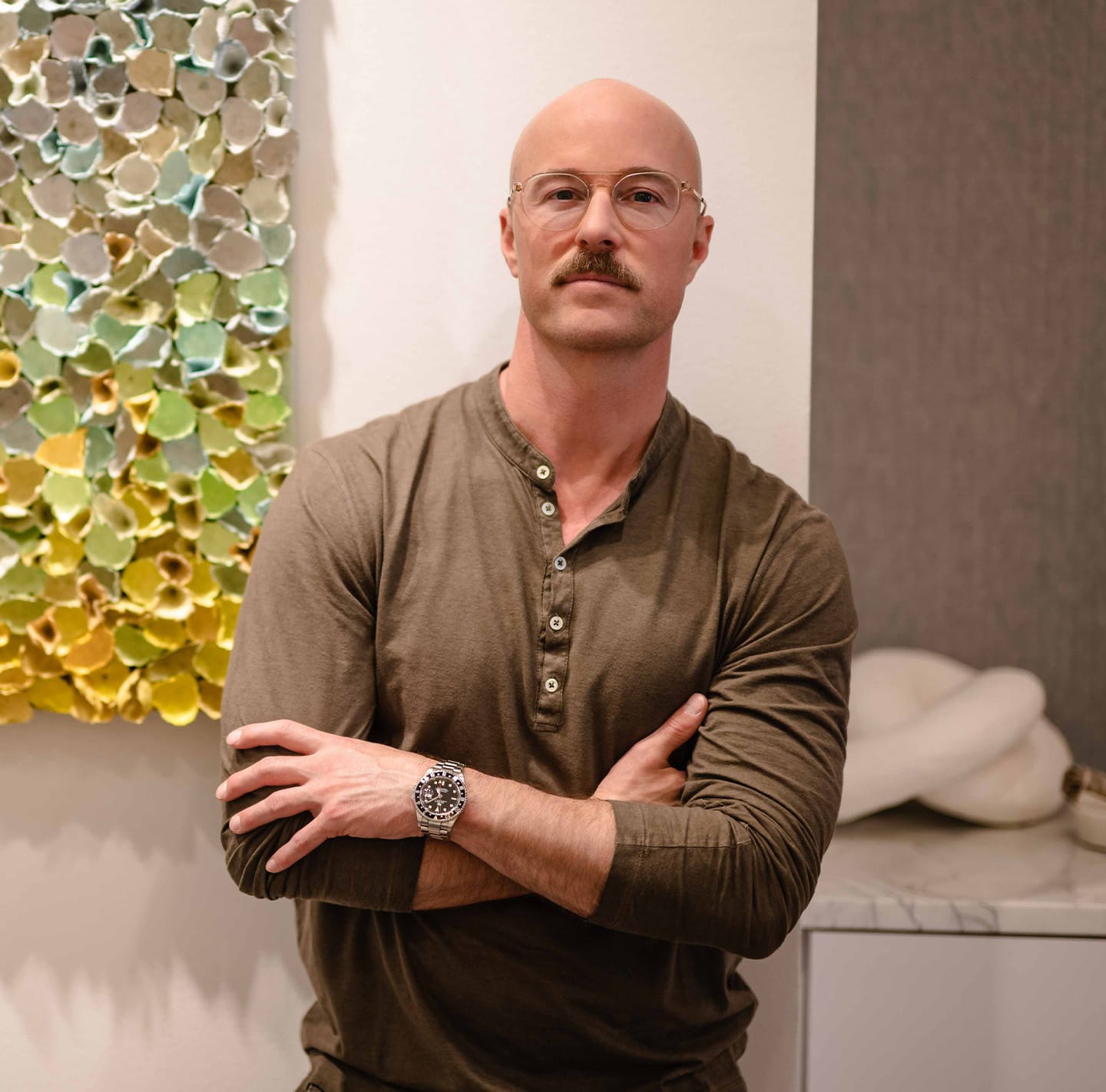
Dr. Rocco Piazza II
Board-Certified Plastic Surgeon
Dr. Piazza is a board-certified plastic surgeon practicing in Austin, TX. He specializes in aesthetic and reconstructive surgery with a focus on natural results.