


Expertly WRITTEN By
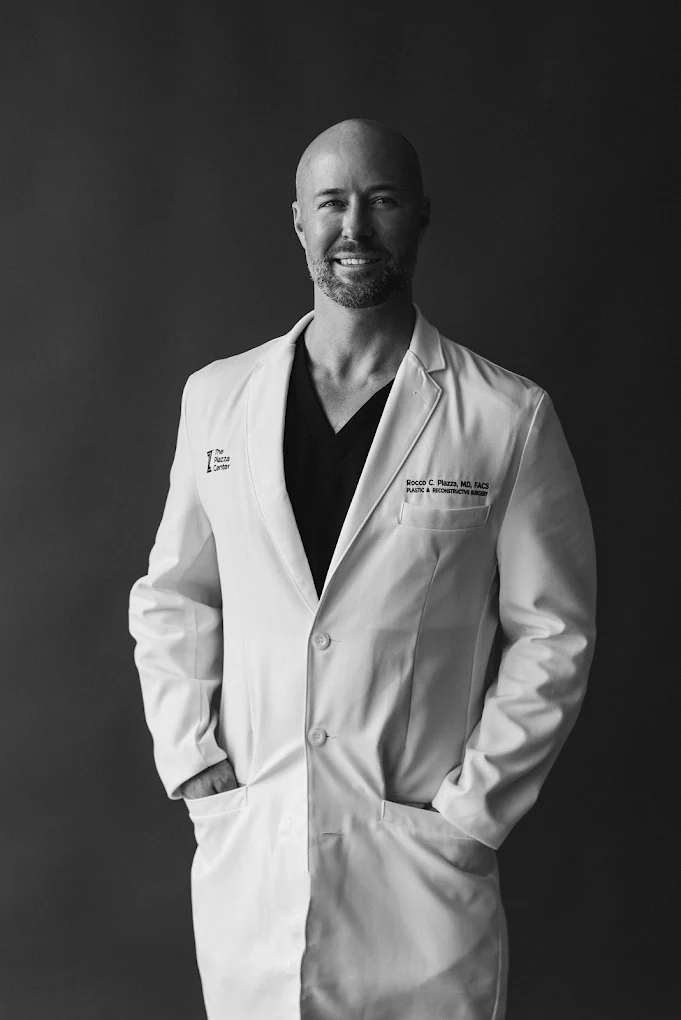
Dr. Rocco Piazza, MD, FACS
Board-Certified Plastic Surgeon specializing in breast and body surgery in Austin, TX.
The 18-Month Rule at a Glance
Start: As soon as the incision is fully closed and your surgeon has cleared it
How long: Every day for the first 18 months after surgery
What to use: Silicone scar gel with SPF built in, or a mineral sunscreen with at least 7% zinc oxide
When to switch to SPF silicone: Around 12 weeks, as the scar loses its pink color, or earlier if the scar will see sun
Backup: UPF clothing, high-waisted swimwear, shade
Why it matters: A scar can heal perfectly flat and thin and still end up darker than the skin around it. That darkening comes from the sun, and once it sets in it can be permanent.
Most scar advice focuses on the first few weeks: keep the incision clean, start silicone, be patient. The part patients underestimate is the sun. In Dr. Piazza's experience, sun exposure during the first year and a half is one of the most common reasons a well-healed surgical scar ends up more visible than it needed to be.
That matters more in Austin than almost anywhere. Our summers are long, the UV index regularly climbs into the very high range, and a lot of life happens outdoors: Lake Travis, Barton Springs, patio season that runs most of the year. Here is how Dr. Piazza's patients protect their scars, and why he recommends one product over layering two.
Why the Sun Makes Scars Darker
A new scar is not finished skin. For many months after surgery it is still remodeling, with extra blood flow and active inflammation. That healing tissue is more reactive to UV light than the skin around it, and it burns faster.
When UV hits a scar during this window, it can trigger pigment to build up in the scar tissue. The result is a scar that is brown or darker than your natural skin tone, a change called hyperpigmentation. Unlike a tan, this discoloration does not always fade. A scar that would have matured into a pale, thin line can stay dark for years.
This is why the sun is the one factor that can undo good surgery and good silicone care. Placement, closure technique and silicone all help a scar heal flat and thin. None of them protect its color.
Dr. Piazza's 18-Month Rule
Dr. Piazza asks his patients to protect their surgical scars from the sun every day for the first 18 months. That is roughly how long a scar takes to fully mature. After that point, the scar has settled into its final color and texture and is far less reactive.
The 18-month rule does not mean avoiding the sun. It means the scar is never exposed without protection, whether that is SPF, clothing or a swimsuit that covers it.
Why We Use Silicone With SPF Instead of Layering Two Products
Every surgical scar in Dr. Piazza's protocol gets silicone first. Silagen 100% Silicone Scar Gel helps the scar flatten and soften while collagen is still remodeling. But silicone on its own is not a sunscreen.
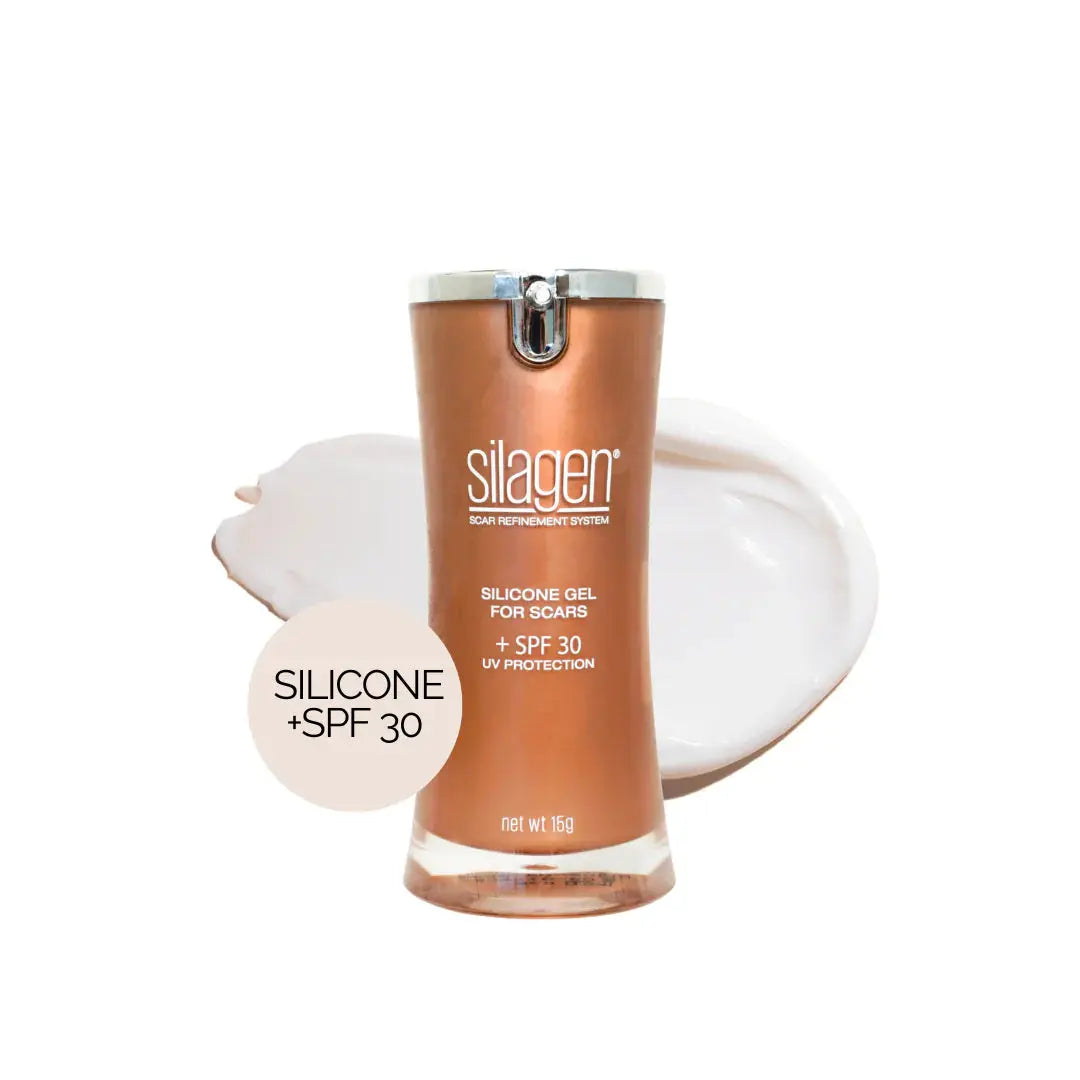
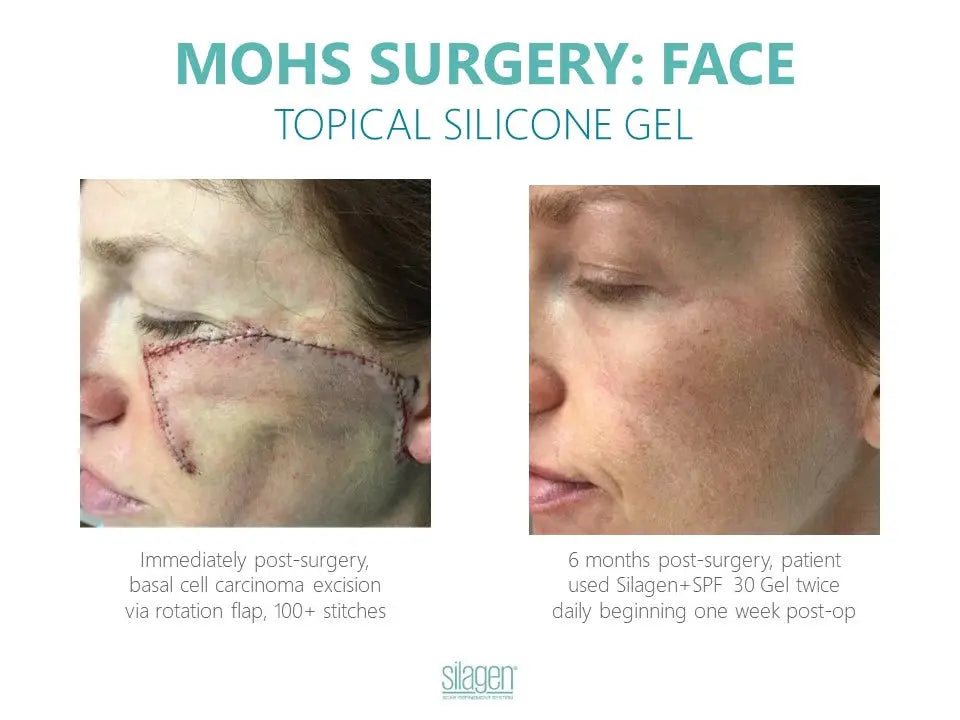
Once the scar starts to mature and lose its initial pink color, usually around 12 weeks, patients switch to Silagen Scar Gel SPF 30. It is the same silicone step with broad-spectrum SPF 30 built in. The reasoning is practical:
- One step is easier to keep up. Scar care only works if you do it consistently for months. Two products twice a day is where most people start skipping.
- The scar is always covered. Every time you apply your scar care, you are also applying sun protection.
If your scar will be in the sun before the 12-week mark, start the SPF version earlier. The Post-Surgery Scar Healing Kit includes both gels so you can move from one to the other without a gap.
What to Look For in a Sunscreen for Scars
For long days outdoors, or on skin around the scar, add a regular sunscreen. Dr. Piazza's guidance:
- Mineral, with at least 7% zinc oxide. Zinc gives broad UVA and UVB protection and tends to be gentle on healing skin. Pavise Dynamic Age Defense SPF 30 (15% zinc oxide) and the EltaMD range are what we stock.
- Broad spectrum, SPF 30 or higher.
- Water resistant for swimming and sweat, such as EltaMD UV Sport SPF 50, and reapply after towel drying.
- Only on closed skin. Never apply sunscreen to an open or weeping incision.
Scar by Scar: Where Sun Exposure Catches Patients Out
| Procedure | Where the scar is | When it gets sun |
|---|---|---|
| Tummy tuck | Low across the abdomen, hip to hip, plus the belly button | Bikinis, low-rise swimwear, crop tops, lake days |
| Breast lift and reduction | Around the areola, and often down to the breast crease | Triangle bikinis, low necklines, sunbathing |
| Breast augmentation | In the crease under the breast | Mostly hidden, but exposed in smaller swim tops |
| Liposuction and BBL | Small access points, often near the hips, back or waist | Swimwear, and easy to forget because they are small |
Two exposures patients often miss: the car, because UVA passes through side windows, and outdoor workouts, where sweat washes sunscreen off faster than you expect.
"Protecting your scars during the first 18 months is crucial, but it doesn't mean you have to avoid the sun entirely. Enjoy the sunshine. Just keep your scars protected." — Dr. Rocco Piazza
If Your Scar Has Already Darkened
If a scar has picked up pigment, start protecting it now. Continued exposure makes it darker, and stopping the exposure is the first step to letting it fade. In the office, BroadBand Light (BBL) therapy targets pigment and redness in scar tissue and can improve discoloration. Dr. Piazza can assess your scar and recommend the right timing at a consultation.
Sunscreen and Scars FAQ
When can I put sunscreen on a new surgical scar?
Once the incision is fully closed, with no scabs or open areas, and your surgeon has cleared it for topical products. Before that, keep it covered with dressings or clothing.
How long should I protect a scar from the sun?
Dr. Piazza recommends daily protection for the first 18 months after surgery, which is about how long a scar takes to fully mature.
Can I use regular sunscreen instead of a silicone gel with SPF?
Yes, a mineral sunscreen with at least 7% zinc oxide protects the scar. The advantage of silicone with SPF built in is that you get your scar treatment and sun protection in one step, which is easier to keep up every day for 18 months.
Does clothing protect a scar from the sun?
Tightly woven or UPF-rated clothing helps, and it is a good backup for long days outside. Thin or wet fabric lets UV through, so do not rely on a light T-shirt alone.
Will a dark scar fade on its own?
Some discoloration fades slowly once the scar is protected, but it can also be permanent. In-office treatments such as BBL can help. Protection from day one is far easier than correction later.
Individual results vary. This article is for educational purposes and does not constitute medical advice. Always follow the post-operative instructions given by your own surgical team.
Protect the Result You Invested In
Dr. Piazza's scar protocol covers every stage, from the first silicone application to 18 months of sun protection.
Dr. Rocco Piazza II
Board-Certified Plastic Surgeon
Dr. Piazza is a board-certified plastic surgeon practicing in Austin, TX. He specializes in aesthetic and reconstructive surgery with a focus on natural results.