


Dr. Rocco C. Piazza, MD, FACS
Board-certified plastic surgeon · The Piazza Center, Austin, Texas
Medically reviewed · Updated September 2026
Exosomes are the most asked-about thing in aesthetics right now and the least well explained. Patients arrive having read that they are stem cells, or that they are banned, or that they will regrow their face. None of those is right.
So: what they actually are, what we actually offer, what it costs, and where we think the honest limit of the evidence sits.
What an exosome actually is
Cells talk to each other. One of the ways they do it is by packaging up signalling molecules — proteins, lipids, genetic messengers — into tiny membrane-bound parcels and releasing them into the surrounding tissue. Neighbouring cells take up the parcel and read the instructions.
Those parcels are exosomes. They are not cells. They are messages between cells.
That distinction is the whole thing, and it is where most of the confusion online comes from. A stem cell is a living cell that can divide and become something else. An exosome is a signalling packet with no nucleus and no ability to divide. Products described as “stem cell therapy” and products containing exosomes are not the same category, are not regulated the same way, and should not be discussed as if they were.
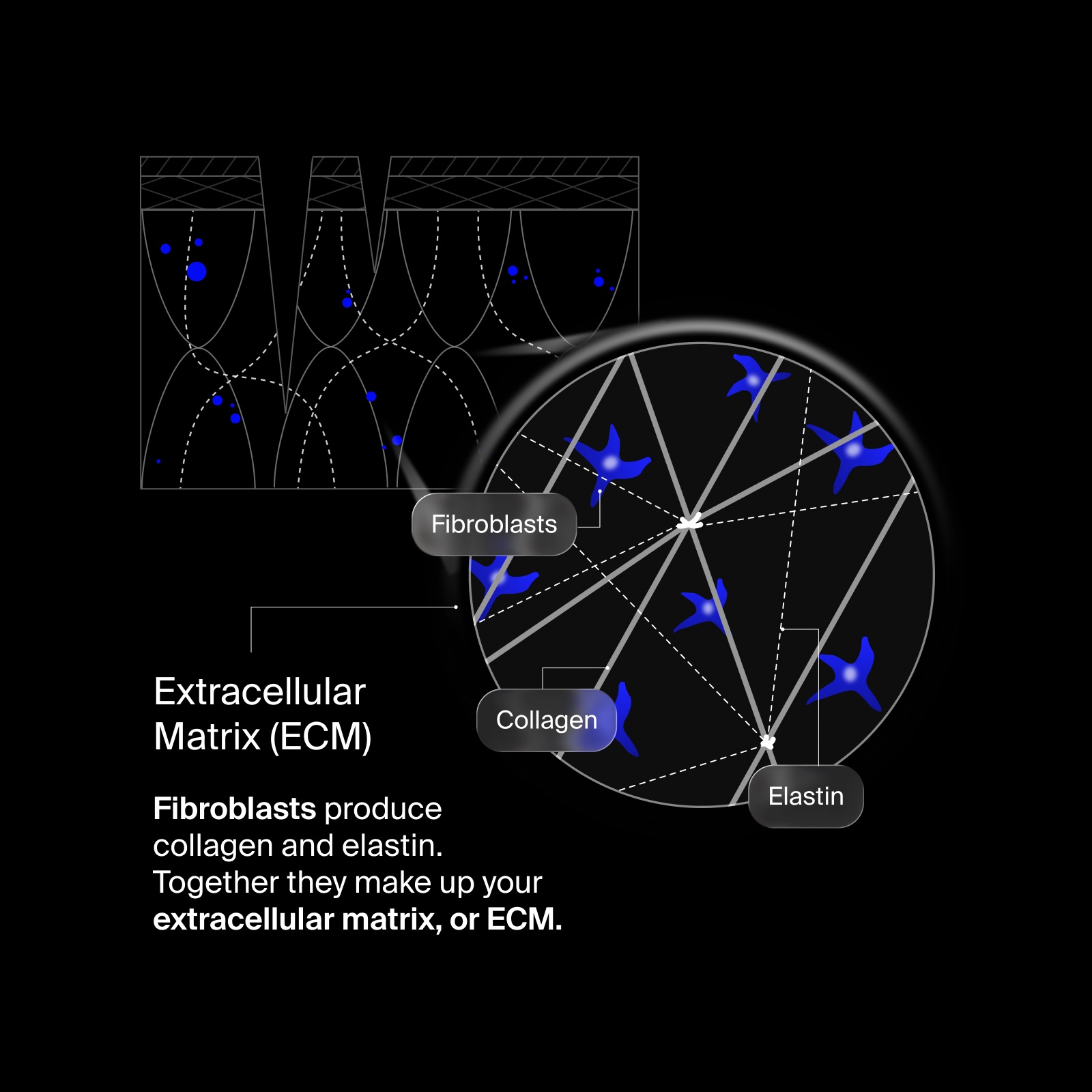
The extracellular matrix. Fibroblasts build collagen and elastin — and fibroblasts are the cells that signalling is ultimately aimed at.
Why anyone applies them after a laser
A resurfacing laser works by controlled injury. It removes or damages tissue deliberately, and the skin rebuilds. During that rebuild, fibroblasts are more active than at any other point — laying down new collagen, reorganising the matrix.
Two things are true at that moment. The skin is doing its most productive work of the year. And the barrier that normally keeps topicals out is temporarily open.
That is the entire logic of applying anything at the time of treatment. Not that the product is magic, but that the window is unusual — a receptive surface over cells that are already building. Applied on intact skin three weeks later, the same product has a much harder job.
What a booster is for — and what it is not for
This is where expectations usually go wrong, so we will be specific.
An exosome booster is a long-term tool
It is a signal delivered while the channels in your skin are open, aimed at how the tissue rebuilds over the following weeks and months. Its value is in the long arc of healing, not in how your face feels on Tuesday.
It is not a comfort product
Exosomes do not calm the skin and they do not minimise redness. They are not occlusive and they do not behave like a barrier cream or a hybrid recovery balm. If you add a booster expecting to look and feel better that evening, you will be disappointed — not because it failed, but because that was never its job.
For immediate comfort, the answer is ECM Restore, not exosomes. That is the product doing the occlusive work in the first days — sealing, settling the skin, and directing the rebuild from day zero. The booster sits alongside it as an extra signal at the one moment the skin is most able to receive one.
Put simply: ECM Restore is what makes the first week tolerable and the rebuild organised. A booster is what you add on top if you want an extra input while the window is open. They are not alternatives to each other, and anyone selling a booster as a substitute for real aftercare has it backwards.
What we offer, and what it costs
$100
Exosome booster — standard
Our back bar option, added to your laser appointment. A professional-use topical applied by our non-surgical team at the time of treatment. This is a service add-on, not a product you take home — it is not sold retail and cannot be bought online.
Quoted at consultation
Benev exosome booster — premium
Physician-dispensed and prescription-only, so it is available exclusively through a medical practice and cannot be purchased online at any price. Also applied topically, in office. Meaningfully more expensive than the standard booster.
Both are optional add-ons to a treatment you are already having. Neither is a standalone appointment, and neither is required for a good result.
Topical, not injected — and why that matters
Nothing we offer is injected. It is applied to the skin surface at the time of your procedure.
This is worth stating plainly, because nearly all of the regulatory attention around exosomes — and there has been a lot — concerns injected or infused products marketed with medical claims. That is a different category of product, a different route of administration, and a different risk profile from a topical applied in a clinical setting.
If a provider offers you injected exosomes, ask a lot of questions. If they promise you a specific percentage improvement, ask more.
What we are not claiming
Most pages about exosomes skip this part. We would rather lead with it.
We are not telling you an exosome booster treats, heals or regenerates anything. We are telling you what it is, that our team applies it topically during your treatment, and what it costs. If you want it, we offer it. If you do not, your protocol is unchanged and still complete.
Our honest position. The mechanism is plausible and the science is genuinely interesting. The clinical evidence for topical exosomes in aesthetics is still early, and anyone quoting you hard numbers from it is ahead of the data. We offer it as an option, priced transparently, without a promise attached.
In office versus what you take home
Patients conflate these constantly, and the distinction decides where your money is best spent.
Frequency
In office — A single application, during the appointment
At home — Daily, for weeks — and SPF indefinitely
Who applies it
In office — Our non-surgical team, at the time of treatment
At home — You, at home, on your own discipline
Availability
In office — Professional use only, not sold retail
At home — Shoppable — the products below
Effect on your final result
In office — A possible additive at the best moment
At home — The larger share, because it runs for the whole remodeling window
If you are choosing where to spend, spend it here. Put your money in the take-home protocol and daily sunscreen before you put it in an in-office add-on. The booster is something extra on top of a good routine. It is not a substitute for one, and no honest provider will tell you otherwise.
The take-home protocol
This is the part that runs for weeks and does the heavier lifting.
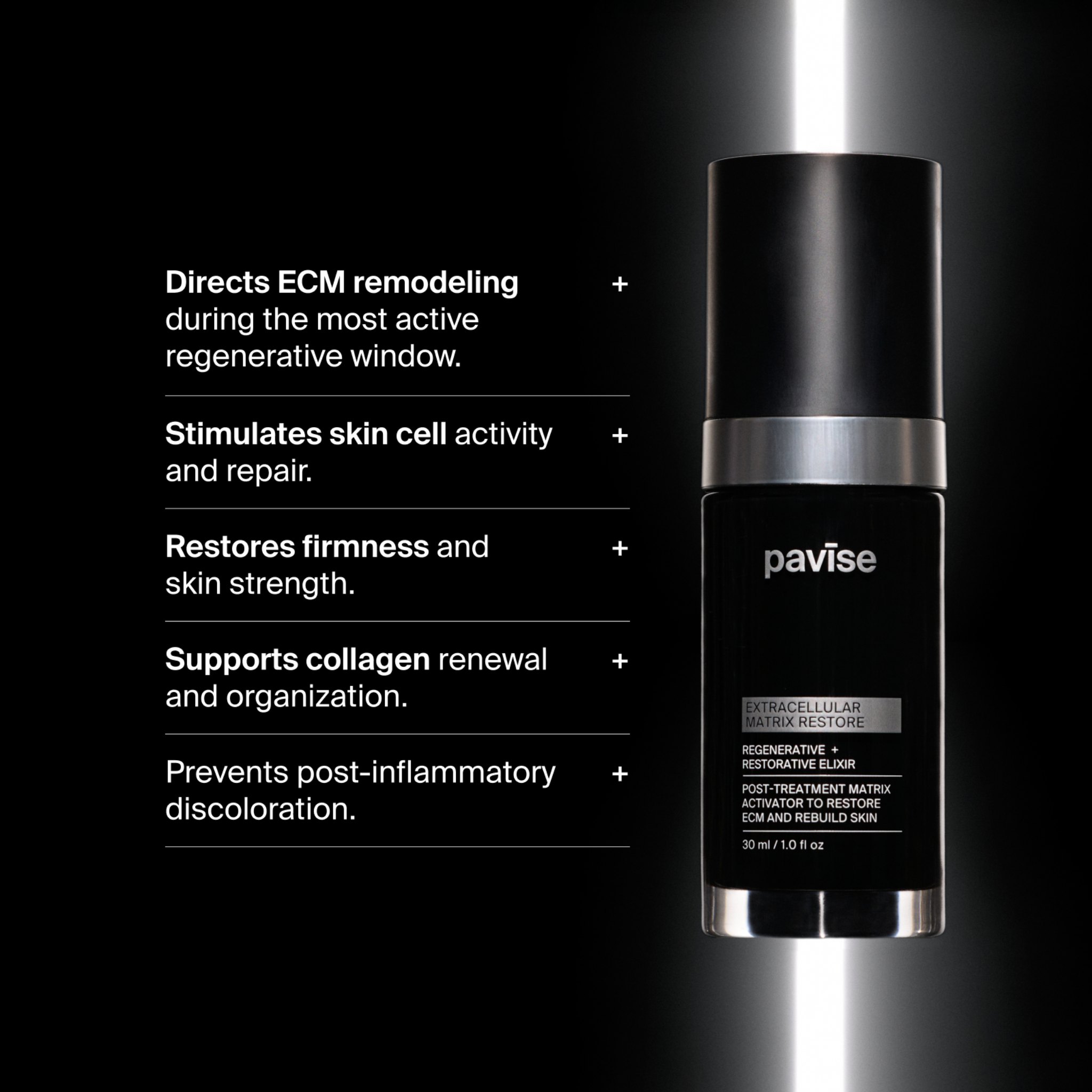
Day 0 — Pavise Extracellular Matrix Restore. On its own, with nothing layered over it. This is your comfort layer as well as your rebuild layer — the occlusive that settles the skin through the first days, which is the job an exosome booster does not do. A post-treatment matrix activator formulated to direct how the new matrix rebuilds while fibroblast activity is highest — which is the same window the in-office booster is aiming at, except this one keeps working for weeks. It is the subject of a registered clinical trial (ClinicalTrials.gov NCT07462533) on ablative resurfacing; registration is not a finding of efficacy, but it shows where the manufacturer is willing to be measured.
Pavise Extracellular Matrix Restore
Post-procedure matrix activator, 30 ml · starts day 0 · $278.00
Shop Pavise Extracellular Matrix Restore →
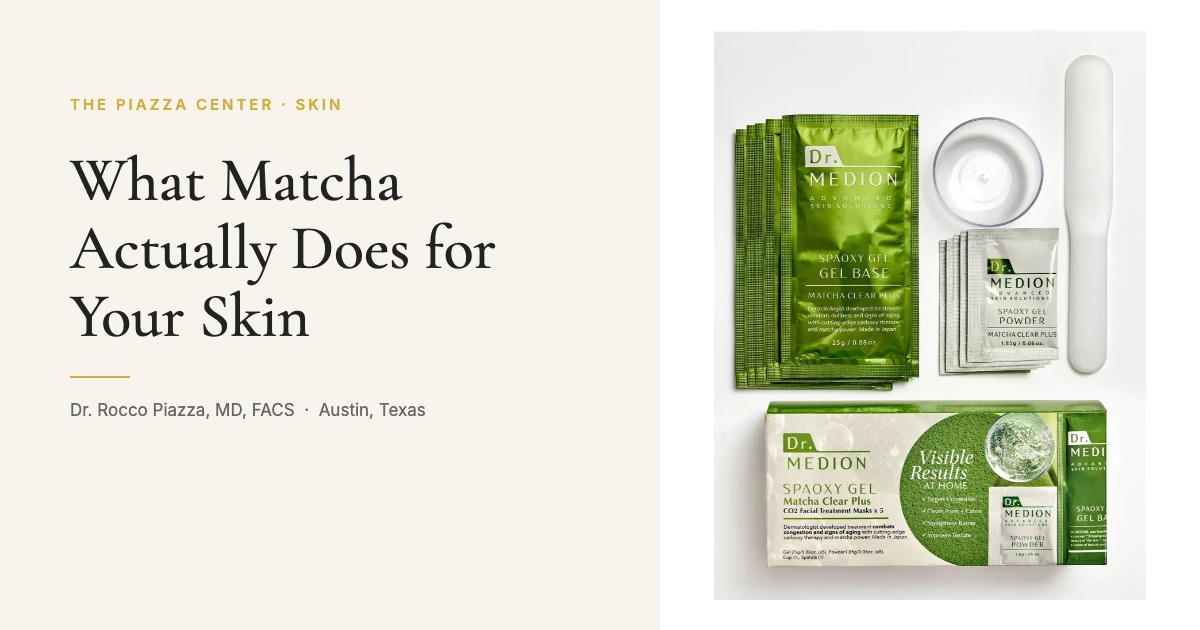
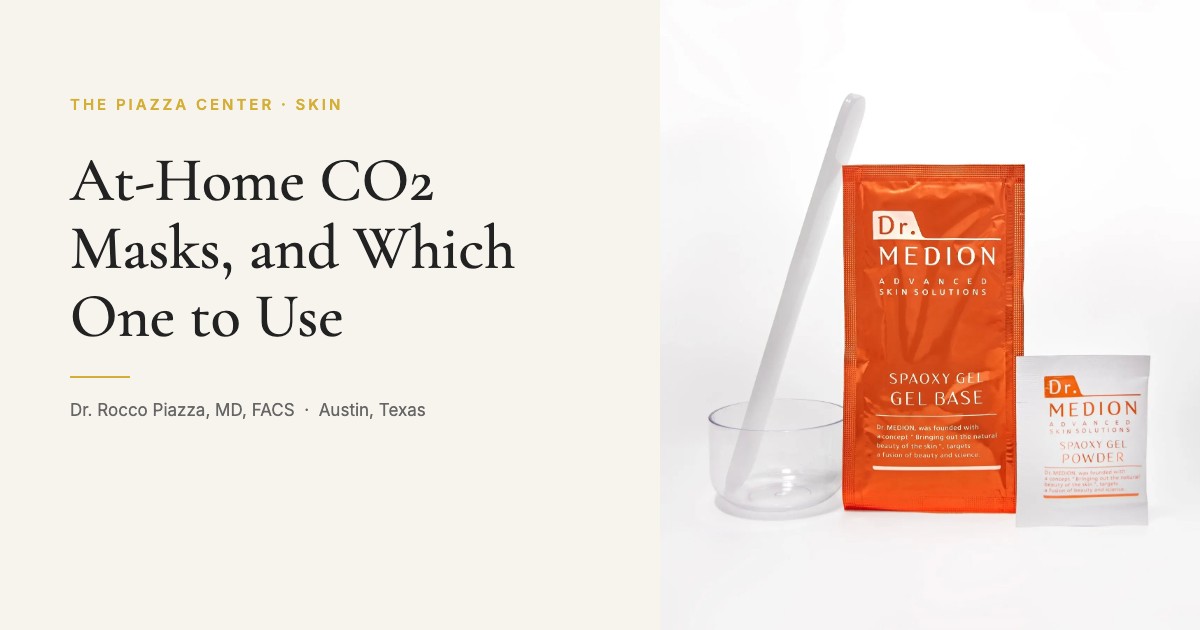
Day 2 — carboxy therapy. Dr. Medion Spaoxy Gel to cool and calm. Not before; the first 48 hours belong to ECM Restore alone.
Day 3 onward — mineral SPF, permanently. If the reason you had the laser was pigment, this is the single item that protects the result. Pavise Dynamic Age Defense adds visible-light and PA++++ protection, which a standard SPF number tells you nothing about — and visible light is a documented driver of pigment.
Pavise Dynamic Age Defense SPF 30
100% mineral, PA++++, visible light protection, 30 ml · $148.00
Shop Pavise Dynamic Age Defense SPF 30 →
Once healed — a cleanser that will not strip it back. Mineral sunscreen is designed to sit on the skin, which is why an ordinary cleanser struggles to remove it and why people end up washing twice. Two rounds of surfactant on freshly remodeled skin is how a barrier gets undone.
Pavise Gentle Amino Powerwash
Serum cleanser, removes mineral SPF in one pass, 148 ml · $64.00
Shop Pavise Gentle Amino Powerwash →
The full sequence is in our laser recovery guide.
the full Laser Recovery Protocol
Everything we send patients home with after a laser, in the order we use it
Shop the full Laser Recovery Protocol →
Who should add it — and who should not
Worth considering if you are having a deeper resurfacing treatment, you already have your take-home protocol sorted, and the add-on cost is comfortable.
Skip it if your budget is finite and your sunscreen habit is not yet daily. Spend it on the SPF. We would tell you the same thing sitting across from you.
Who performs your treatment
Nurse practitioner & laser provider · in aesthetics since 2006
“As a nurse practitioner, my goal is to provide competent, compassionate, and holistic care using evidence-based practices. I believe that by empowering patients with knowledge, we can begin to establish trust and long-term relationships.”
— April Daniel, APRN, FNP-C
Dr. Rocco C. Piazza, MD, FACS sets the medical guidance and protocols for our non-surgical services. The laser treatments and any in-office booster are performed by our non-surgical team of nurse injectors and medical aestheticians.
The booster can be added to most of our resurfacing and light treatments — ContourTRL, Erbium ProFractional, HALO, Moxi and BBL HERO, as well as microneedling.
Individual results vary. This page describes services available at The Piazza Center and is for educational purposes only; it does not constitute medical advice and makes no claim that any product or treatment described treats, cures or prevents disease. Topical exosome products offered in office are professional-use items applied by licensed clinical staff and are not sold retail. ClinicalTrials.gov identifier NCT07462533 is a registered, ongoing study; registration is not a finding of efficacy. Pricing correct at time of publication and subject to change. Suitability for any treatment is determined at consultation.
Thinking about adding a booster?
Bring it up at your consultation. We will tell you honestly whether it is worth it for your treatment and your skin — including when the answer is no.
Book a ConsultationShop the ProtocolFAQ
Frequently Asked Questions.
No. Stem cells are living cells that can divide. Exosomes are signalling packets released by cells — no nucleus, no ability to divide. They are messages, not cells, and the two are regulated differently.
No. Everything we offer is topical, applied to the skin at the time of your treatment. Nothing is injected.
Our standard booster is $100 as an add-on. The Benev option is prescription-only and quoted at consultation.
Benev is a physician-dispensed exosome line, available only through a medical practice rather than online or over the counter. We apply it topically in office.
No. It is professional-use only, applied by our team during your appointment. What you take home is a separate protocol — ECM Restore, carboxy therapy and mineral SPF.
No. Exosomes are not occlusive and do not calm the skin — they are a long-term signal delivered while the channels are open, aimed at how the tissue rebuilds over weeks. Comfort in the first days comes from ECM Restore, not from a booster.
No. It is optional and your recovery protocol is complete without it. If your budget is limited, spend it on daily sunscreen first.
Dr. Piazza sets the medical protocols. The lasers and any in-office booster are performed by our non-surgical team of nurse injectors and medical aestheticians.
No. The weeks of remodeling after a laser determine your result, and that is driven by what you do at home, not by a single application in the chair.
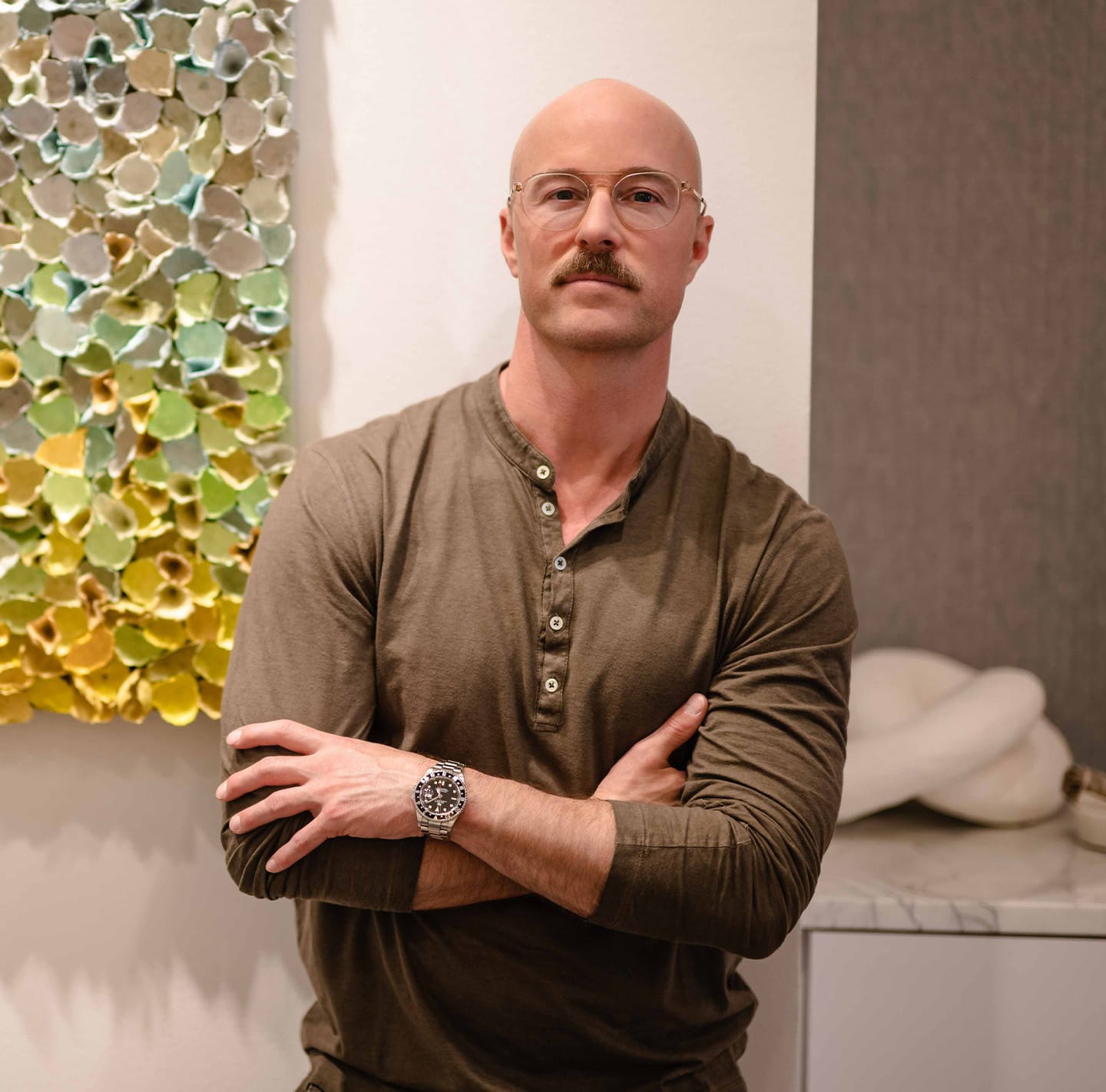
Dr. Rocco Piazza II
Board-Certified Plastic Surgeon
Dr. Piazza is a board-certified plastic surgeon practicing in Austin, TX. He specializes in aesthetic and reconstructive surgery with a focus on natural results.