

Expertly WRITTEN By
Dr. Rocco Piazza, MD, FACS
Board-Certified Plastic Surgeon & Austin's Leading Specialist in Natural, Muscle-Sparing Breast Augmentation with Motiva Preservé™.
The Case at a Glance
Technique Note: Placing the implant in a subfascial (above-the-muscle) plane and transposing the muscle keeps the chest muscle intact — so the result stays soft and natural even when an active patient flexes, rather than distorting the way an under-the-muscle implant can.
For women who lift, run, do yoga, or simply live an active life, one worry comes up again and again in consultation: "Will my implants look fake when I move — or get in the way of how I train?" It is a fair question. For decades the default breast augmentation placed the implant under the chest muscle, which can cause the breasts to flex and distort with movement (an effect called animation deformity) and can interfere with the very muscles active women rely on.
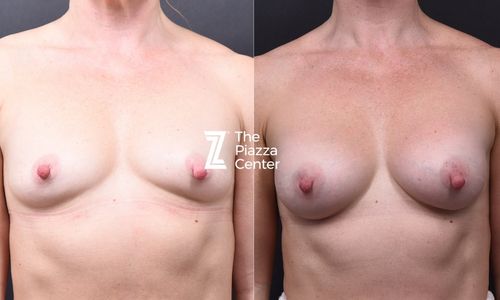
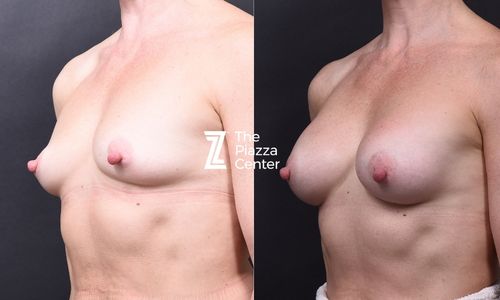
This active 47-year-old mother wanted exactly what so many fit patients want: to restore the fullness she had lost while keeping a natural, athletic shape that moves the way she does. Dr. Rocco Piazza achieved it with a muscle-sparing approach — the Motiva Ergonomix® Demi implant placed through a Neo Subfascial Pocket with muscle transposition, using the tissue-preserving Preservé™ technique.
The Neo Subfascial Pocket & Muscle Transposition, Explained
A breast implant can be placed in a few different planes. The most common is submuscular (fully under the pectoralis muscle). It has its place, but for an athletic patient it carries a trade-off: every time the chest muscle contracts — a push-up, a plank, a heavy lift — it can visibly pull and flatten the implant.
The subfascial plane sits above the muscle, beneath the thin fascia layer that covers it. Placing the implant here leaves the pectoralis undisturbed. Dr. Piazza refines this further with a Neo Subfascial Pocket — a precisely built pocket that supports the implant in a natural position — and muscle transposition, repositioning tissue to give soft, even coverage without cutting through the muscle. The result is a breast that looks natural at rest and stays natural in motion. You can read more about why Dr. Piazza favors above-the-muscle placement in this deeper look at the technique.
Why This Matters for Active Women
Sparing the muscle changes the experience in three ways that active patients feel every day. First, no animation deformity — the breasts don't flex or shift when the chest engages. Second, preserved strength and function — the pectoralis keeps doing its job for lifting, pushing, and pressing. Third, a softer, more natural feel and slope, because the implant is cushioned by the body's own tissue rather than held under tension by a working muscle. For a woman who intends to keep training, this is the difference between an augmentation that fits her lifestyle and one that fights it.
Clinical Results: A Natural, Athletic Shape
Tap either image below to reveal this patient's actual result. See the full gallery case here.
The Result: Proportionate, Natural, and Built to Move
Working within her 5'2", athletic frame, Dr. Piazza selected a 205cc Motiva Ergonomix® Demi implant — a lower-projection device that adds fullness without overwhelming a petite, fit build — and used the Preservé™ tissue-preserving technique to protect the breast's own structures. She went from a 34B to a 36C with restored upper-pole fullness and a soft, natural slope. Because the muscle was spared, the result is one she can take straight back into her training. (For a different starting point — restoring volume after pregnancy and breastfeeding — see our post-pregnancy Motiva case study.)
"For an active patient, the goal isn't just size — it's a breast that behaves naturally when she moves. Keeping the muscle intact with a subfascial pocket lets me give her a soft, real result that works with her body instead of against it." — Dr. Rocco Piazza
Muscle-Sparing Breast Augmentation FAQ
What is the Neo Subfascial Pocket technique?
It's a precisely constructed pocket in the subfascial plane — above the chest muscle, beneath the fascia that covers it — that supports the implant in a natural position without disturbing the pectoralis muscle. It's the foundation of a muscle-sparing augmentation.
Is above-the-muscle placement better for active or athletic women?
For many active patients, yes. Because the implant sits above the muscle, it doesn't flex or distort when the chest contracts (no animation deformity), and the muscle stays fully available for lifting and pressing. Candidacy depends on your tissue, which Dr. Piazza assesses in consultation.
What is muscle transposition in breast augmentation?
It's repositioning tissue to give the implant soft, even coverage without cutting through or detaching the chest muscle — preserving muscle function while still achieving smooth, natural contours.
Will breast implants affect my workouts or chest strength?
With a muscle-sparing subfascial approach, the pectoralis is left intact, so chest strength and function are preserved. Your return-to-exercise timeline is guided by Dr. Piazza based on your healing.
Which Motiva implant gives the most natural result for an athletic frame?
For a petite, fit build, a lower-projection device like the Motiva Ergonomix® Demi adds fullness in proportion to the frame. The right size and profile are chosen to match your anatomy and goals — this patient's result used a 205cc Demi.
Individual results vary. Photographs are of an actual patient of The Piazza Center, published with consent. This article is for educational purposes and does not constitute medical advice.
Want an Augmentation That Fits Your Active Life?
Dr. Rocco Piazza specializes in natural, muscle-sparing breast augmentation for Austin women who intend to keep moving.
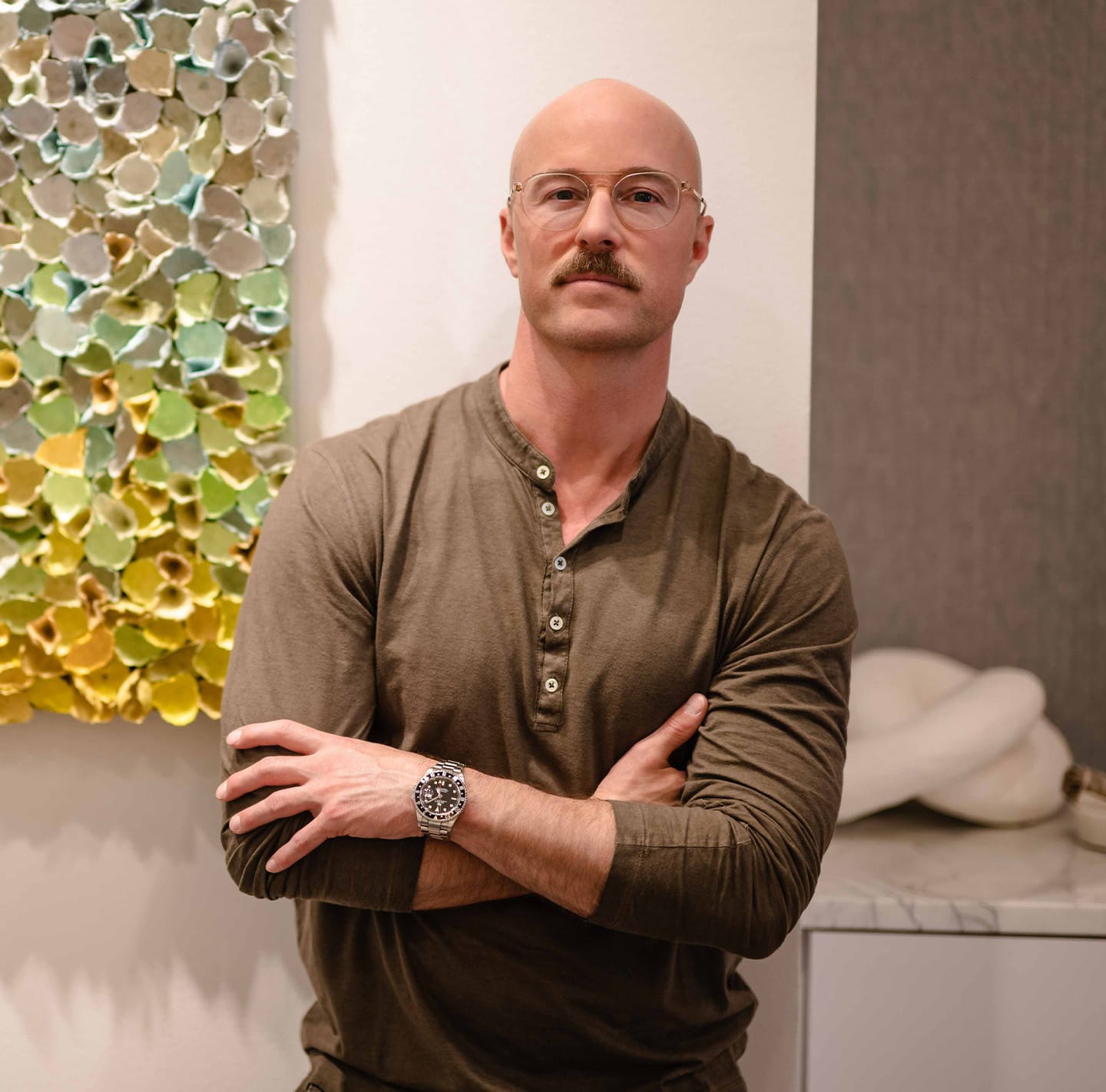
Dr. Rocco Piazza II
Board-Certified Plastic Surgeon
Dr. Piazza is a board-certified plastic surgeon practicing in Austin, TX. He specializes in aesthetic and reconstructive surgery with a focus on natural results.