


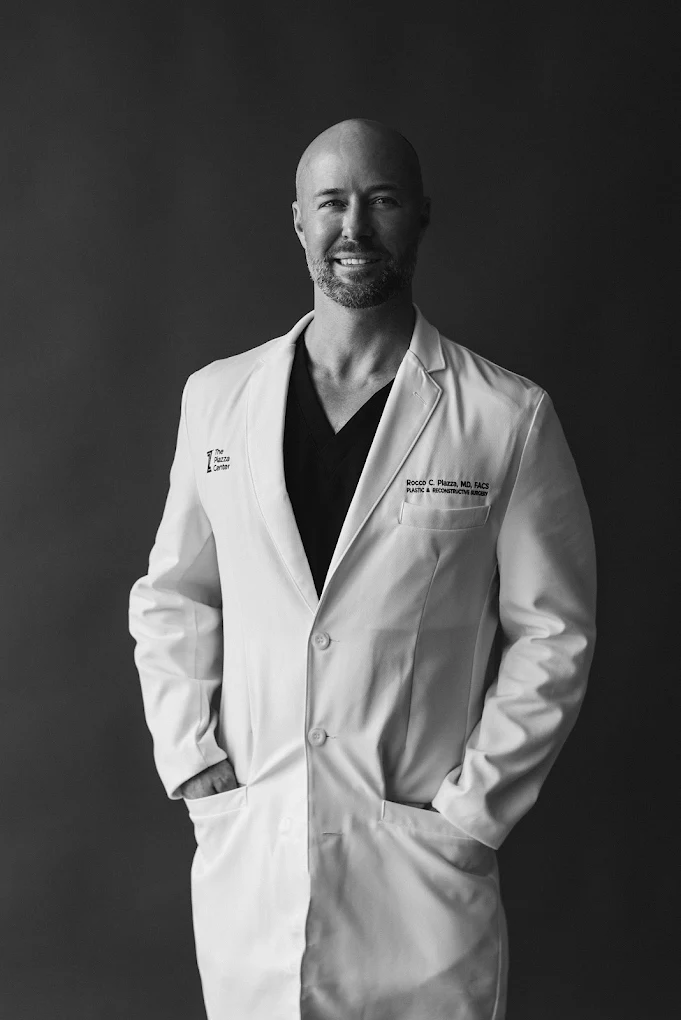
Expertly Written By
Dr. Rocco Piazza, MD, FACS
Board-Certified Plastic Surgeon practicing in Austin, Texas, and the physician who selects every product on our skincare shelf.
At a Glance
What a biostimulator is: A treatment that prompts your own cells to make more collagen
Injectable versions: Sculptra (PLLA) and Radiesse (CaHA), FDA-approved devices
What a topical can claim: Supporting the look of firmer, smoother, more even skin
The honest line: A serum cannot replace Sculptra or Radiesse. It does not add volume and it does not do what an injection does.
Where a serum earns its place: Every day, between clinic visits
What we stock: Two serums we rate highly, Pavise Bioadaptive Stress Repair and INVO Rejuvenating Complex. Most people need one, not both.
Who it suits: People maintaining skin quality, or pairing skincare with in-office treatments
Why This Matters: "Biostimulator" started as a term for injectables with years of clinical data behind them. It is now on serum labels. Knowing what the word means in each case stops you paying injectable expectations for a skincare result, or dismissing good skincare because it is not an injectable. Individual results vary.
Can a serum be a biostimulator? Not in the way Sculptra is. A serum cannot add volume or replace an injectable, but a well-made one can support firmer, smoother, more even-looking skin every day between clinic visits.
Patients are now asking me about "skin longevity" the way they used to ask about anti-aging. The shift is mostly in language, but there is something real underneath it: less interest in freezing or filling the face, more interest in keeping the skin itself in good condition for longer.
Into that space comes a new label: the topical biostimulator. It borrows a word from injectables like Sculptra. So it is fair to ask what a serum can actually do, how it compares to the injectable version, and whether it belongs in your routine.
Can a serum replace Sculptra? No. Sculptra is injected into the tissue and builds collagen and volume over months. A serum sits on the surface. What a good serum does well is the daily work: protecting the skin from the damage that breaks collagen down and keeping skin quality up between your clinic visits. That is a real job, and it is a different one.

Key Takeaways
- Injectable biostimulators place material inside the skin and have FDA-reviewed data. A serum works from the surface and is regulated as a cosmetic.
- A topical will not replace Sculptra or Radiesse. It can support skin quality day to day, between and after treatments.
- Sunscreen and a retinoid are still the foundation. A topical biostimulator is an addition, not a substitute.
What Is a Topical Biostimulator?
A topical biostimulator is a skincare product designed to support the skin's own collagen-making cells, the fibroblasts, from the surface. Injectable biostimulators like Sculptra and Radiesse are FDA-approved devices placed into the skin that trigger new collagen over months. A serum cannot match that, but a well-designed one can support firmer, smoother, more even-looking skin with daily use.
The word is doing a lot of work, so it helps to separate the two.
How Injectable Biostimulators Work
Sculptra is made of poly-L-lactic acid (PLLA) microparticles. Galderma describes it as a collagen stimulator that was first approved for aesthetic use in the US in 2009; in 2023 the FDA approved it for fine lines and wrinkles in the cheek area, with results described as lasting up to two years.
The mechanism is a controlled response to the particles. A 2024 review in the Journal of Cosmetic Dermatology describes fibroblasts exposed to PLLA producing more type I collagen through TGF-β signalling, with immune cells called macrophages likely shifting into an anti-inflammatory, repair-oriented state. In one small human study it summarises, type I collagen rose 65.5% at three months in 14 subjects. The authors are clear that the precise mechanism is not fully understood.
Radiesse is calcium hydroxylapatite (CaHA). In 2026 the FDA approved it for wrinkles of the décolleté, which Merz describes as its fourth US aesthetic indication, alongside facial folds, the backs of the hands and, for Radiesse (+), the jawline. Merz calls it a regenerative biostimulator and states that results can last up to two years.
We compare these and EZGel PRF in our guide to EZGel PRF vs other fillers and biostimulators.
Injectable vs Topical Biostimulators
| Sculptra (PLLA) | Radiesse (CaHA) | Topical serum | |
|---|---|---|---|
| Where it works | Injected into tissue | Injected into tissue | Applied to the surface |
| Regulated as | FDA-approved device | FDA-approved device | Cosmetic |
| Adds volume | ✓ Gradually | ✓ Immediately | — |
| Stated duration | Up to 2 years | Up to 2 years | While you use it |
| Tone, texture, glow | Indirect | Indirect | ✓ Daily |
| Downtime | Some swelling | Some swelling | None |
Sources: Galderma, 2023; Merz Aesthetics, 2026; FDA. Durations are manufacturer statements.
Clinic Visits vs Every Day: Who Does What
The easiest way to see it is a calendar. The injectable is a few visits a year. The serums are every morning and every night in between.
Why Skin Loses Collagen in the First Place
Collagen is made in the dermis by fibroblasts. With age, and much faster with sun, two things happen: fibroblasts make less, and existing collagen is broken down faster.
Oxidative stress sits in the middle of that. A review in Biomolecules states that extrinsic aging is driven to a large extent by oxidative stress caused by UV, with UVA the main source of reactive oxygen species in skin. Those reactive molecules switch on enzymes called matrix metalloproteinases, which degrade collagen. The same review found fibroblasts carry more oxidative protein damage than surface cells under UV.
Where Collagen Is Lost, and Where Each Approach Acts
Simplified diagram. Collagen loss and MMP activity per Rinnerthaler et al., Biomolecules, 2015.
That gives a topical two honest jobs: reduce the oxidative load on the skin, and support fibroblast activity as far as a surface product can. It does not give it the job of rebuilding volume.
What a Topical Can Legally and Honestly Claim
This matters more than most product pages admit. Under US law, a product intended to affect the structure or any function of the body is a drug, and the FDA gives "regenerate cells" as an example of a drug claim. Skincare sold as cosmetics has to stay on the side of appearance: firmer-looking, smoother, more even.
So when a brand calls a serum a biostimulator, read it as a description of the design intent and the lab work behind it, not as an equivalent of an injectable. That is not a criticism. It is the right frame for judging the product.
What the Evidence Looks Like
80%
Inflammatory ROS neutralized
Pavise's stated figure for DiamondCore; method not published (Pavise)
Different kinds of evidence: a human biopsy study of an injectable, a controlled human study of a topical, and a manufacturer mechanism claim. They are not directly comparable.
Note the middle card. The best-studied topical for collagen is still a retinoid. In that study, a 0.4% retinol lotion used for 24 weeks increased procollagen and improved fine wrinkles in naturally aged skin. Anything sold as a topical biostimulator should be judged against that baseline, and ideally used alongside it.
Pavise Bioadaptive Stress Repair: What It Claims
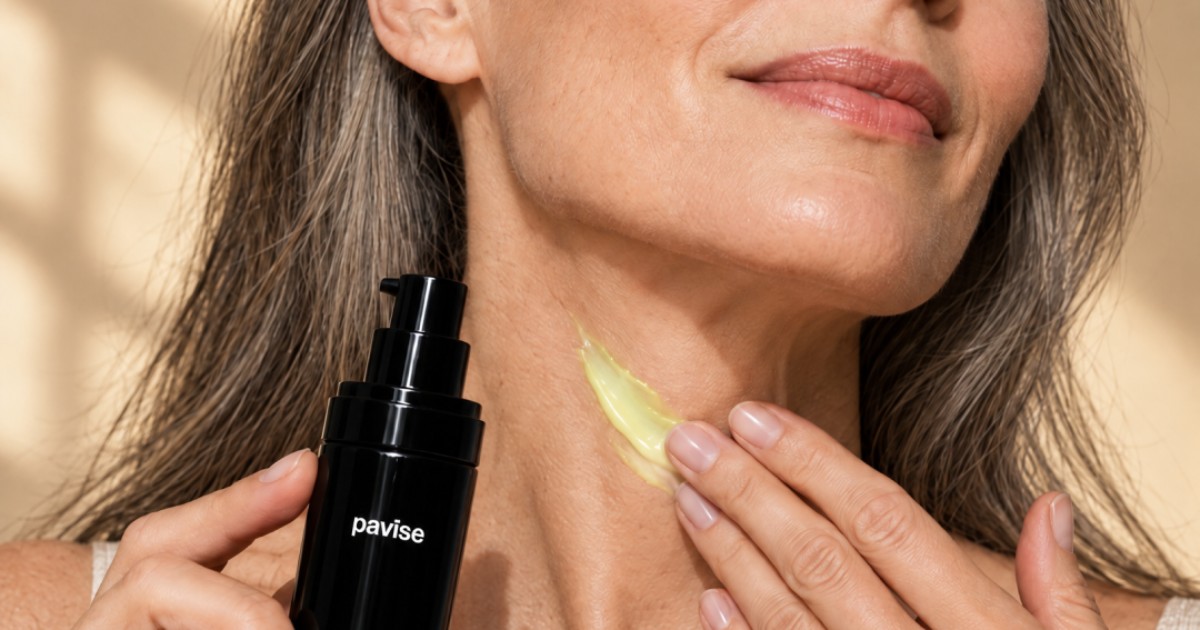
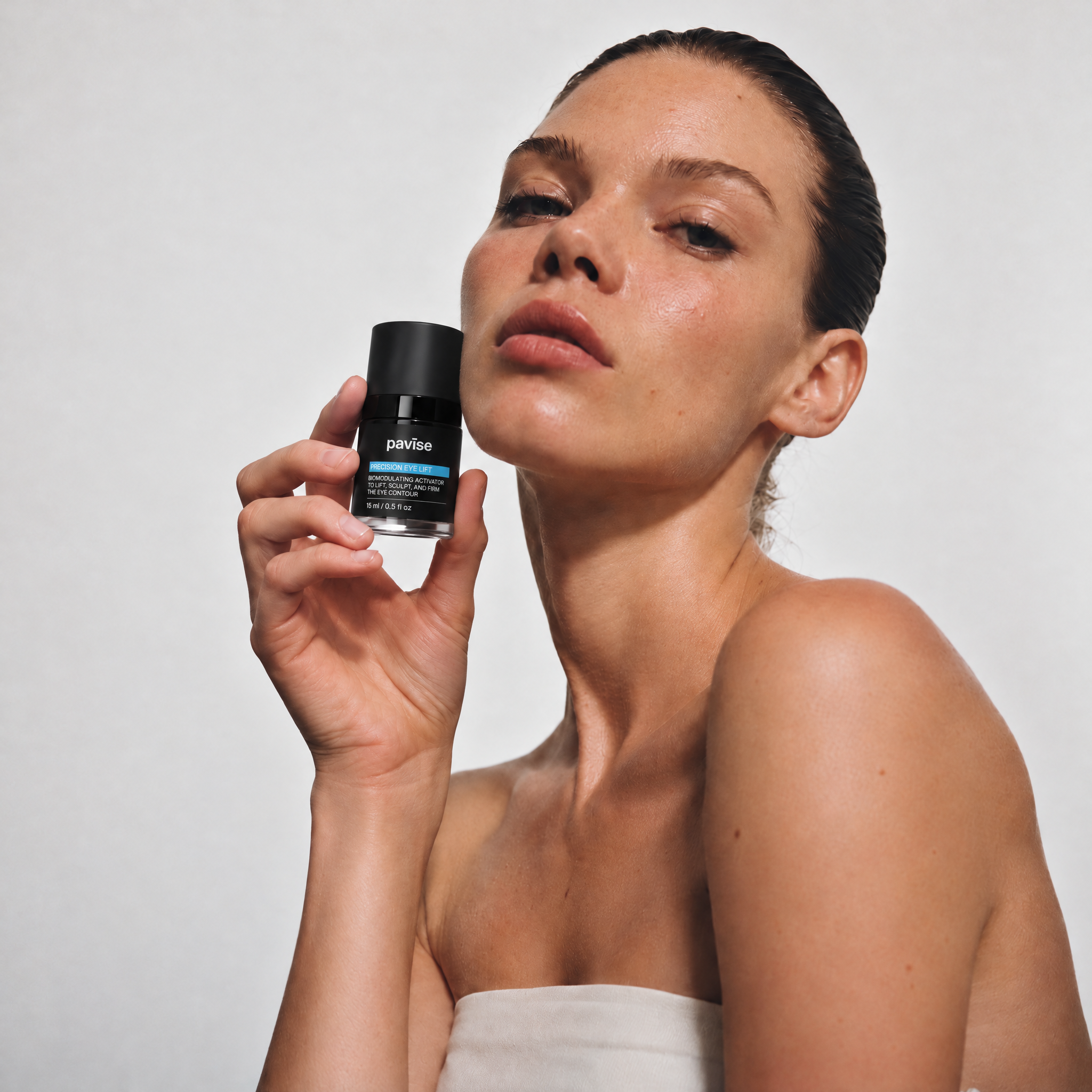
Pavise was founded by Sophie Bai, an MIT-trained bioscientist, and its scientific advisory board is chaired by Moderna co-founder Bob Langer, according to Beauty Independent. Its night serum, Bioadaptive Stress Repair, is the product the brand positions as a daily topical biostimulator.
Pavise reports that the serum supports collagen synthesis and fibroblast activity, neutralizes 80% of inflammatory reactive oxygen species and doubles the penetration of the actives paired with it. In human skin cells in the lab, Pavise states it restored 91% of optimal collagen production. In an eight-week third-party study, Pavise reports that 97% of users noticed visibly firmer skin at four weeks. That last figure is self-assessment, and the sample size is not published.

The formula combines the brand's DiamondCore technology with sculpting hexapeptides, a barrier complex and a pigment-fade complex. It is fragrance-free and vegan, and goes on clean skin at night.

What We Saw in Our Own Clinic
Before we stocked it, Kari, our medical aesthetician, used the full Pavise line for three months through an Austin summer. She saw a marked drop in the pigmentation on her cheeks, more even tone and softer fine lines, and she did not have a rosacea flare that summer, which is her own observation, not a claim that the products treat rosacea.
The caveats are important. That is one person, using the whole line including sunscreen, not a controlled trial of one serum. It persuaded us the products were worth stocking. It does not prove what any single product does. Her full write-up is in our team test.
"I do not tell patients a serum will do what Sculptra does. I tell them that the skin they bring to every treatment is the skin we are working with, and that daily care decides how long a result holds. A good topical is part of that, alongside sunscreen and patience." — Dr. Rocco Piazza, MD, FACS
Kari (@skin_kare_atx), our medical aesthetician, on why she reaches for Bioadaptive Stress Repair.
Who a Topical Biostimulator Suits
Good fit: people in their 30s to 50s who want to maintain skin quality; people with early laxity, dullness or uneven tone who are not ready for injectables; and anyone already having in-office treatments who wants daily support between them.
Not a fit on its own: visible volume loss in the temples or cheeks, deep folds or significant laxity. Those need a structural treatment, and a serum used instead of one will disappoint.
Sensitive or reactive skin: a fragrance-free formula like this one is a reasonable choice, but introduce one new product at a time.
How It Pairs With In-Office Treatments
This is where we use it most. In our laser protocol, patients start Bioadaptive Stress Repair about two weeks before RF microneedling, Moxi, HALO, BBL or CO2 to arrive with calm, well-supported skin, then restart it four to seven days after treatment once the skin has closed. The full sequence is in our day-by-day aftercare guide.
For patients who have Sculptra or Radiesse, the logic is the same. The injectable works on structure over months; daily sunscreen and a well-made serum look after the surface and limit the oxidative damage that breaks collagen down.
Two Serums We Rate: Bioadaptive Stress Repair vs INVO
We stock two daily serums we trust between clinic visits. They work differently, and most people should pick the one that fits their skin rather than buy both.


| Bioadaptive Stress Repair | INVO | |
|---|---|---|
| Core technology | DiamondCore® + peptides | Human cell-derived exosomes |
| Texture | Richer; can replace a light moisturiser | Light serum |
| Pick it if | Pigment, redness or early laxity is your main concern | You have regular microneedling or laser |
| Price | $228 | $285 |
| Replaces Sculptra? | ✗ | ✗ |
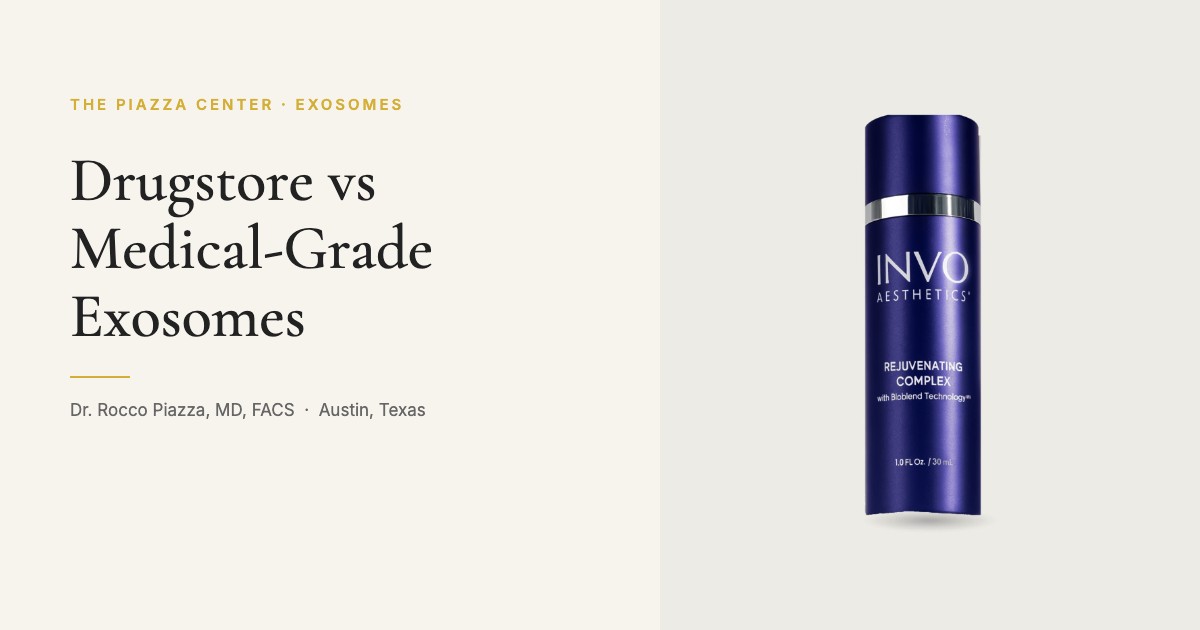
Either one, used every day with sunscreen, is the kind of daily care that helps a clinic result last. Neither is a substitute for the clinic result itself. We use exosomes topically only; more on INVO in why we chose INVO.
Dr. Rocco Piazza (@roccopiazzamd) on pairing daily UV protection with collagen support.
What We Stock
- Pavise Bioadaptive Stress Repair ($228) — the nightly serum discussed here.
- INVO Rejuvenating Complex ($285) — the exosome alternative, best if you have regular procedures.
- Pavise Dynamic Age Defense SPF 30 ($148) — untinted mineral SPF; the daytime half of the routine.
- Pavise 3-Step Essential Kit — Powerwash, Bioadaptive Stress Repair and SPF 30, $44 less than separately.

Topical Biostimulators: Common Questions
What is a biostimulator?
A treatment designed to prompt your own cells to make more collagen. The term comes from injectables such as Sculptra (poly-L-lactic acid) and Radiesse (calcium hydroxylapatite); some skincare brands now use it for serums.
Is there a skincare alternative to Sculptra?
No. Skincare cannot add volume or do what an injected biostimulator does. A good serum supports firmer, smoother-looking skin every day between treatments. Think of it as the daily care that helps a clinic result last.
Can skincare really increase collagen?
Retinoids have the strongest human evidence. Newer serums show collagen effects in lab studies, which is promising but not the same as proof in people. Individual results vary.
How long does a topical biostimulator take to work?
Plan on at least four to eight weeks of nightly use. Pavise reports user-noticed changes at four weeks in its eight-week study. Individual results vary.
Can I use it with retinol?
Pavise describes the serum as compatible with any routine. If you use both, introduce them one at a time and pause both before laser as your provider directs.
What does "skin longevity" actually mean?
In practice: protecting the skin from the UV and oxidative damage that breaks collagen down, and supporting repair. Daily sunscreen does most of that work. Everything else builds on it.
Individual results vary. The products discussed are cosmetic products and are not intended to diagnose, treat, cure or prevent any disease. Manufacturer figures are attributed to the manufacturer; in-vitro results are laboratory findings and do not predict results in people. Cited studies are linked to their published sources. This article is for educational purposes and does not constitute medical advice; speak with a qualified physician about what is appropriate for your skin.
Serum, Injectable or Both? Let's Decide Together.
Dr. Rocco Piazza and our Austin aesthetics team will look at your skin and tell you what a topical can do for it, and when a structural treatment is the better answer.
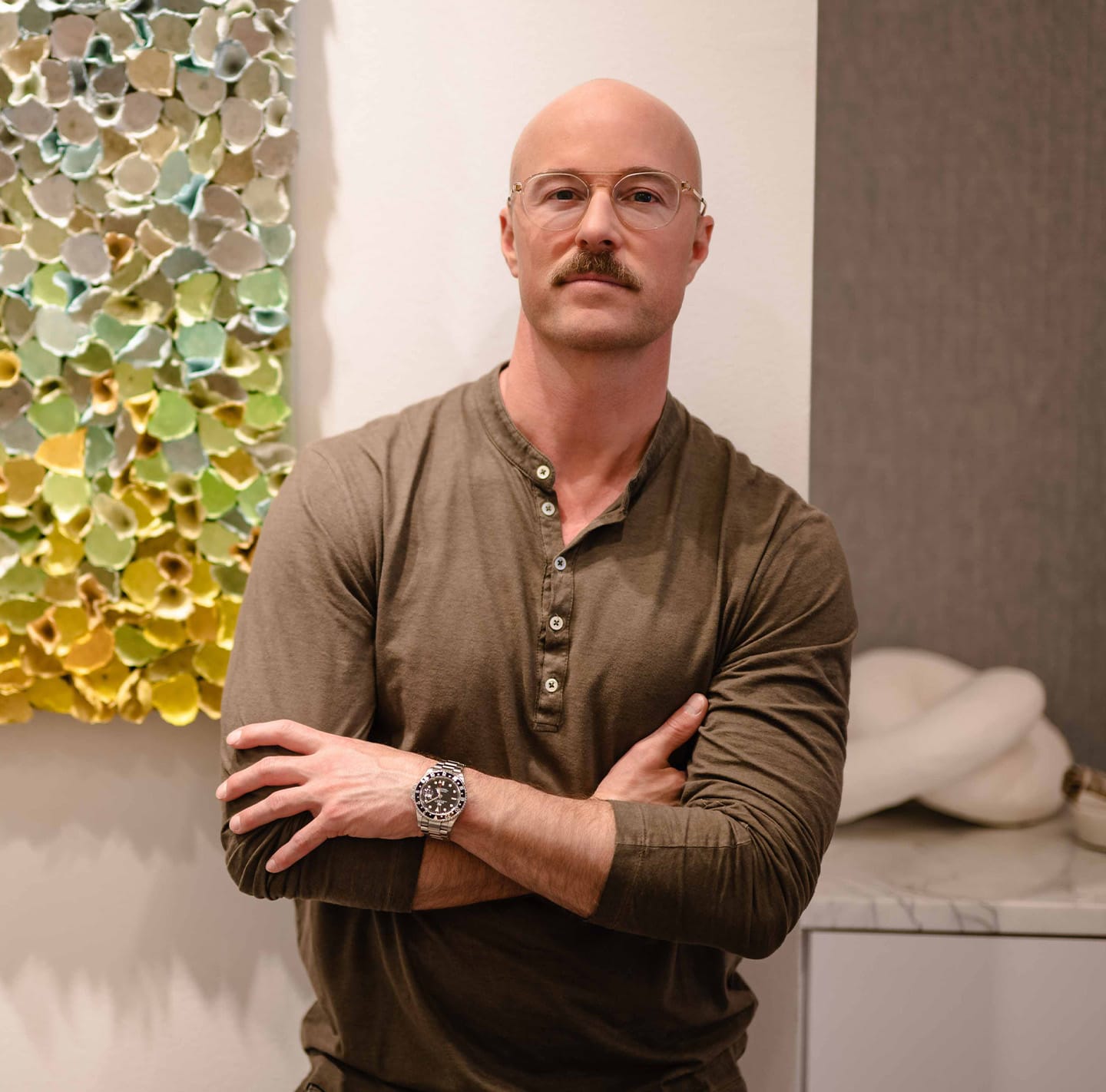
Dr. Rocco Piazza II
Board-Certified Plastic Surgeon
Dr. Piazza is a board-certified plastic surgeon practicing in Austin, TX. He specializes in aesthetic and reconstructive surgery with a focus on natural results.