


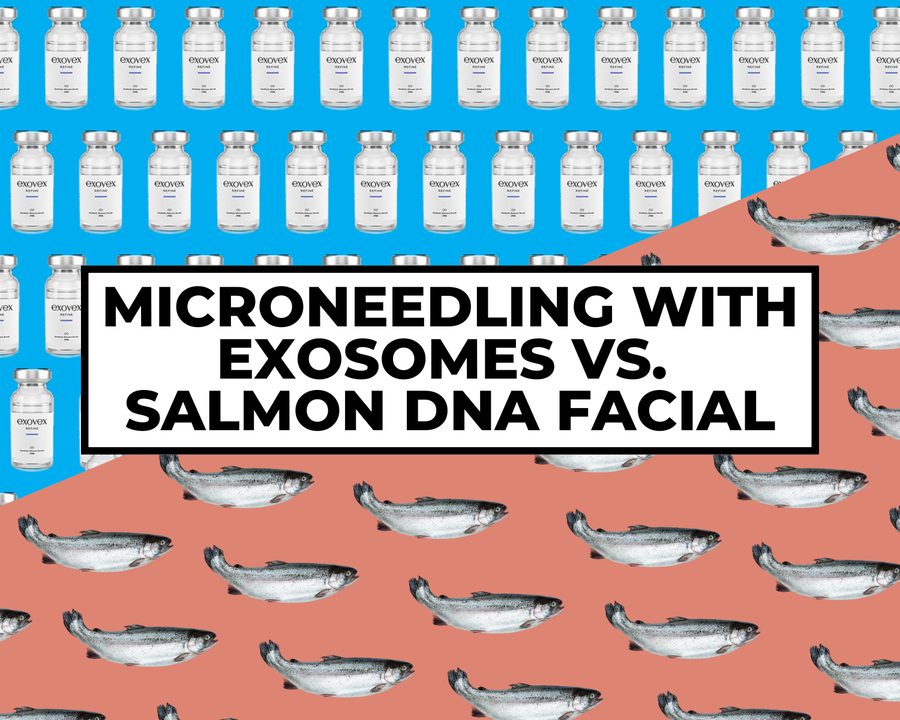
Achieving radiant, youthful skin is a common goal, but with numerous treatment options available, choosing the right path can be overwhelming. Two popular contenders in the skincare realm are microneedling with exosomes and the salmon DNA facial (often referred to as the "mermaid facial"). Let's dive into the details of each to help you determine which treatment aligns best with your skin goals.
The short answer: they do different jobs. Microneedling with exosomes is an in-office treatment that uses a microneedling pen to stimulate your skin's own collagen, with exosomes applied to the skin right afterward. A salmon DNA facial is aimed mainly at hydration and calming the skin. The right choice depends on your skin concerns, and we help you decide at a consultation.
Microneedling with Exosomes: A Synergistic Approach
Microneedling involves creating tiny punctures in the skin to stimulate collagen and elastin production. At The Piazza Center, exosomes are applied to the skin's surface right after microneedling. Exosomes are vesicles made by cells that carry many signals at once, and the human research on them is promising but still early.
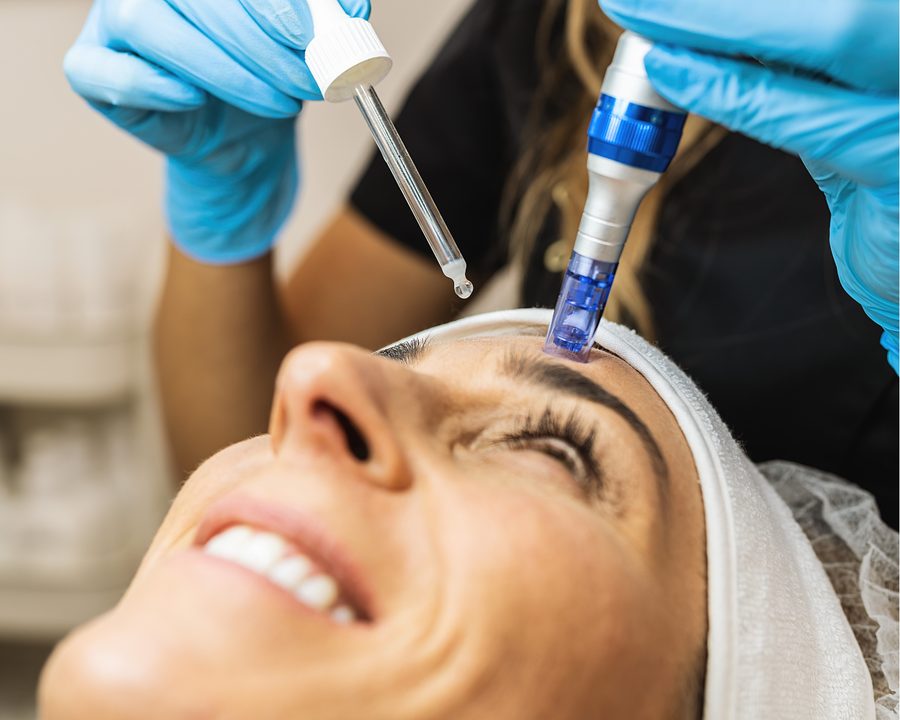
Microneedling is used for a range of skin concerns, including:
- Fine lines and wrinkles
- Acne scars
- Uneven skin tone
- Enlarged pores
- Loss of elasticity
- Dull skin
Salmon DNA Facial (Promoitalia NUCLEOSKIN®): A Hydrating Boost
The salmon DNA facial, made popular by celebrities like Kim Kardashian, harnesses the power of polydeoxyribonucleotides (PDRN) derived from salmon sperm DNA. This treatment aims to hydrate and rejuvenate the skin by supporting the skin's repair processes and calming inflammation. It can improve skin texture and tone, and individual results vary.
Choosing the Right Treatment
Selecting the ideal treatment depends on your specific skin concerns and desired outcomes. Here's a quick comparison:
| Feature | Microneedling with Exosomes | Salmon DNA Facial |
| Target Concerns | Fine lines, wrinkles, acne scars, uneven tone, loss of elasticity, loss of collagen | Dryness, dehydration, dullness, uneven texture |
| Results | Visible improvement in skin texture, tone, and firmness, and radiance | Increased hydration, improved skin radiance |
| Downtime | Minimal to moderate redness and flaking | None |
| Ideal Candidate | Individuals seeking skin rejuvenation and collagen stimulation | Those with dehydrated or dull skin |
What Happens During Microneedling with Exosomes at The Piazza Center
We use the SkinPen® microneedling device, the first FDA-cleared microneedling device, with a sterile, single-use tip for every treatment. A soothing topical gel is applied first for comfort, and the settings are customized to your skin. Most procedures last about an hour. Right after microneedling, while the skin's tiny channels are briefly open, a sterile exosome product is applied to the surface.
Recovery: skin can look flushed for up to 4 days, and some people heal within 24 hours. Most people return to normal activities the same day.
How many treatments: for most concerns we recommend a series of 3 to 6 treatments, with quarterly maintenance sessions and yearly touch-ups. Results build over the weeks that follow as new collagen forms. Individual results vary. For what to use on your skin in the days afterward, see our day-by-day aftercare guide.
What Is Salmon DNA (PDRN)?
PDRN, short for polydeoxyribonucleotide, is DNA taken from salmon or trout sperm and then purified to remove the proteins that could provoke an immune reaction. It acts mainly on one receptor, adenosine A2A, which is linked to wound repair and lower inflammation. In the US, topical PDRN serums are sold as cosmetics, while PDRN injections would be regulated as a dermal filler and are not FDA-approved.
Many of the dramatic before-and-after photos people associate with salmon DNA come from injected polynucleotides in clinics abroad, not from serums. DNA fragments are large and do not reach the same depth through intact skin, so topical PDRN is better understood as support for hydration and calming the skin than as a substitute for a procedure. Dr. Piazza explains the science in Exosomes vs PDRN (Salmon DNA): What Each Does, and Whether to Use Both.
Are Exosomes FDA Approved?
No. The FDA states that there are currently no FDA-approved exosome products. Topical exosome skincare is sold as a cosmetic, which does not require FDA approval, and the adverse events reported in the medical literature involve injections, not topical products. At The Piazza Center we use exosomes topically, on the skin's surface right after microneedling, and we do not inject them. Read Dr. Piazza's full answer in Are Exosomes FDA Approved, Safe or Legal? A Plastic Surgeon's Straight Answer.
Disclaimer: It's essential to consult with a qualified skincare professional to determine the best treatment for your individual needs. Please book a complimentary consultation with Kari Van Zandt or Annie Pankl who can identify the right treatment path for your non-surgical needs.
The Piazza Center: Your Partner in Skin Transformation
At The Piazza Center, we offer microneedling with Evovex® exosomes. Our expert team will carefully assess your skin and recommend the treatment that will deliver the most optimal results.
Ready to unlock the secret to radiant skin? Contact us today to schedule a consultation.
FAQ
Frequently Asked Questions.
The SkinPen® device we use is FDA-cleared for microneedling. No exosome product is FDA approved. Exosomes used on the skin's surface are sold as cosmetics, which do not require FDA approval, and we apply them topically right after microneedling. We do not inject exosomes.
A salmon DNA facial uses PDRN, purified DNA from salmon or trout, mainly to hydrate and calm the skin. Microneedling with exosomes uses a microneedling pen to stimulate your skin's own collagen, with exosomes applied to the skin afterward. They do different jobs, and the right choice depends on your skin concerns.
Neither is better across the board. PDRN has a clearer single mechanism and a longer injectable history abroad. Exosomes carry broader signals but have earlier human data. They suit different goals, and individual results vary.
Skin can look flushed for up to 4 days, and some people heal within 24 hours. Most people return to normal activities the same day.
For most concerns we recommend a series of 3 to 6 treatments, with quarterly maintenance sessions and yearly touch-ups. Individual results vary.
Pricing depends on the number of sessions recommended and whether growth factors, peptides or other enhancements are included. After assessing your skin at a consultation, we share a tailored treatment plan and pricing. Financing is available through Cherry, CareCredit® and PatientFi.
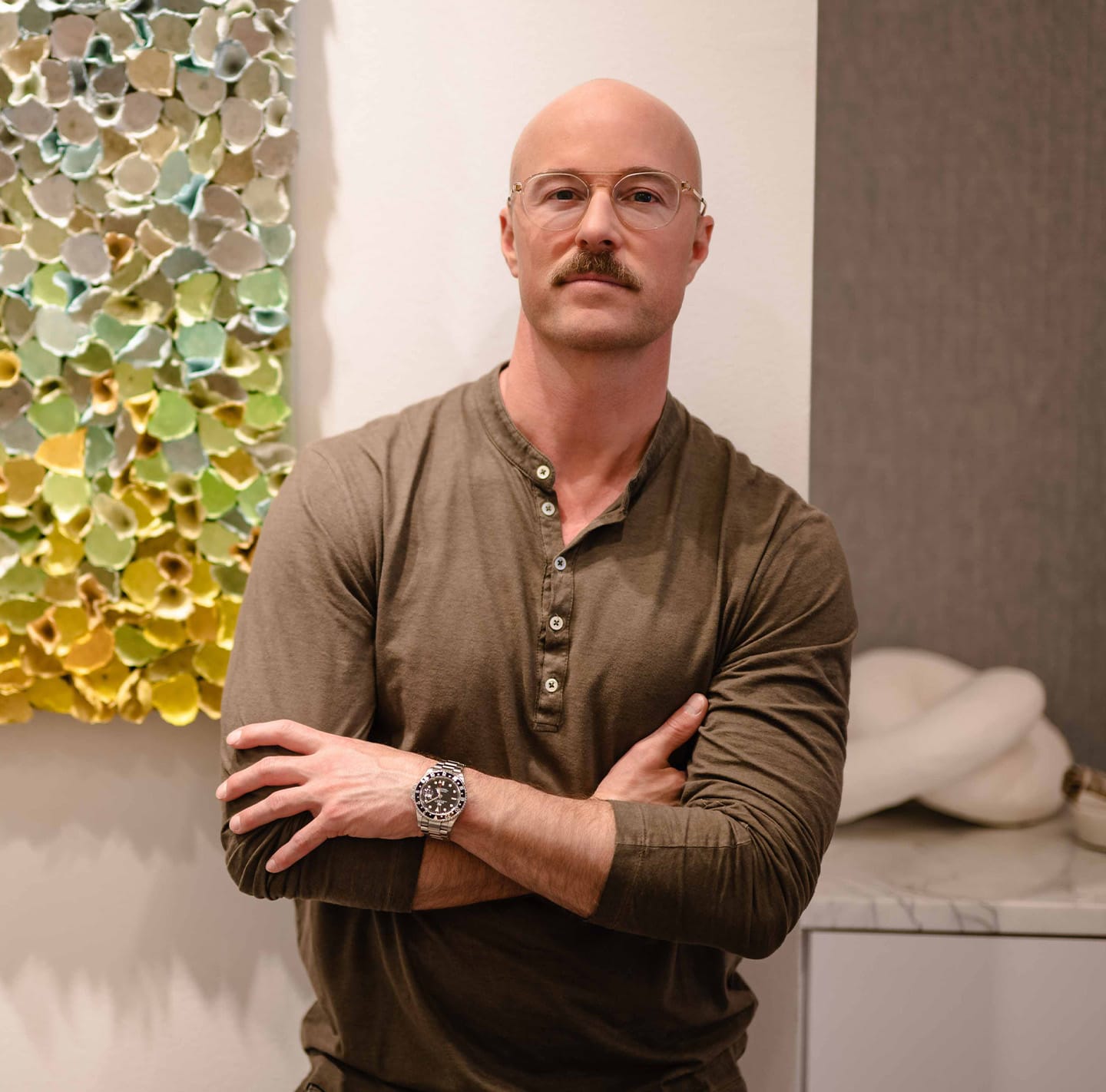
Dr. Rocco Piazza II
Board-Certified Plastic Surgeon
Dr. Piazza is a board-certified plastic surgeon practicing in Austin, TX. He specializes in aesthetic and reconstructive surgery with a focus on natural results.