





Dr. Rocco C. Piazza, MD, FACS
Board-Certified Plastic Surgeon · The Piazza Center, Austin, TX
The Test at a Glance
Subject: Kari, our lead medical aesthetician
Duration: Three months, through an Austin summer
Regimen: The full Pavise line, nightly — cleanser, night serum, SPF, eye concentrate
Measured by: VISIA standardised facial imaging, same machine, both sessions
Also in the protocol: Halo resurfacing, neurotoxin, exosome serums
Honesty Note: This is one person on our own staff, not a clinical trial. The imaging is standardised, but one person is still one person — and she was on a protocol with several moving parts, which we name in full below so you can discount the result appropriately.
We do not stock a skincare line until someone here has lived with it. Not sampled it, not read the deck — used it every night for months, on their own face, while doing their actual job.
Pavise has only just gone on our shelf. Before it did, our lead medical aesthetician ran the entire line for three months, through the worst of a Texas summer. This is what happened over those three months, including the parts that argue against it.
Why we test before we stock
Professional skincare is sold to practices the same way it is sold to patients: with a folder of studies, a mechanism that sounds inevitable, and photographs taken under lighting no one has in their bathroom. Most of it is real. Almost none of it answers the question that actually decides whether a product works for you, which is whether you will still be using it in week nine.
That question cannot be answered by a study. It can only be answered by someone using the thing long enough to get bored of it. So that is the test we run, and we run it on staff before we run it on patients, because the cost of being wrong lands on us instead of on you.
It is a low bar scientifically. It is a high bar commercially — it is the reason several lines that wanted to be in this building are not.
Kari: three months, pigment and redness
Kari is our lead medical aesthetician. She has access to everything in the dispensary, at no cost, and no obligation to keep using any of it. She ran the full Pavise regimen nightly for three months across the summer, finishing shortly before we made the decision to stock it.
What she reported at the end of it: a marked drop in pigmentation across her cheeks, no rosacea flares across the entire period, more even overall tone, and softer fine lines.
Her timeline is worth more than the endpoint, because it tells you when to judge it. Calmer skin inside the first fortnight. Visible change around week four. Firmness somewhere in weeks eight to twelve. Nothing dramatic happened quickly, which is the ordinary and honest shape of a topical result.
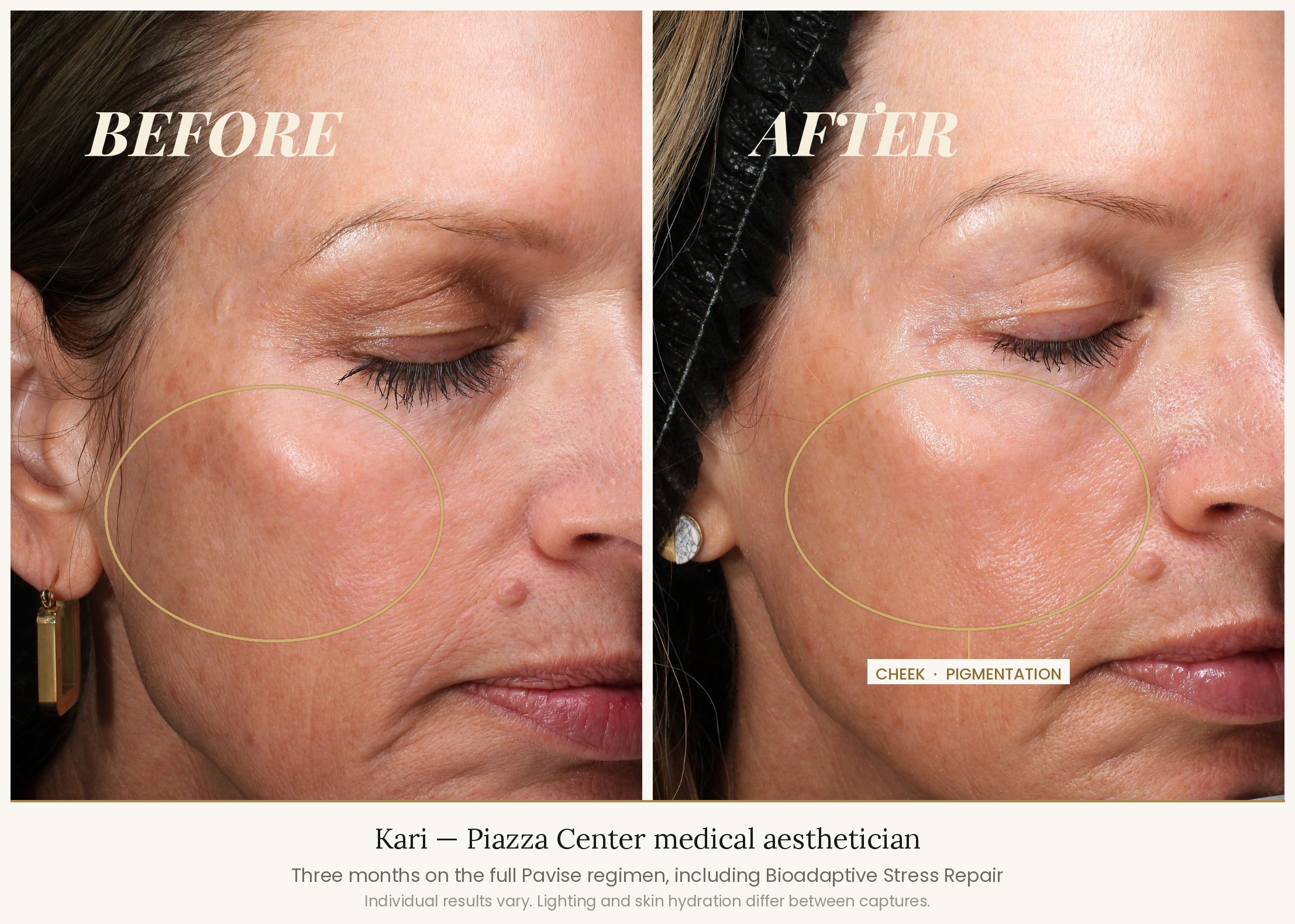
Cheek pigmentation, three months apart. VISIA standardised capture; the marked field is the same region on both frames.
The second set is the periorbital area. Both the upper eyelid and the under-eye are marked, on both frames, so you are comparing like with like rather than being steered to the flattering half.
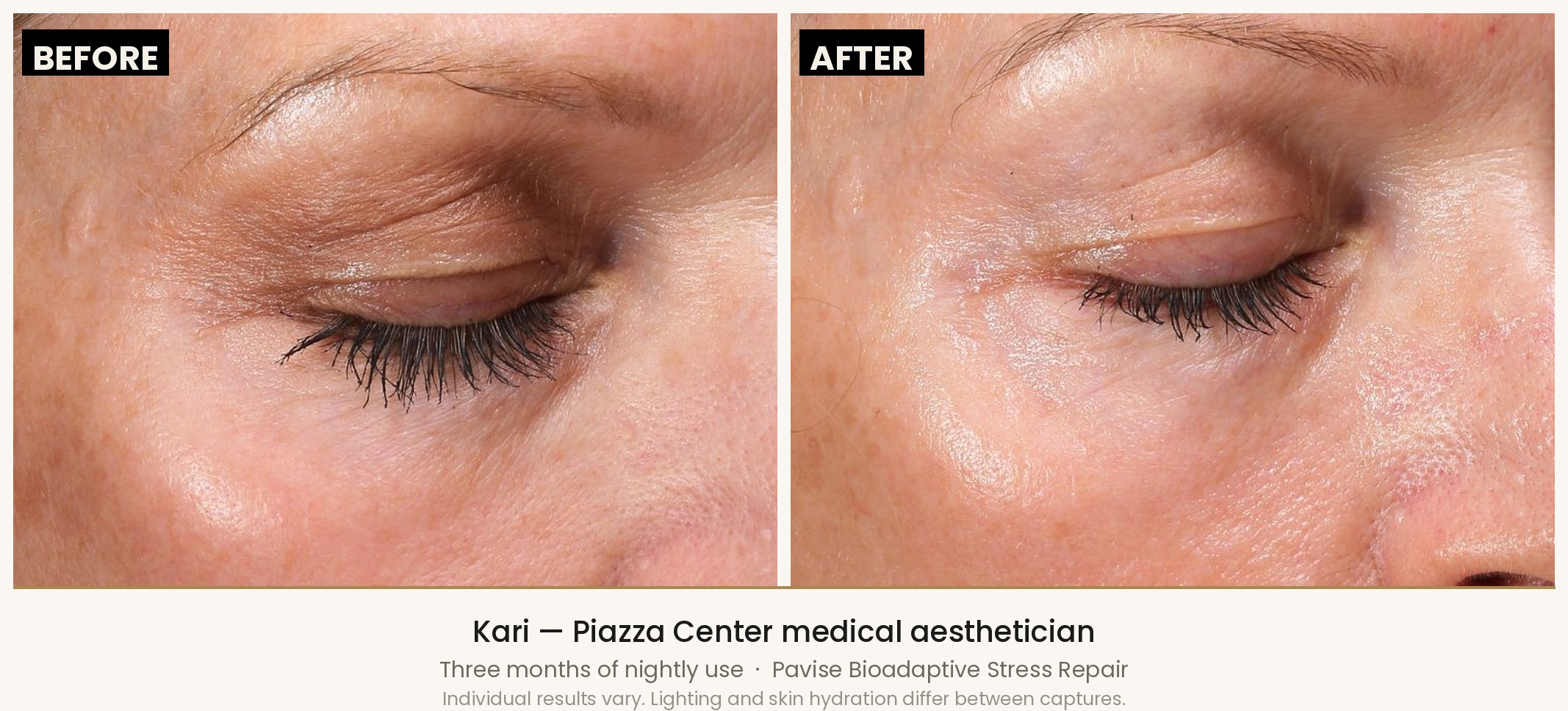
Periorbital comparison, three months apart. VISIA standardised capture; upper eyelid and under-eye marked on both frames.
These are not snapshots. Both frames were captured on the VISIA imaging system we use with patients — the same machine, in the same room, with head position, lighting and camera settings standardised between sessions. That matters more than it sounds. The usual objection to a skincare before-and-after is that the light changed, the angle changed, or the skin was freshly moisturised in the second frame. Standardised capture removes that objection, which is why we use it on patients and why we used it here.
The pigment change is the largest visible difference between the two sessions, and it is also the change she noticed first.
So what is left to argue about is not the photographs. It is everything around them, which we deal with below.
Exactly what she used
Four products, every night, for three months. No substitutions and nothing added halfway through — which is the only reason the three months mean anything.
If you are only going to start one of them, start with the sunscreen. That is true of every routine we have ever recommended and it is not specific to this brand.
What was actually in the protocol
This is the section most articles of this kind leave out, and leaving it out is what makes them dishonest. Kari was not only using Pavise over those three months. She was also on our standard staff protocol:
- Halo fractional resurfacing, twice a year. This addresses photodamage and pigment directly, and it is the most powerful single variable on this page.
- Neurotoxin, quarterly. Relaxes the muscles that produce expression lines.
- Exosome serums, nightly, alongside the Pavise regimen.
So a fair reading is not "Pavise did this." A fair reading is that a topical regimen sat on top of in-office treatment for three months and the skin got better, and that the topical layer is the part that runs every night in between. Topicals are the maintenance layer between procedures. That is the honest division of labour, and anyone who tells you the bottle did all of it is selling you the bottle.
What Pavise claims, and who is claiming it
Pavise's own position is that its DiamondCore® technology doubles the penetration and efficacy of the age-defying actives it is paired with, and the company documents photographic change at four weeks and instrumental measurement at six. Those are Pavise's data and we present them as Pavise's, not as ours. We have not independently verified them and this article is not an attempt to.
What we can tell you is what happened to one person here over three months, which is a much smaller claim, and the only one we are in a position to make.
I have watched a lot of skincare lines come through this practice with excellent folders and nothing behind them. What persuades me is not the study. It is that three months in, the person using it has not quietly gone back to what she was using before. That is a low bar and a surprisingly hard one.
— Dr. Rocco C. Piazza, MD, FACS
What this does and does not prove
It does not prove Pavise works. One person is not a study, she works here, and the result does not isolate a single product from a protocol with several moving parts — she was also having Halo and neurotoxin on our usual schedule.
What the standardised imaging does buy us is that the comparison itself is sound — the difference between those two frames is a difference in her skin, not in the lighting. What it cannot do is tell you which part of the protocol produced it.
What it does tell you is the thing a clinical folder cannot — someone who could use anything in our dispensary, for free, chose to keep using this for three months. In a category where most products are abandoned inside three weeks, that is a signal about whether a routine is liveable. It is not a signal about efficacy.
If you want to know whether it will do anything for your skin, the answer depends on what your skin is actually doing — how much sun damage is banked, whether the pigment is hormonal or photo-driven, what your barrier is like. That is a conversation, not a purchase.
Frequently asked questions
Is this a clinical study?
No. It is one member of our staff, imaged on the same VISIA system three months apart. The capture is standardised; the design is not a trial. We are publishing it because it is honest about its own limits, not because it is evidence.
Did Pavise pay for this?
No. We bought the product, tested it on our own staff before stocking it, and we sell it. That last part is a commercial interest you should factor in — which is why we have been specific about what this test cannot tell you, and why we have named the treatments that were running alongside it.
How much of this is the Botox and the Halo?
A meaningful amount, and we have named both. Neurotoxin relaxes the muscles that create expression lines, and fractional resurfacing addresses photodamage and pigment directly. Topicals are the maintenance layer between those treatments — that is the honest division of labour.
Do I have to use all four products?
No, and we would rather you started with one and kept it up than bought four and abandoned them. If you are choosing one, choose the sunscreen. Kari used the full regimen, so the full regimen is what this article can speak to — a single product is a different experiment.
How long before I would see anything?
Pavise documents photographic change at four weeks and instrumental measurements at six. Kari's timeline was longer — calmer skin in the first fortnight, visible change around week four, firmness by weeks eight to twelve. Judge it over months, not weeks.
Can I use this after a laser or in-office treatment?
Not immediately. Post-procedure skin follows its own sequence and these are active products. Confirm timing with your care team before restarting anything.
Individual results vary. Images are of a member of The Piazza Center team, captured on our own VISIA imaging system and published with her consent, rather than supplied by the manufacturer. This article is for educational purposes and does not constitute medical advice.
Find out what your skin is actually doing
A skin consultation in Austin tells you which of these problems you have before you spend anything on solving them.
Book a Consultation Shop Pavise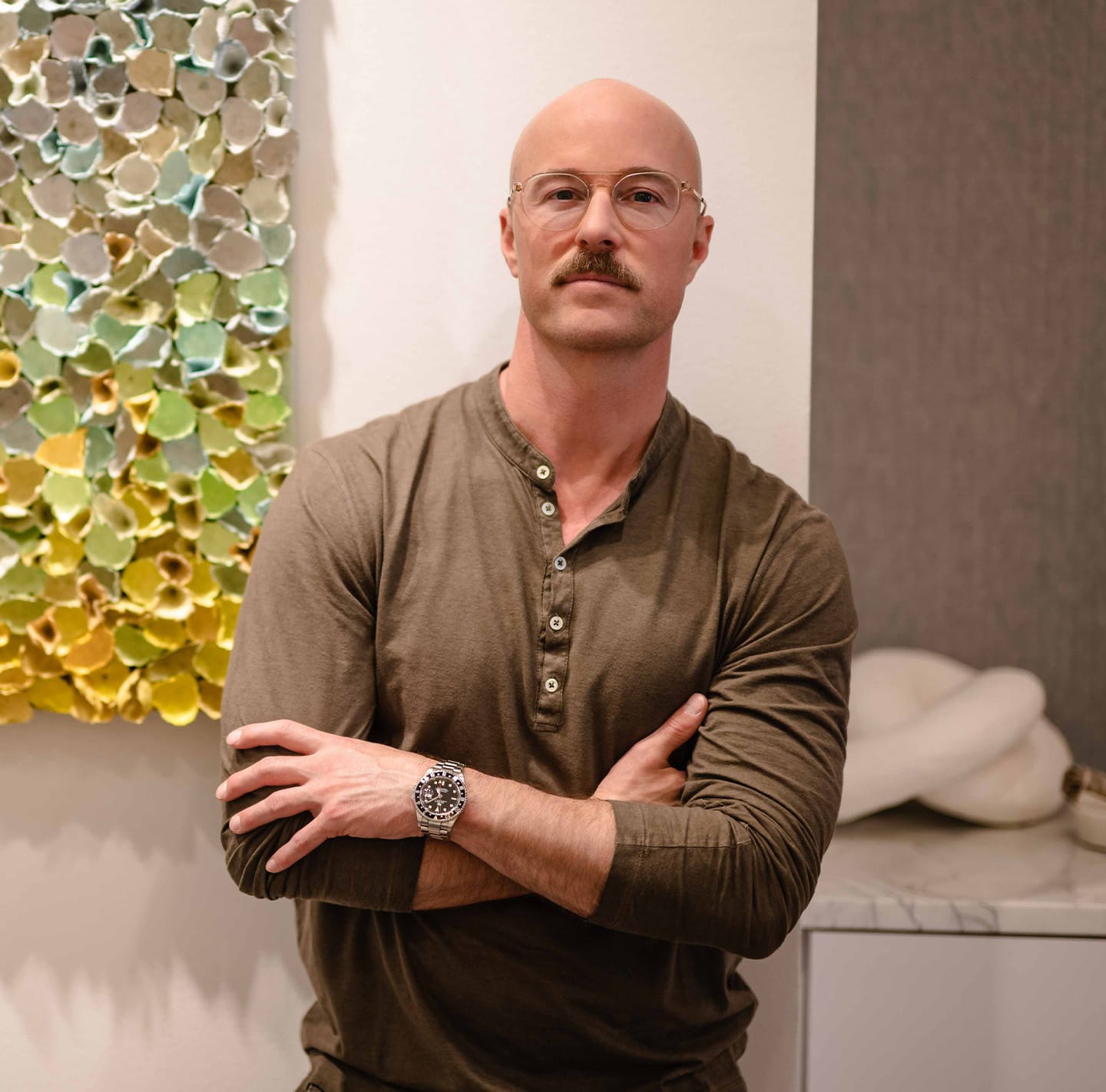
Dr. Rocco Piazza II
Board-Certified Plastic Surgeon
Dr. Piazza is a board-certified plastic surgeon practicing in Austin, TX. He specializes in aesthetic and reconstructive surgery with a focus on natural results.