


Dr. Rocco C. Piazza, MD, FACS
Board-certified plastic surgeon · The Piazza Center, Austin, Texas
Medically reviewed · Updated September 2026
Search “Alastin Skin Nectar dupe” and you will find listicles, comparison databases and a lot of confident opinions. Almost none of them were written by anyone who has seen a resurfaced face on day four.
We have. Our clinical team runs ContourTRL, Erbium ProFractional, HALO, Moxi and BBL HERO, and we follow the same patients through the whole recovery. So this is not a dupe list. It is what changed on our own shelf, and why.

First, Alastin earned its place
Alastin Regenerating Skin Nectar is built on TriHex Technology — a tripeptide and hexapeptide pairing designed to help clear fragmented collagen and elastin out of the extracellular matrix so new proteins have room to be laid down.
When it launched, that was a genuinely new idea. The prevailing approach was to add ingredients and hope. Alastin’s argument was that you first have to make space. It became the default post-procedure serum in plastic surgery offices across the country for most of a decade, and it deserved to.
We stocked it for years. We still stock it. Nothing below is an argument that it stopped working.
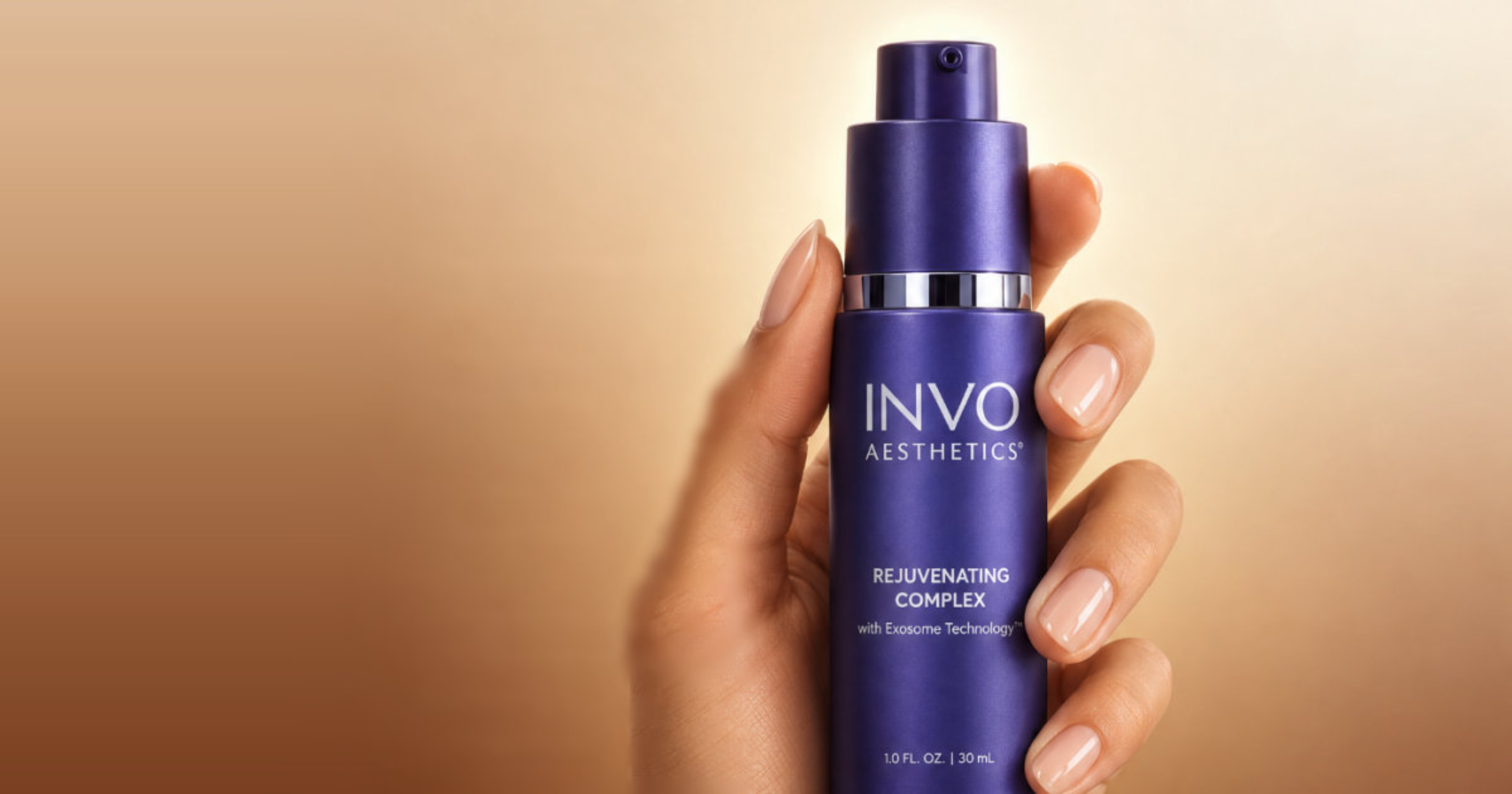
ALASTIN Regenerating Skin Nectar
TriHex Technology, post-procedure serum · $258.00 $180.60 — final stock
Shop ALASTIN Regenerating Skin Nectar →
Skin Nectar or Restorative Skin Complex? They are not the same product
This trips up more patients than anything else in the Alastin line, so it is worth two sentences.
Regenerating Skin Nectar is the post-procedure product — the one you use around a laser or a peel. Restorative Skin Complex is the everyday anti-aging serum, used when your skin is intact and not healing from anything. Same TriHex platform, different jobs. If someone recommended “Alastin” after your treatment and you bought Restorative Skin Complex, you bought the wrong one.
The honest answer about “dupes”
There is a real budget alternative, and it is not a serum. It is Aquaphor, or petrolatum, or whatever healing ointment your clinic handed you in a paper bag. That is what most people actually use, and we are not going to pretend it does nothing.
An occlusive ointment does one job extremely well: it seals the skin, stops transepidermal water loss and keeps a wound bed moist while it closes. Moist wound healing is real, it is well established, and it is why every practice in the country sends patients home with an ointment. For the first few days after a laser, Aquaphor is a legitimate answer, and if it is genuinely all you can spend, use it and do not feel badly about it.
What it does not do is anything else. Petrolatum is a lid. It holds conditions steady while your skin rebuilds, but it contributes nothing to how that rebuild happens — no collagen signal, no fibroblast support, no influence on how the new matrix is organized. It is the floor, not the ceiling.
That is the actual case for ECM Restore, and it is worth being precise about it: it is occlusive and it directs the rebuild. That is why its registered trial studies it as the primary occlusive treatment immediately after ablative resurfacing — it is being tested in the role the ointment normally fills, and asked to do more while it is there.
So the honest ranking, at the depths we treat at: ointment is the floor. Skin Nectar is the previous generation. ECM Restore is the standard we have moved to, and the one we now start patients on at day zero.
Clearing the site versus conducting the rebuild
Two things have to happen in the matrix after a laser. Degraded collagen and elastin have to be cleared out. And the new proteins have to be laid down in an organized way.
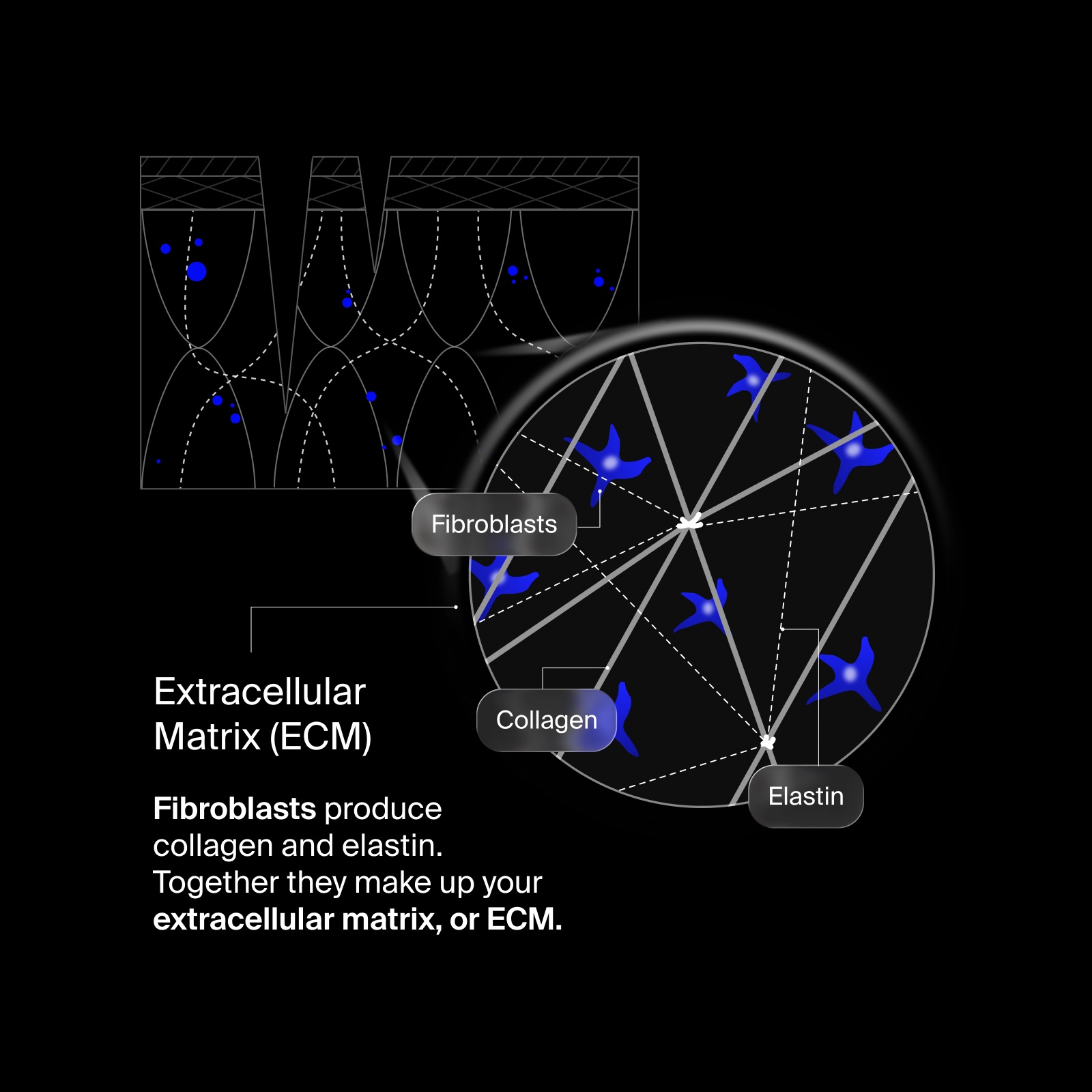
The extracellular matrix. Fibroblasts produce collagen and elastin; together they form the scaffold a laser makes your skin rebuild.
Skin Nectar addresses the first. Pavise Extracellular Matrix Restore addresses the second. That is the whole comparison, and everything else is detail.
ECM Restore is a post-treatment matrix activator, formulated to direct how the new matrix is assembled during the window when fibroblast activity is highest. It is built on DiamondCore® with human collagen III and a peptide signaling cascade.
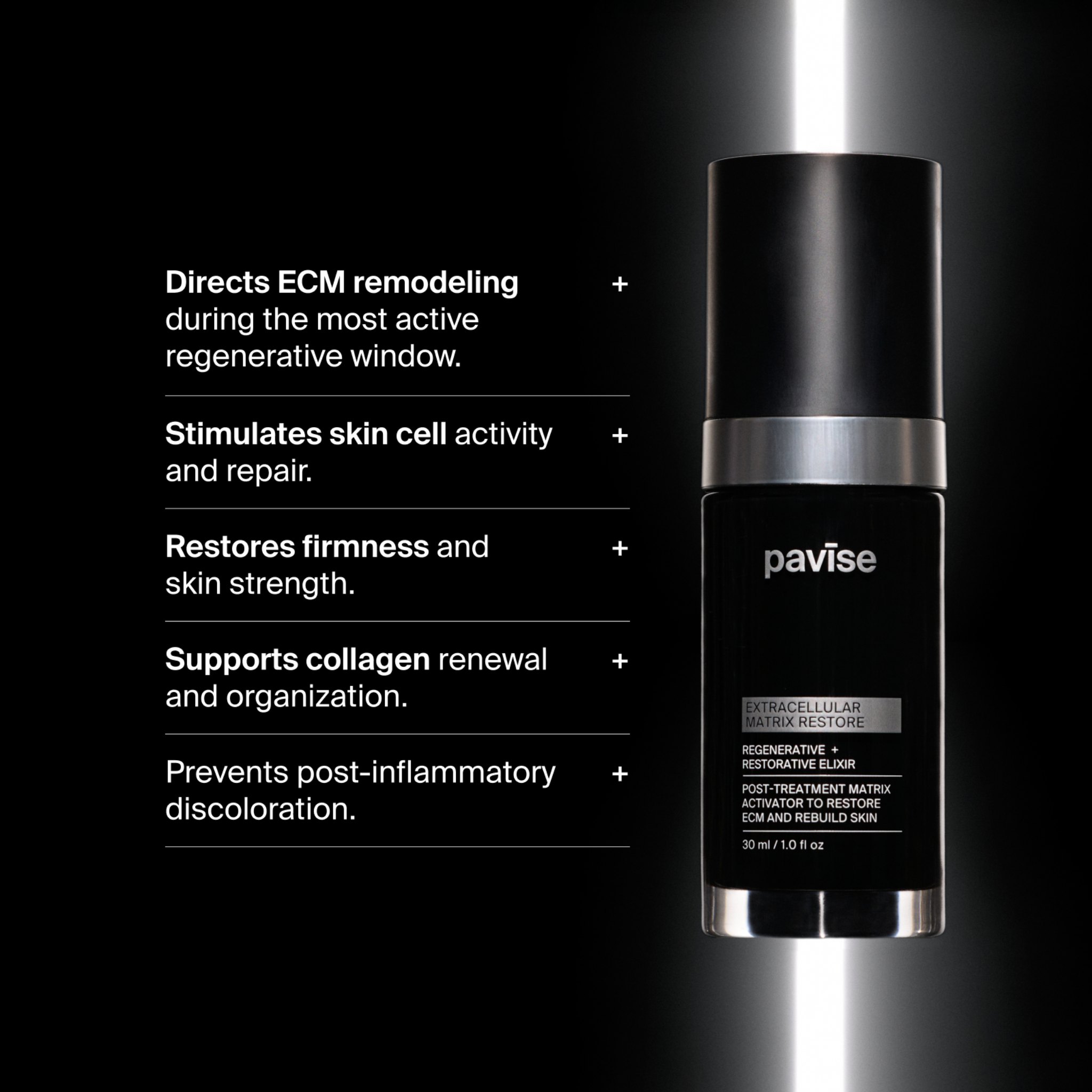
Two things separate it from the previous generation in practice.
It is studied on the procedure itself. ECM Restore is the subject of a registered clinical trial (ClinicalTrials.gov NCT07462533) evaluating it as the primary occlusive treatment immediately following ablative CO2 and Er:YAG facial resurfacing — the same Erbium YAG wavelength family as ContourTRL and ProFractional. A registered trial is not a finding of efficacy, and we will not present it as one. But it tells you where the manufacturer is willing to be measured, and no dupe-list product on the internet can say the same.
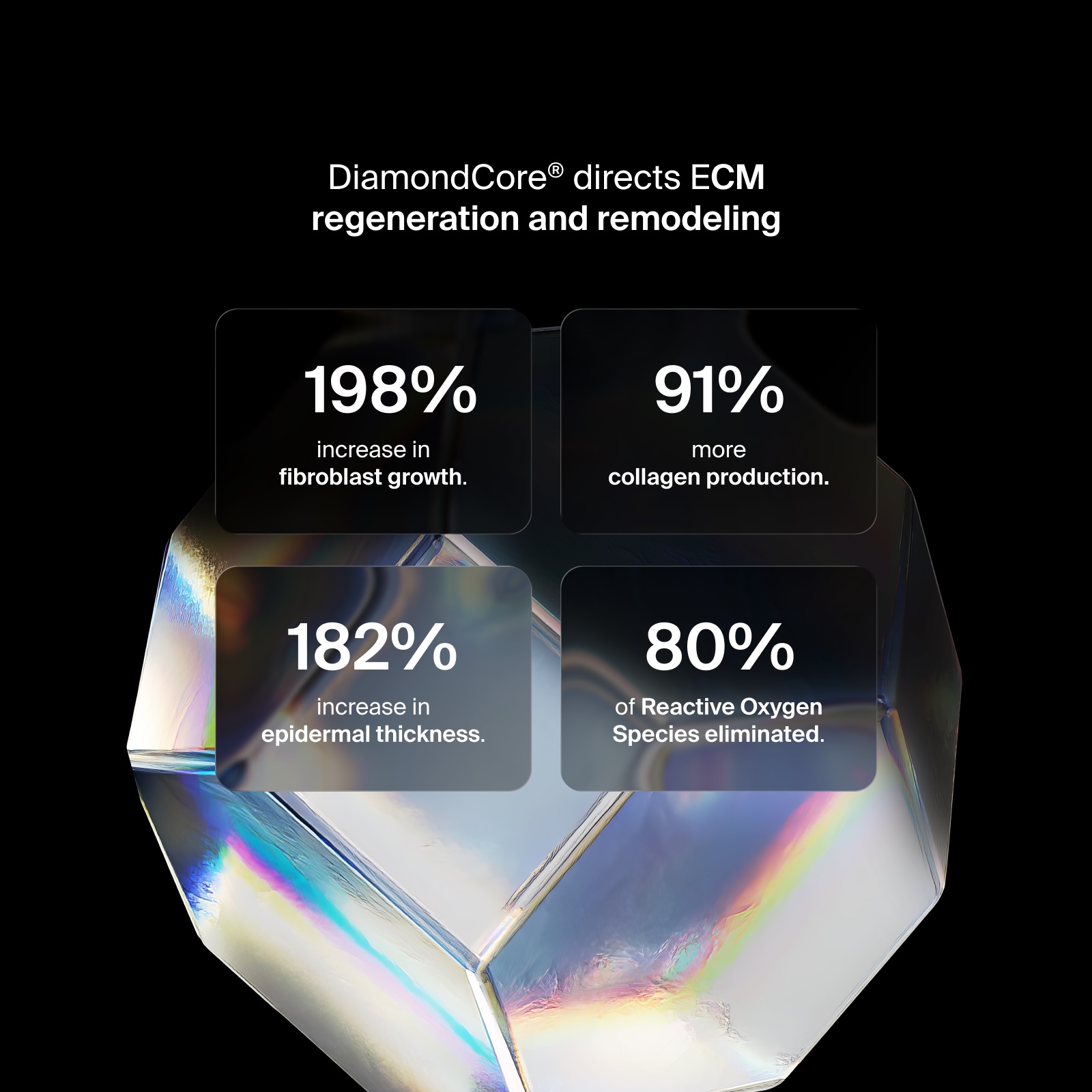
Pavise laboratory data for DiamondCore, measured in cell culture. These are not outcomes measured on patients, and we present them as what they are: mechanism evidence, not a promise about your face. Individual results vary.
It starts on day zero. Most post-procedure serums wait for the skin to close. ECM Restore is formulated to go on immediately, which means it is present for the entire remodeling window instead of joining it late.
What that looks like on skin
Pavise’s clinical photography following ablative Erbium YAG resurfacing. Left, immediately post-procedure. Right, four days later.
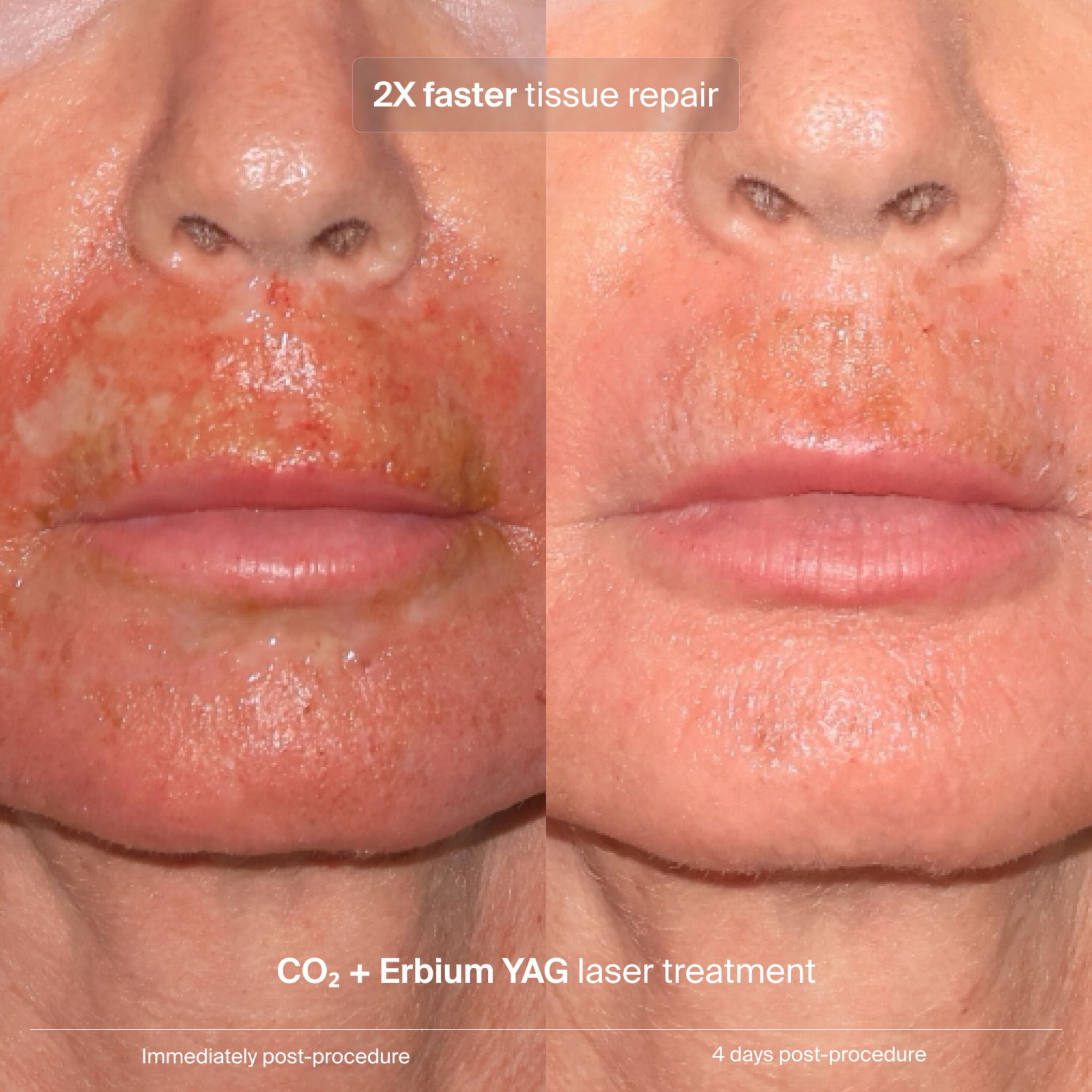
Pavise clinical data, presented unmodified with their timepoints and qualifiers intact. Individual results vary.
Four days is not a vanity metric. Less time with open, inflamed skin means less opportunity for the inflammation that drives post-inflammatory hyperpigmentation — the complication that turns a good laser result into a second problem to treat.
Side by side
Core mechanism
Alastin Skin Nectar — Clears degraded collagen and elastin to make room
Pavise ECM Restore — Directs matrix remodeling as new collagen is laid down
Technology
Alastin Skin Nectar — TriHex peptides
Pavise ECM Restore — DiamondCore®, human collagen III, peptide signaling cascade
Generation
Alastin Skin Nectar — The 2015-era standard
Pavise ECM Restore — Current generation
Registered trial on ablative laser
Alastin Skin Nectar — None
Pavise ECM Restore — Yes — NCT07462533, CO2 and Er:YAG
When it starts
Alastin Skin Nectar — Typically once the skin has closed
Pavise ECM Restore — Day 0, immediately post-procedure
Texture
Alastin Skin Nectar — Light serum
Pavise ECM Restore — Fragrance-free, balm-like elixir
Price (MSRP)
Alastin Skin Nectar — $258.00
Pavise ECM Restore — $278.00
Also used after
Alastin Skin Nectar — Injectables, resurfacing, surgery
Pavise ECM Restore — ContourTRL, ProFractional, HALO, RF microneedling, peels
Let us talk about price
At full retail these two products are $20 apart. Skin Nectar is $258. ECM Restore is $278. Whatever you assumed the gap was, it is smaller than that.
Which makes the decision simpler than a price comparison usually does. For twenty dollars on a treatment that cost four figures, the question is not which serum is cheaper — it is which one is designed for the phase that determines your result, and which one you can start on the day of your procedure rather than a week later.
One honest exception. We are clearing our remaining Alastin inventory as we transition the shelf, so Skin Nectar is currently $258 $180.60 while stock lasts. If you have a lighter treatment booked, or you already know you like it, that is a genuinely good buy and we would rather it went to a patient than sat in a cabinet. When it is gone, it is gone.
Shop the remaining Skin Nectar stock →
If budget is the real constraint, the highest-return place to put the money is not a serum at all. It is sunscreen you will actually wear every day, which protects the result for longer than anything else you can buy.
Where Skin Nectar still wins
Three situations, honestly:
- You are mid-recovery and comfortable. Finish the bottle. Switching products in the middle of a healing window for the sake of switching is not a strategy.
- Lighter treatments. After Moxi, a NanoLaserPeel or a superficial peel, the remodeling window is short and the ceiling on any product is lower. Skin Nectar is perfectly good there.
- You already own it. An unopened bottle in your cabinet beats a better serum you have not bought.
Where we now start patients on ECM Restore instead is the deep end — ContourTRL, Erbium ProFractional, and HALO, where the recovery is longest and the aftercare has the most leverage.
What we actually send patients home with
The full sequence is in our laser recovery protocol, but in short:
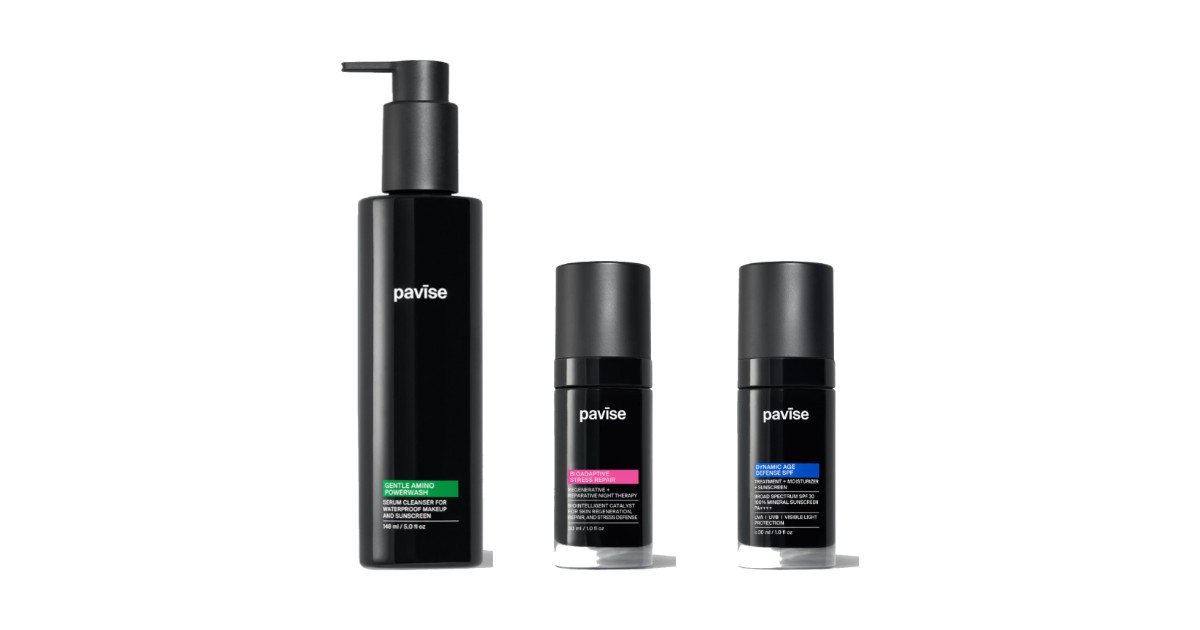
- Day 0 onward — ECM Restore, on its own. No actives, no layering.
- Day 2 — Dr. Medion Spaoxy Gel, carboxy therapy to cool and calm.
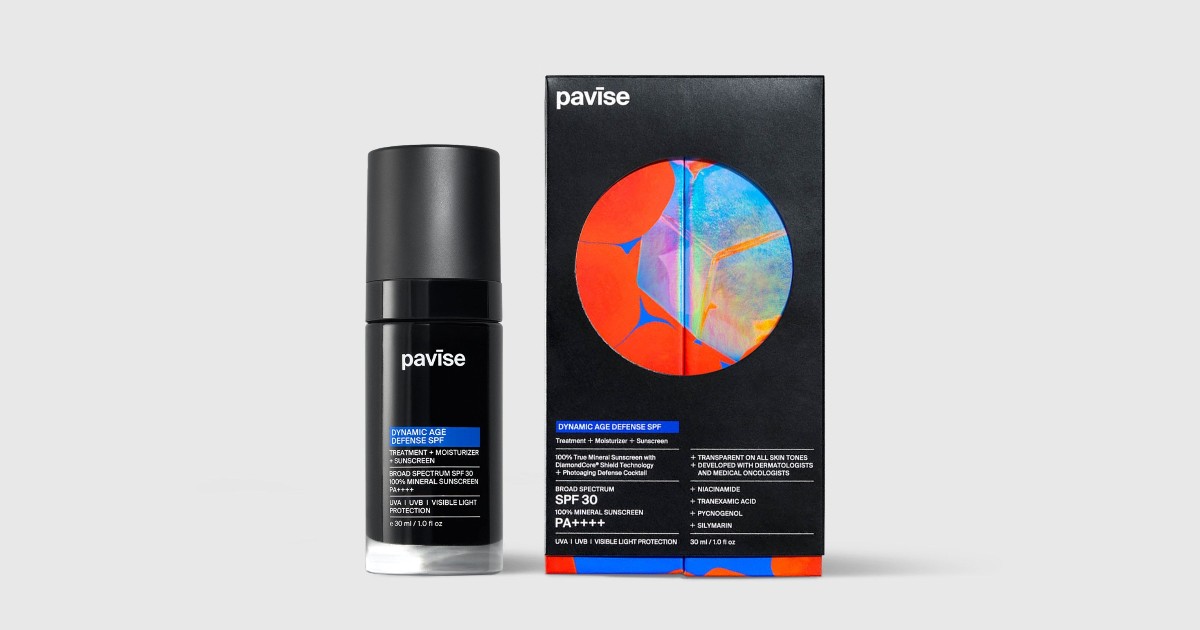
- Day 3 onward — mineral SPF, which then never leaves the routine.
- Once healed — a cleanser that removes that sunscreen without stripping the barrier.
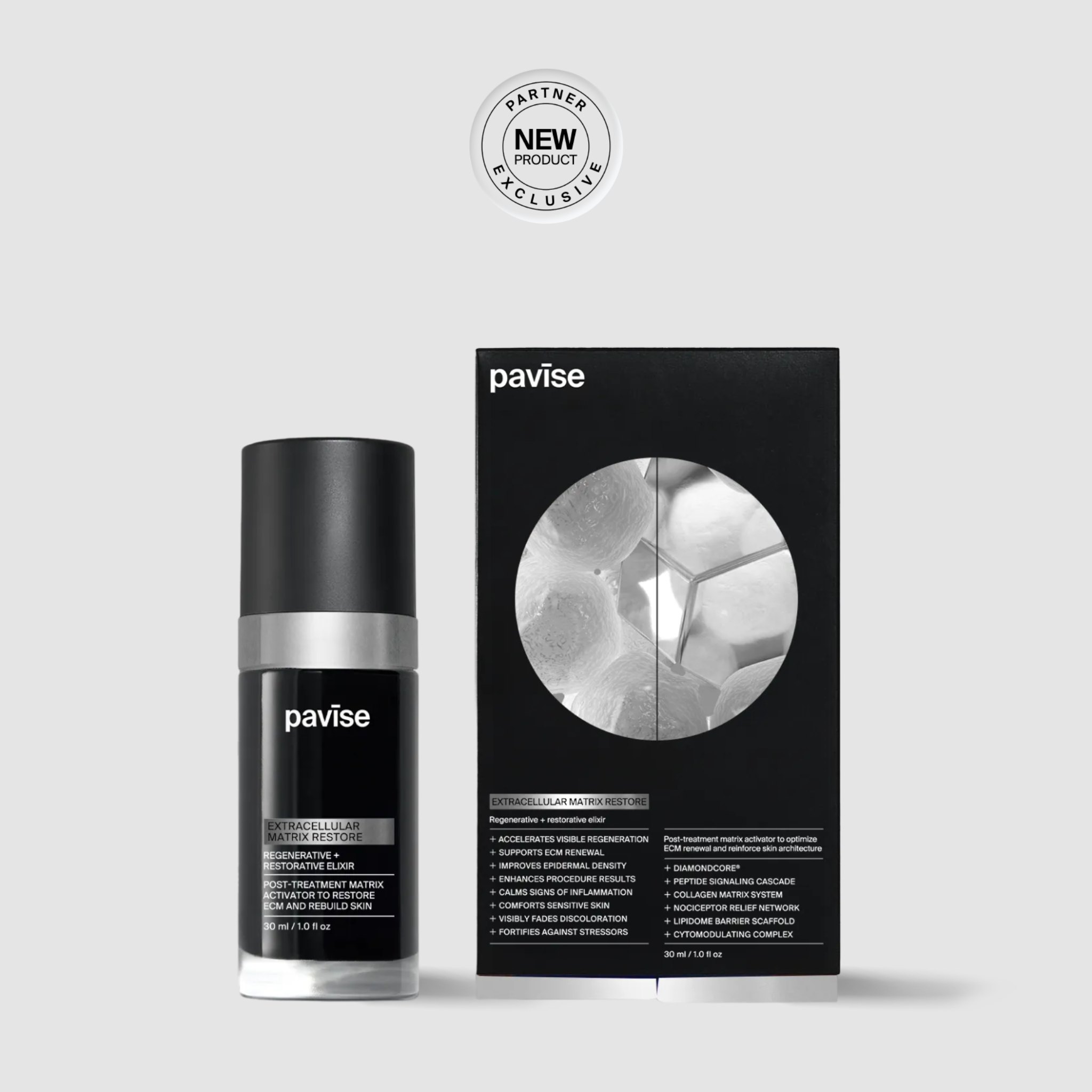
Pavise Extracellular Matrix Restore
Post-procedure matrix activator, 30 ml · starts day 0 · $278.00
Shop Pavise Extracellular Matrix Restore →
Pavise Dynamic Age Defense SPF 30
100% mineral, PA++++, visible light protection, 30 ml · $148.00
Shop Pavise Dynamic Age Defense SPF 30 →
Pavise Gentle Amino Powerwash
Serum cleanser, removes mineral SPF in one pass, 148 ml · $64.00
Shop Pavise Gentle Amino Powerwash →
Shop the full Laser Recovery Protocol →
Every product above, in the order we use it.
Why our opinion here is worth something

The Piazza Center is a board-certified plastic surgery practice in Austin, Texas, led by Dr. Rocco Piazza, MD, FACS. Our resurfacing and light treatments are performed by our clinical nursing team, and that same team follows you through the entire recovery.
We are not comparing two products from their marketing materials. We stocked one of them for years, we stock the other now, and we watched the same patients through both. That is the difference between this page and a dupe list.
Frequently asked questions
Is there a dupe for Alastin Skin Nectar?
Not a true one — TriHex Technology is proprietary, so anything sold as a dupe is a different formula with different peptides. The real budget substitute is an occlusive ointment like Aquaphor, which seals and protects healing skin but does nothing to direct how collagen rebuilds. It is a reasonable floor, not an equivalent.
Can I just use Aquaphor after my laser?
For the first few days, an occlusive ointment is a legitimate and widely used option — it keeps the wound bed moist while the skin closes, which genuinely matters. It simply stops there. It offers no support for the collagen remodeling that runs for weeks afterward and determines your final result, which is the phase a matrix activator is built for.
What is the best alternative to Alastin Skin Nectar after laser?
For ablative treatments like ContourTRL and Erbium ProFractional, we use Pavise Extracellular Matrix Restore, starting at day zero. It directs how the new matrix rebuilds rather than focusing on clearing the old one, and it is the subject of a registered trial on ablative Er:YAG resurfacing.
Is Alastin Skin Nectar worth it?
It was the standard for a decade and it still works. Whether it is the right choice depends on the depth of your treatment — for lighter lasers and peels it is perfectly good, and for deep ablative resurfacing we now prefer a matrix activator that starts on day zero.
What is the difference between Alastin Skin Nectar and Restorative Skin Complex?
Skin Nectar is the post-procedure product, used around a laser or peel. Restorative Skin Complex is the everyday anti-aging serum for intact skin. Same TriHex platform, different jobs.
How long do I use a recovery serum after laser?
Through the remodeling window, which runs roughly four to six weeks depending on depth, and many patients simply continue afterwards. Your care team will set the timing for your specific treatment.
Can I use both Skin Nectar and ECM Restore?
There is rarely a reason to. They address the same window, and layering post-procedure products on healing skin adds risk without adding benefit. Pick one and use it properly.
When can I start either one after my treatment?
ECM Restore is formulated for immediate post-procedure use and in our protocol begins at day zero. Confirm your own timing at your post-op visit, since depth and platform change the sequence.
Individual results vary. Product data and clinical photography supplied by Pavise and presented unmodified with their timepoints intact. ClinicalTrials.gov identifier NCT07462533 is a registered, ongoing study; registration is not a finding of efficacy. Alastin, TriHex and Restorative Skin Complex are trademarks of their respective owner and are referenced here for comparison. Pricing correct at time of publication. This article is for educational purposes and does not constitute medical advice.
Not sure which one you need?
Bring it to your consultation. We will tell you which laser fits your skin and build the recovery protocol around it — before you spend anything on a serum.
Book a ConsultationShop the Protocol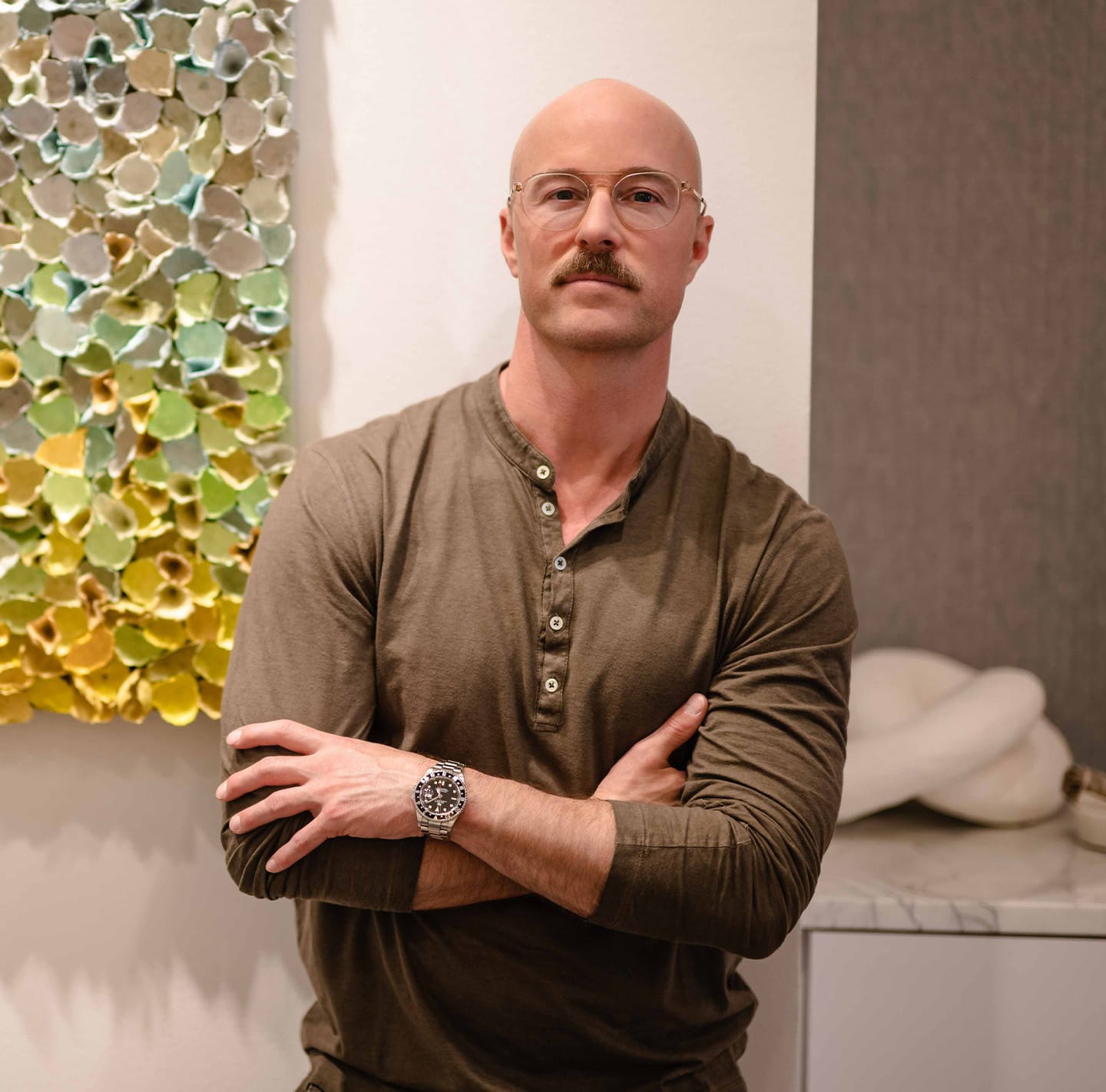
Dr. Rocco Piazza II
Board-Certified Plastic Surgeon
Dr. Piazza is a board-certified plastic surgeon practicing in Austin, TX. He specializes in aesthetic and reconstructive surgery with a focus on natural results.